
Entrepreneur and Dragons’ Den investor Steven Bartlett has revealed that declining an opportunity to invest in a company now valued at £40,000,000 stands as his biggest regret from the show.

Every new year we have the excitement of a fresh start and new possibilities and that can be the fuel for many business owners. It is the time to reset, plan, and take stock of the goals for the year. But let’s be honest, by mid-February (if not before) that initial energy starts to decrease as the reality of running a business sets in, priorities shift, workloads intensify, and anxiety starts to creep up quietly like a ghost in the background leading to the unwanted burnout.

Lupa, the AI-native veterinary practice management platform, has closed a $4 million seed from top investors including firstminute capital, 2100 Ventures, and Vento by Exor Ventures. Other investors include top McKinsey, BCG, JP Morgan, Nexi, and NovaCapital angels. Lupa will use the new funding to accelerate product development and commercial expansion.

Global carbon ratings agency BeZero Carbon has announced a $32 million Series C investment round to enable carbon markets through ratings.

ESG initiatives remain out of reach for the majority of UK businesses, according to ‘The Finance and Business Synergy Report’ by expense management platform, Pleo.

Emitwise and Equipoise have partnered with the SME Climate Hub to provide emissions measurement tools to small and medium-sized enterprises (SMEs). The free tools help businesses measure both operational and supply chain emissions to inform their reduction strategies.

The Department for Business & Trade, Challenge Works, the Open Data Institute, and Smart Data Foundry are calling on innovators to enter the new Smart Data Challenge Prize.

Workwize, a platform for global IT hardware asset management, has announced that it closed $13 million in Series A funding led by Klass Capital, with continued support from early-stage investors Peak and Graduate Entrepreneur Fund.

In the high-stakes world of entrepreneurship, humility often feels like an endangered virtue. We often see the media glorifying the bold, self-assured visionary – the one who beat odds and sticks steadfastly to their grand idea. However, this narrative overlooks a crucial truth: humility is not a weakness but a strength, particularly when navigating the uncertainty and complexity of building something new.
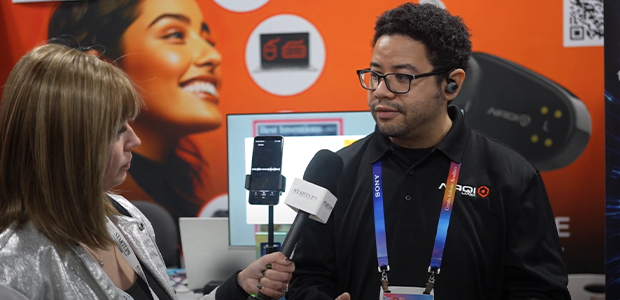
At CES 2025, Paige West, Managing Editor at Startups Magazine, interviewed Zavier Alexander, Director of Product Management, Naqi Logix. They discussed the Naqi Neural Earbud, where it sits in the market, and its mission.

The Hustle Awards offer a golden opportunity for startups, and those within the startup ecosystem, to celebrate their achievements, gain industry recognition, and showcase the fantastic work they’re doing. As the entry portal is open already, here is why you should enter the Hustle Awards 2025!

The construction industry is known for its high overhead costs. It is one of the major challenges for startups in the sector. The project demands change which further modifies the labour costs, equipment needs, and several other things.
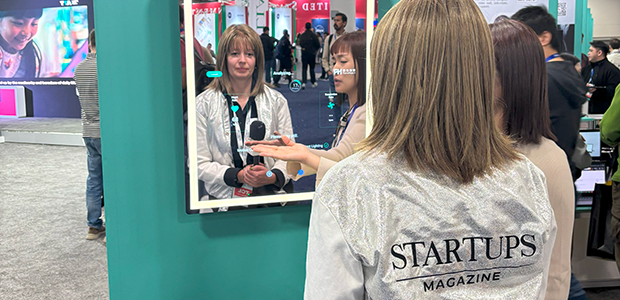
Startups Magazine presents our top 10 startups from CES 2025, each chosen for their unique contribution to the field and potential to shape tomorrow’s tech landscape.

AI venture capital investment in London has hit an all-time high, making up 32% of overall VC investment in the city according to the latest data from Dealroom and London & Partners. London-headquartered AI startups raised a record $3.5 billion in VC in 2024. This reflects a 52% increase to the levels raised in 2023 ($2.3 billion) and is 21% higher than the previous record set in 2022 ($2.9 billion).

Global nature intelligence company, NatureMetrics, announces it has raised $25 million in Series B funding to rapidly scale its biodiversity monitoring solution. The funding round is led by Just Climate, alongside EDF Pulse Ventures, and the Monaco ReOcean Fund, with participation from existing investors 2150, BNP Paribas, Ananda Impact Ventures, and SWEN Blue Ocean.

TheHill, an innovation catalyst, embedded within Oxford University Hospitals NHS Foundation Trust has announced a new partnership with regulatory compliance experts, IMed Consultancy, sponsors of its successful NHS Market Access Accelerator Programme.

Today, Canva, the all-in-one visual communication platform, unveiled its second annual New Year, New Job report, offering a comprehensive look at how artificial intelligence (AI), social media, and accessible design tools are impacting the hiring process in the UK and beyond.
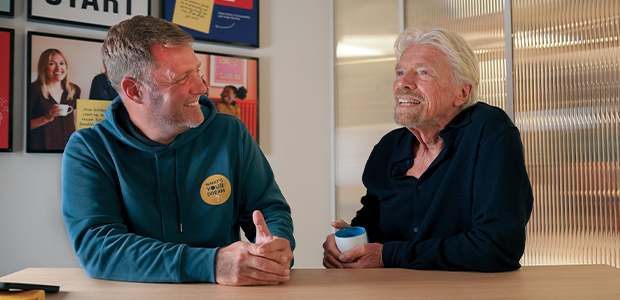
With more than a quarter of young people eager to set-up a business in 2025, business magnates Sir Richard Branson and Simon Squibb, have partnered up to launch the ‘Elevator of Dreams’ at Virgin Hotels London in Shoreditch.

From 31 January, businesses moving goods from the European Union (EU) to Great Britain (GB) will need to comply with new UK safety and security declaration requirements.

A think tank has called on the government to continue its investment drive to support AI adoption in private businesses and across public services.