
Startup founders have a huge list of things to think about, and somewhere pretty high is the company name. It’s like naming your child, so much emotion and pressure to get it right can lead to a disproportionate amount of time and concern being expended at the expense of other vitally important jobs-to-be-done.

TravelPerk, the business travel platform, has announced a new Series E fundraise of $200 million. The investment is led by European venture capital firm Atomico, alongside EQT Growth, with significant participation from Noteus Partners and existing investors, including Kinnevik and General Catalyst. The oversubscribed round nearly doubles TravelPerk’s valuation to $2.7 billion.

Exactly Payment Specialist, Saran Talasila, shares insights on how startups and SMEs can drive value through an efficient payment processing strategy and provides best practices for selecting the right payment solution provider.

The UK healthcare sector is at risk of falling behind its European counterparts in adopting AI, according to a major new pan-European study.

Molten Ventures has announced its participation as a co-lead investor in the $5.5 million seed funding round for Sightline, a market intelligence platform powering the transition economy.

Mollie, one of Europe’s fastest-growing financial service providers, has enabled Apple’s Tap to Pay on iPhone for its UK customers. This allows businesses of all sizes to use the Mollie app on iPhone to accept contactless payments without the need to purchase or manage additional hardware.

Swedish startup Adsorbi, a research-based spinout from Chalmers University of Technology, has raised €1 million in funding from Metsä Spring, Chalmers Ventures, Jovitech Invest, and a grant from Sweden’s Innovation Agency for its cellulose-based air purification material.

This National Productivity Week, a CIPD poll has found that almost two thirds of people (63%) would trust AI to inform – but not make – important decisions at work. According to the poll of over 2,000 people, over a third (35%) wouldn’t trust AI to make important decisions at work, preferring to use human intelligence. Just 1% of respondents would trust AI to make important work decisions.

Three London-based startups have won funding after pitching their ventures to a panel of business leaders in Deliveroo’s annual Big Pitch event.
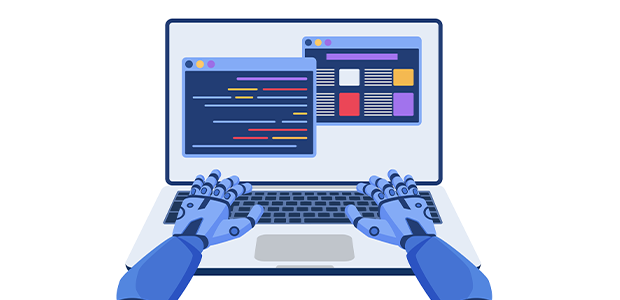
BOW, the universal robotics software company, has announced closing a £4 million seed round. The round was led by Northern Gritstone, the investment business focused on science and technology businesses in the North of England, with co-investors Finance Yorkshire and Praetura Ventures as part of the Northern Powerhouse Investment Fund II.

As the world continues to turn up the dial on digital transformation, businesses need faster, more agile, and secure solutions to support evolving operations. Traditional legacy infrastructures are increasingly inadequate, as organisations integrate new technologies and roaming identities into existing networks, creating complex, layered architectures that expose them to new security risks. Combined with the rising costs of maintaining traditional networking, these systems are becoming increasingly unsustainable.
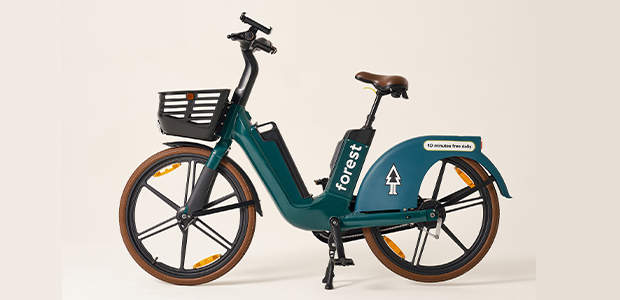
Forest, one of Europe’s most innovative shared bike operators, that last year submitted a tender to operate e-bikes in Paris, has secured £13 million in the first close of its Series B round, including a facility of up to £10 million in Asset-Backed Finance from Fintex Capital.

Ayesha Ofori is the Founder and CEO of Propelle and she is on a mission to change the way women think about and engage with their finances.

In 2024, the UK’s fintech startup ecosystem emerged as the second most funded globally, trailing only the US. Despite its historical prominence, 2024 marked a five-year low in funding, attributed to factors such as evolving regulatory complexities, heightened investor caution due to fraud and cybersecurity concerns, and macroeconomic challenges like inflation and rising interest rates.

30 visionary women leaders in tech from across industry-leading brands including Chanel, Mars, Barclays, Deliveroo, Formula 1, PepsiCo and more are set to present brand new strategies at The Women In Tech Conference at the Millennium Gloucester Hotel in central London on 6th March 2025. This premier one-day event will provide an inspiring platform to explore the latest advancements in technology, leadership, and career growth.

In 2024, well-known social media platforms faced fines totalling €1.955 billion for violations of the General Data Protection Regulation (GDPR). Krete Paal, CEO of the Estonian privacy startup GDPR Register, analysed the most significant breaches and court rulings impacting European companies and the development of data protection practices.

The electronics industry, a cornerstone of modern life, is essential for the functioning of economies and the daily lives of billions. From smartphones, computers, ticketing machines, or wearable devices, the demand for electronic devices continues to surge, driven by technological advancements and consumer expectations. However, behind the sleek designs and cutting-edge functionalities of these devices lie increasingly complex supply chains, sometimes marred by environmental degradation and unethical labour practices.

International law firm Herbert Smith Freehills has advised Streambased, a specialist in streaming data analytics and management, on its $2.7 million in seed funding led by Elaia. Other backers include Seedcamp, TKM, and First Momentum as well as industry expert angels. This funding round will go towards hiring and R&D to expand their tech capabilities.

Women founders consistently deliver higher returns on investment compared to male founders. This has been proven repeatedly through data-driven research. A 2019 BCG report revealed that for every dollar of funding, female-founded startups generated 78 cents, while male-founded startups produced only 31 cents. So basically, women generate 2.5X on a dollar.

Constant Contact, a marketing solution that has helped millions of small businesses and nonprofits around the world, is proud to announce a new sponsorship with Chelsea FC Women.