
Every company today faces mounting pressure to deploy AI, but most solutions fall short on reliability and cannot handle complex, critical workflows.

NeoCarbon and Carbonaide are excited to announce the successful mineralisation of the first batch of concrete cured with ~1kg CO2 captured from NeoCarbon’s pilot Direct Air Capture (DAC) blended with other biogenic CO2. This marks a significant milestone in their collaborative effort to increase the share of DAC CO2 used in the mineralisation process, in addition to CO2 captured from biogas and waste-to-energy plants.

In a recent webinar, Jon Burt, Head of Enterprise Architecture at Manchester City Council, and Rick Goud, Co-Founder and Chief Innovation Officer at Zivver, discussed what is meant by ‘right-sizing’, how it impacts the risks of data loss, and how to build a security-conscious culture across the entire organisation

The latest ONS figures offer little comfort for UK businesses. Unless December’s data delivers significant – and surprising – expansion, the economy will have contracted in the final quarter of last year.

Gresham House Ventures, a growth equity investor specialising in innovative businesses in the consumer, healthcare, and enterprise sectors, has committed a €4.25m investment in Mobility Mojo.
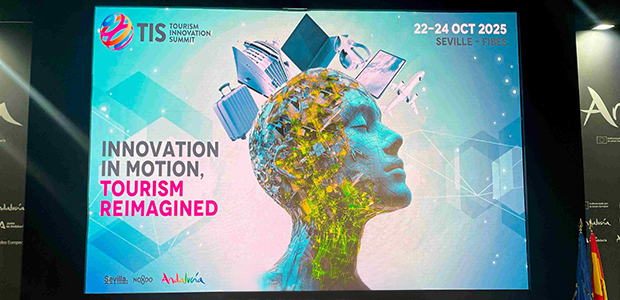
FITUR has once again hosted the official presentation of the new edition of the TIS – Tourism Innovation Summit, which will take place from October 22–24th 2025 in Seville, Spain. The summit, already established as a key technological event for the travel and tourism industry, will bring together the sector’s main players and professionals.

The latest research from The Global Payroll Association (GPA) reveals that 75% of people would turn down a job that doesn’t offer hybrid or remote working, while flexi working is also preferable to a four-day week.

The European Laboratory Research & Innovation Group (ELRIG), a not-for-profit, volunteer-led organisation for the drug discovery community, has announced the keynote speakers for Research & Innovation 2025. Dr Jue Wang, Research Scientist and Co-lead of the Protein Design Team at Google DeepMind, and Dr Robert Grundy, CEO of Intelligent OMICS, will lead this year’s event focussed on ‘big molecules to big data … thinking BIG to drive innovative research’.

GRYD Energy, a solar tech startup and developer of the UK’s first true solar subscription, has raised £1 million to fund its national expansion.

The Self Assessment tax return deadline is looming, and millions of people are yet to file their return and risk fines. Here, Jodie Wilkinson, Head of Strategic Partnerships, takepayments – the small business digital payments specialists – proves six top submission tips.

Technology and sustainability are joining forces to drive a new wave of innovation in the financial sector, and ekko, a fintech company with a mission to make every transaction a force for good, is leading this movement.

ISE 2025 proudly introduces the Esports Arena, an exciting 1,000m² feature created in partnership with LVP – Liga de Videojuegos Profesional (GRUP MEDIAPRO), a global specialist in e-sports competitions.

A recently launched digital service will break down barriers to accessing patent information. This will make it easier for businesses of all sizes – from startups to established companies – to protect their innovations and spot new opportunities for growth.

According to Companies House data curated by e-commerce accounting specialists, Your Ecommerce Accountant, the total number of UK e-commerce businesses now sits at an all-time high of 166,052.

This article is a high-level overview of the key considerations when launching a brand and product in the US and Canadian markets.

Since October 2020, Soumya Dinesh has been Managing Director and Co-Founder of Atula Technologies – a Buckinghamshire based business specialising in bespoke software solutions for SMEs.

Cyclic Materials has announced a $2 million investment from InMotion Ventures, the investment arm of Jaguar Land Rover (JLR). This latest backing lifts the company’s Series B round to $55 million, underscoring its critical role in advancing sustainable supply chains for the automotive industry and beyond.

It’s easy to get lost in the excitement of finally launching your dream business. However, policies must be laid out formally to ensure its success and protect its future.

Neko Health, the preventative healthcare technology startup co-founded by Hjalmar Nilsonne and Spotify CEO Daniel Ek, has announced the completion of its $260m Series B funding.

“As sustainability becomes a global priority and stricter EU regulations take hold, businesses are scrambling to brand themselves as eco-friendly,” says Assoc. Prof. Danguolė Oželienė.