
The sales game has changed, and if you’re still relying on outdated methods, you’re already falling behind. Conversational AI isn’t just another buzzword – it’s a powerhouse for sales teams looking to scale their outreach, close deals faster, and operate with efficiency.

Meridian Health Ventures, formerly known as KHP Ventures, has announced a transatlantic fund to provide healthtech superscalers with global and domestic growth opportunities, while supporting UK innovation to be adopted in the NHS.

In a digital first economy, the performance and security of any software is what hold a business together. Creating seamless user experiences involves curating a rigorous and well thought out software testing processes. Without a doubt, these processes require high level of collaboration and innovation from the software testing team and quality engineers.

Shakers, the workforce orchestration platform connecting companies with top tech freelancers, has announced its €14 million Series A funding round. The round was led by Partech, with further investment from KFund, Brighteye Ventures, Athos Capital, and Wayra.
In today’s ever evolving digital landscape, innovation has become a necessity. However, the path to enabling fast, secure and scalable software delivery remains complex. Many engineering leaders continue to face the fundamental challenge of empowering developers and providing autonomy to facilitate autonomy. This also comes with the added challenge of maintaining governance, security, and compliance that the organisation demands.

South by Southwest London has announced the semi-finalists for its international Venture Spotlight competition for early-stage startups across life science, biotech, deeptech, and creative tech.
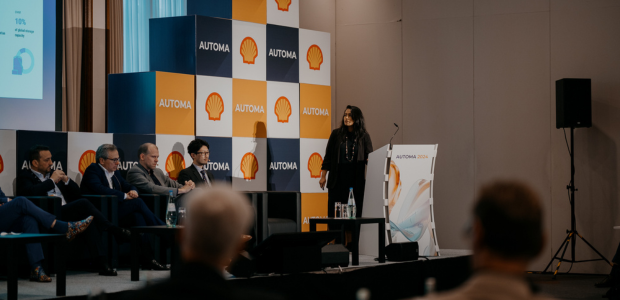
The Oil & Gas Automation and Digitalisation Congress (AUTOMA) 2025 convenes industry leaders to present their technological advancements and smart solutions for the oil and gas sector on 13-14 October in Amsterdam, the Netherlands. The Congress gathers key companies such as TotalEnergies, Shell, and Fluor, known for their commitment to innovation and inclusion initiatives, to share their expertise and strategies driving progress in the industry.

99% of private sector businesses in the UK are classed as SMEs, but despite the scale of the activity that takes place within this segment, there’s often a lack of guidance for smaller companies seeking to comply with the significant regulatory barriers they must navigate.

Over the past three years, Latitude59 Pitch Competition winners have collectively raised more than €20 million in investments, reinforcing Latitude59’s position as one of the most influential startup launch platforms in the Baltics and the New Nordics.

Classiq has announced raising $110 million in Series C funding, the largest ever for a quantum software company.

Microsoft spotlighted the future of cybersecurity with Agentic AI, autonomous, AI-powered agents purpose-built for defending against evolving cyber threats. At GISEC Global 2025, the Middle East and Africa’s largest cybersecurity event, Microsoft is spotlighting how Agentic AI is transforming cybersecurity, equipping organisations with intelligent agents capable of detecting, triaging, and responding to threats faster than ever before.

With almost half (48%) of UK companies now offering a four-day working week, new research from hybrid meeting technology leader Owl Labs reveals that UK workplaces are on the brink of a major shakeup in working patterns. Employees aren’t just embracing shorter weeks; they expect the four-day model to become standard in the next five years.
DevOps today is the engine behind agile transformation, and high-performing digital organisations. Teams are redefining how software is built, tested and deployed. However, in a world where success often happens behind the scenes, recognising hard work is vital.

High-Velocity Startups has entered an ongoing strategic partnership with Fusion Flow Software to deliver automation and AI advisory services supporting international enterprise growth.

Gen Z, the digital natives driving a surge in startups, often prioritise innovation and marketing. However, financial literacy is a crucial, often overlooked element for sustainable success.

MarvelX is on a mission to build the operational backbone for the financial industry – starting with insurance. It has announced the closing of a $6 million funding round led by EQT Ventures, and the launch of ClaimOS MaX.

As we begin the second quarter of 2025, the first companies with 12-month accounting periods are preparing their latest research and development (R&D) tax relief claims under the new merged R&D Expenditure Credit (RDEC) – and the Enhanced R&D Intensive Support (ERIS) scheme. But what are the key considerations early claimants need to be aware of?

Across global innovation hubs – from the UK and US to key markets in APAC – university spinouts are capturing investor attention like never before. These research-rooted ventures are now seen as high-potential engines of scalable growth, sparking an emerging hiring boom focused on transformative leadership.

I used to think progress looked like more women in leadership. More women at the table. More women at the top.
And for a while, that felt true. After all, in a world where men are still holding quite a substantial amount of leadership roles – 90% of Fortune 500 CEOs to be exact – any shift felt like something worth celebrating.

Zendo Energy, the British startup building the first ‘Energy OS’ to decarbonise computing power in data centres, has announced it has raised £1.75 million in a pre-seed funding round.