

This 13ft robot can lift a cow. Here’s how it works

Moving hundreds of kilograms of equipment in challenging industrial environments is no easy task. From heavy manufacturing and mining to disaster response and nuclear maintenance, handling large loads can require considerable strength, precision and, in some cases, expose workers to dangerous conditions.
One Beijing-based startup believes humanoid robots could help address these challenges.
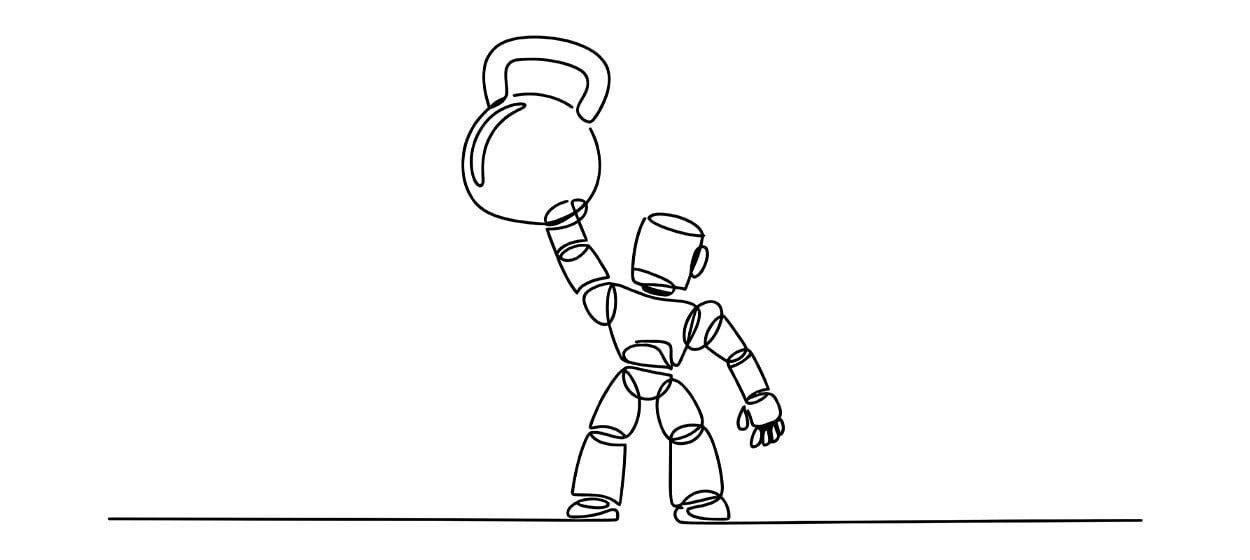
NeodraDynamics has developed Neo1, a 13ft humanoid robot weighing 1.2 tonnes and reportedly capable of lifting loads of up to 600kg using both arms. That’s roughly the weight of a small car – or a fully grown cow.
Yang Tao, Founder & CTO at NeodraDynamics, says that the company is built around a hydraulic-electric hybrid-drive “super humanoid” robot platform, with the aim of empowering the robotics industry.
“We have full-stack capabilities spanning complete robots, solutions, and core components, with our self-developed digital hydraulic actuators, motion control, and reinforcement learning at the core,” says Tao.
“Our initial focus is on the ‘4D’ scenarios – Dull, Dirty, Dangerous and Difficult – where the need for automation is particularly urgent. These include the nuclear industry, deep-sea operations, emergency rescue, and heavy manufacturing. From there, we plan to expand progressively into general industrial manufacturing and, eventually, household services,” he says.
Engineering principles
Tao says that the company’s engineering principles are centred around digital hydraulics, which has two defining characteristics.
“The first is pulse equivalence: the number of pulses determines the position or stroke, while the pulse frequency controls speed. This allows digital signals to translate directly into physical movement,” he says.
“The second is a mechanical feedback closed loop, which enables fast response times, micron-level precision, and reliable, stable performance over extended periods. It also provides strong durability and resilience in extreme environments,” he adds.
By combining digital hydraulics with electric drive, allowing each technology to complement the other, Tao says that they can scale robotic loads from just a few kilograms to thousands of tonnes.
A 13ft friend
The 13ft robot, dubbed Neo1, has 41 active degrees of freedom and can handle payloads of around 600kg, using coordinated dual-arm operation, or 300kg with a single arm.
“From the project’s initial development to its public debut, the prototype took approximately one year and four months to complete,” Tao says.
In August 2025, the company debuted the five-finger dexterous hand capable of handling a 300kg payload at the World Robot Conference (WRC) in Beijing.
In August 2026, there was the public debut of the four-metre humanoid robot at WRC Beijing, and in October 2026, there was a joint exhibition with NeodraDynamics JD Industrial at the China International Industry Fair (CIIF), held in Shanghai.
Tao says that building Neo1 came with several technical challenges, the most obvious being simply building such a huge robot.
“It was achieving high torque, precision, responsiveness, and mass-producibility simultaneously at a four-metre scale,” he says.
“As the size of a robot increases, mechanical errors become amplified, real-time control requirements become more demanding, and the internal interactions within the hydraulic system become considerably more complex,” he adds.
Therefore, the challenge was to ensure that all these elements could work together effectively without compromising performance or reliability
Why combine hydraulic and electric systems?
When asked why NeodraDynamics opted for a hydraulic-electric hybrid system, rather than relying solely on electric motors, Tao points to the advantages of combining the two technologies.
“Conventional all-hydraulic systems, meanwhile, offer considerable force but have traditionally faced challenges around control precision, energy efficiency, and reliability. These limitations have been significant obstacles to their wider adoption in robotics,” he says.
“Our solution is to combine hydraulic and electric technologies, allowing each to perform the tasks it is best suited to,” he says.
“Neo1 uses digital hydraulic actuators as its backbone, with electric drives operating at the lower-torque joints. In simple terms, hydraulics take care of the heavy lifting, while electric motors handle the lighter movements,” he says.
Changing the physical world
Tao says that Neo1 needed to be invented because robot intelligence has the capability to change the physical world and create real-world value.
“To achieve this, robots need three key capabilities: strength, controllability, and the ability to withstand extreme environments,” he says.
“There are several industries where this is particularly important. In nuclear reactor maintenance, deep-sea cable and pipeline operations, hazardous chemical leak response, and post-disaster rescue, sending people into certain environments is either impossible or presents unacceptable risks.”
He also says that existing robots have limitations in strength and resilience, or require different operations in certain conditions. “This creates a genuine and pressing need for more capable robotic solutions.”
Setbacks and success
Compared to its competitors, Tao says that NeodraDynamics stands out due to its digital hydraulic technology, exceptional lifting capacity, precision, and adaptability.
“If you compare us to Tesla Optimus and other electric humanoids, for instance, their strengths are low weight, agility, and consumer-grade design. Our battlefield is heavy industry and extreme environments – they lift a few tens of kilograms per arm, we lift 300kg. We are not in the same weight class,” he says.
“With other conventional industrial robot arms and hydraulic equipment, they deliver force but lack flexibility. We combine high force, high precision, human-like dexterity, environmental adaptability, and intelligence on a single humanoid platform.”
“Nearly 50 years, two generations of people, and three generations of products of accumulated digital-hydraulics expertise, plus fully in-house development from actuator to complete robot. It would be extremely hard to replicate in the short term,” he says.
Tao also describes the various setbacks that the startup has faced. “The biggest setback we faced was the development of our humanoid heavy-duty arm. We initially underestimated just how challenging it would be to design,” he says.
“The arm needed to have a reach of more than 1.7 metres, seven degrees of freedom and the ability to hold a 300kg load while keeping it level. At the same time, we wanted it to be as lightweight as a human arm while maintaining the rigidity and stability needed to support such heavy loads. Balancing these requirements proved particularly difficult, as reducing weight often comes at the expense of structural strength.”
After two months focusing on the initial design, the team decided to scrap this plan and start again, going back to fundamental engineering principles to rethink the design from the ground up.
“We studied the mechanical structures and materials used in a wide range of industrial equipment and construction machinery. Through multiple rounds of design, calculations, simulations, and optimisation, we eventually developed a humanoid dexterous hand and arm capable of handling a 300kg payload while weighing just 200kg itself,” he says.
NeodraDynamics has continued to develop and test Neo1 while pursuing industrial trials, having also secured seed and seed-plus funding from TopView Innovation, and SummitView Capital to support its in-house technology development and future commercial deployment.
For more startup news, check out the other articles on the website, and subscribe to the magazine for free. Listen to The Cereal Entrepreneur podcast for more interviews with entrepreneurs and big-hitters in the startup ecosystem.
