

Capital has become a commodity: why I left a $600m fund to build my own
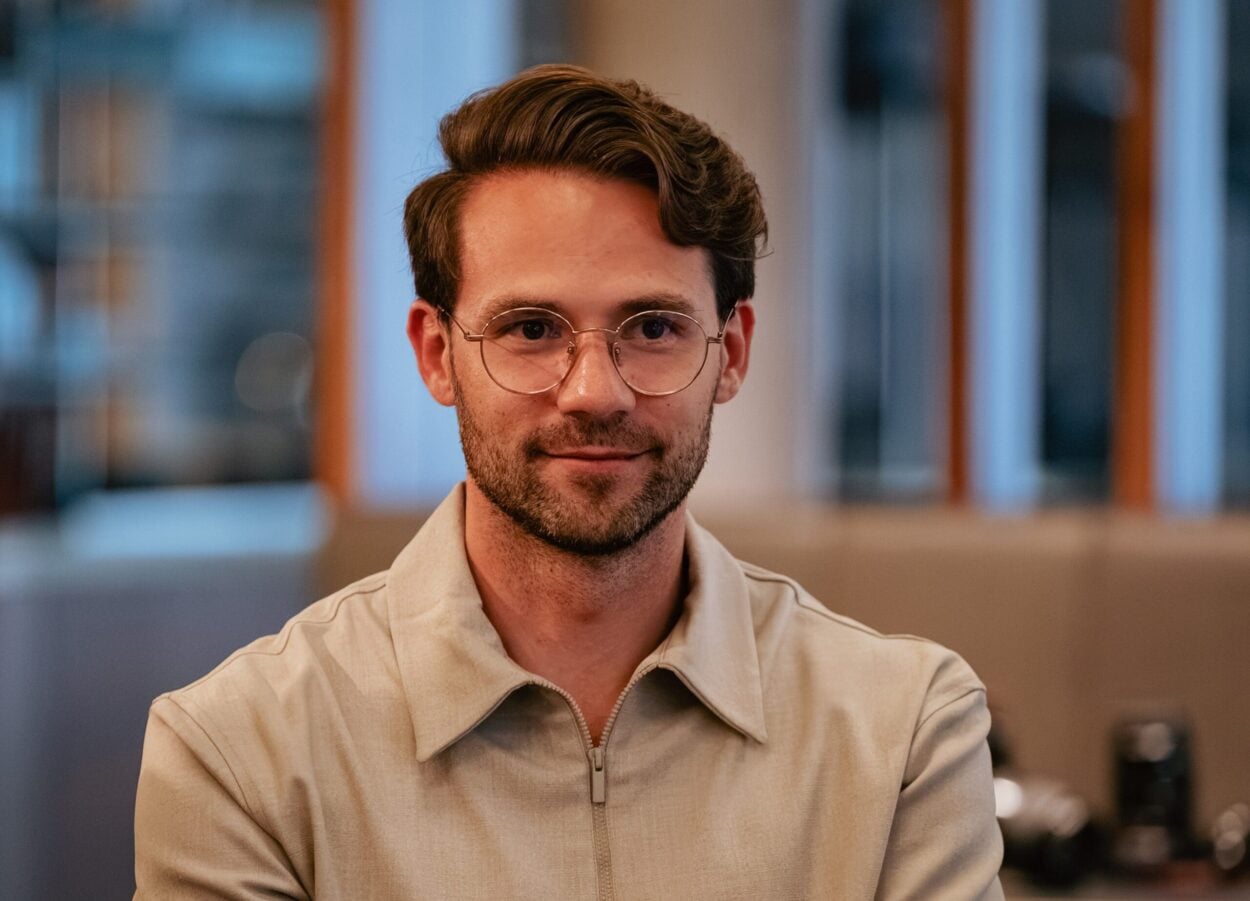

Venture investors spend their careers judging how founders build companies. Few get to test those principles by building an investment firm of their own. After more than five years at AltaIR Capital, rising from portfolio manager to portfolio director, Alexander Zhuravlev left in early 2023 to launch Mento VC.
At AltaIR he took part in dozens of exits and worked with companies including Miro, an online whiteboard platform; Deel, a payroll platform for international teams; and Sunbit, a point-of-sale lender. Assets under management grew twelvefold during his time there.
We spoke about what he carried over, what he left behind and the harder side of investing – missed opportunities, bets that fail and how to say no without burning a relationship.
What’s the biggest lesson you’ve drawn so far about how a modern venture fund should operate?
Probably that a venture fund has to do more than provide capital. Capital has become a commodity. The real value is helping a company grow faster and make better decisions.
At AltaIR, I looked at tens of thousands of startups and took part in more than 200 investments. Starting my own fund taught me something else: trust is hard to scale. A GP’s job isn’t just closing deals but building a long-term reputation with founders and investors.
That’s why I’m keeping Mento VC focused. I’d rather make fewer investments and be useful to the companies we believe in. Ideally, the best founders want you on the cap table not just for the check, but because they believe you can improve their odds of success.
While you were responsible for portfolio management, AltaIR grew from roughly $50M to $600M in assets under management, while the portfolio went from around 70 to 30 companies. What made that scaling possible?
I don’t think it came down to one “secret ingredient.” It was a systematic approach. Venture is less about isolated flashes of insight than about process quality and discipline.
We built an operation that could screen around 10,000 startups a year without lowering the bar. We kept refining the selection process, went deeper on data, expanded our founder and fund network and put real weight on post-investment work.
The lesson was to scale decision quality, not deal count. When tens of thousands of companies pass through your pipeline, it’s easy to invest on autopilot. The hard part is saying no to most opportunities and concentrating on the few exceptional companies.
Did that philosophy carry over to Mento VC?
Yes. That’s the model I’m building at Mento VC. The idea is to look at thousands of companies, invest in very few, and make sure each investment has the potential to return the fund.
Was there anything from the traditional venture fund model that you deliberately didn’t want to carry over?
A few things. One was the idea that you need to invest broadly so you don’t miss the next unicorn. I’m more comfortable being highly selective. That can mean passing on hundreds of good companies to save capital and time for a few outstanding ones.
The second was bureaucracy. At many larger funds, a decision can take weeks. Startups move too quickly for that, so I wanted a structure where a decision can take hours rather than weeks, without sacrificing the analysis behind it.
I didn’t want founder relationships to revolve only around a transaction, so we start building them before there is a deal to discuss. Our focus is on B2B AI applications and enterprise software, where I have spent years and know the market well.
What kinds of AI companies are you looking for?
Not the foundation models. They require a huge amount of capital, and I don’t think that’s where we have an advantage. I’m more interested in the application layer – companies taking AI and using it to solve a very specific business problem. The basic test for me is: if you remove the word “AI” from the pitch, is this still something customers really need and will pay for? If not, it’s probably a feature rather than a company.
By 2023, AltaIR was already a mature institutional fund with a strong track record. Why leave then and start over?
It wasn’t an easy decision. AltaIR gave me experience, a team, the opportunity to take part in hundreds of investments and a close-up view of how a successful fund gets built. I’m grateful for that chapter.
I wanted to test myself in a different role. By then I knew the kind of fund I wanted: focused, fast in its decision-making and close to founders. I felt that if I didn’t try it then, I probably never would.
Did starting a fund feel like becoming an entrepreneur yourself?
Yes. It was the riskier path. Building a fund is a lot like building a startup: no brand, no assets under management and no guarantee it will work. I wanted to go through that experience myself, and I haven’t regretted it.
What problem in venture still hasn’t been solved, and why might a smaller fund have a shot at it?
How to scale an investment business without losing decision quality or proximity to founders.
Large funds have enormous resources and strong brands, but size creates constraints. A multi-billion-dollar fund has to put much more capital to work, creating pressure to write larger checks, deploy more broadly and often move into later stages. Eventually, the need to deploy capital can start shaping strategy alongside company quality.
A smaller fund has a structural advantage. We don’t have to invest just to deploy capital. We can choose a few dozen from several thousand and still have every investment matter.
The decision-makers are often the same people who met the founder, analyzed the company and will work with it afterward. There aren’t five layers between the founder and the decision-maker.
In venture, you inevitably get a lot of calls wrong. How do you deal with passing on a strong company or backing one that doesn’t work out?
It doesn’t get easier with experience. It gets calmer.
Early in your career, every miss feels personal. Pass on a future unicorn and it’s easy to think you failed. Over time you realize you can’t get every call right. Some companies we passed on became huge successes. Others we believed in didn’t work out.
What matters is whether the decision was sound given the information we had. If the process and reasoning were solid, I can live with the outcome. Venture is a game of probabilities, not absolute precision.

We review the companies we passed on too. Did we misread the market, underestimate the founder, decide too quickly or make a disciplined call consistent with our strategy?
Those reviews help us make better decisions next time. With experience, you stop regretting individual deals. Venture isn’t won by never being wrong. A few strong decisions can outweigh everything else.
Your job requires you to say no constantly. Has your approach to those conversations changed?
A lot. Early on, a decision feels binary: invest or don’t invest. With time you realize that very few decisions in venture are final.
At Mento VC, we think in terms of “not now.” Given the company’s stage, metrics, valuation, the market or our level of conviction, we may not be ready to invest. Three, six or twelve months later, the same company can look completely different.
It’s important to explain that. We can be wrong too, and I never want to talk to a founder as if I’ve handed down a final verdict.
So what makes a pass useful rather than damaging?
You have to explain the real reasons. We give one or two concrete reasons rather than hide behind “too early for us” or “doesn’t fit our thesis.”
I’ve seen companies we passed on grow fivefold, and suddenly we’re asking for a chance to invest. A conversation around one financing round can start a ten-year relationship. You should be able to say “not now” so that a year later the founder still wants to call you.
Where do you see Mento VC in five years? What should distinguish it from other new funds?
I’d like Mento VC to be known less for its size than for the quality of its decisions and its reputation.
Raising capital is only the beginning. The real test comes seven to ten years later, when you can see whether the fund has built an exceptional portfolio and earned founders’ and investors’ trust.
Success would mean some of the best B2B AI companies want Mento VC as an early investor – not for the biggest check, but because we understand the market, move quickly and can genuinely help.
And I hope we don’t lose what often disappears as a fund grows. If founders are still saying, “They’re straight with you, they decide fast and they’re still around when things get hard,” I’d be very happy with that.
For more startup news, check out the other articles on the website, and subscribe to the magazine for free. Listen to The Cereal Entrepreneur podcast for more interviews with entrepreneurs and big-hitters in the startup ecosystem.
