Some professionals don’t fit the mould. In fact, it’s often the most talented, high-impact workers who quietly carry more than their share of work, especially in specialised fields like deeptech. These individuals can often define the direction and pace of progress in startups and small business, yet leading them is anything but straightforward.

The University of Oxford’s PINCH project joins EIT Health’s Deep Tech Venture Builder programme to transform pain management in young children.

LovOn, a US-based AI-powered bonding platform for couples, raised $850,000 in pre-seed funding to launch the most human-like AI coach designed to help couples navigate their relationship challenges, from intimacy to domestic conflicts.

CEOs are taking over our social feeds, with one in three (30%) building up such a following that they now see themselves as influencers. That’s according to new research from BT, which finds execs now see their social media presence as critical to their business strategy.

Virgin StartUp, the not-for-profit incubator for UK business founders, has opened applications for its fully-funded business accelerator, Empower 100, which is exclusively aimed at under-represented business owners based in Greater London.

Startups today face more complexity and competition than ever before. Having a great idea is no longer enough. Success depends on how quickly founders can build the right support around them – whether that’s forging strong connections, accessing funding and mentorship, gaining access to the right talent at the right time, having flexibility, or becoming part of a strong community.

In an age where every click, swipe, and search can be tracked, stored and analysed, data privacy is no longer a luxury but a necessity. From social media profiles to medical records and financial transactions, personal information is constantly collected and processed, often without understanding or consent.

The Worshipful Company of Entrepreneurs hosted the Entrepreneurs’ Award in Social Innovation (EASI) Final at The Skyline Rooms in London on 27th May.

Every Q4, Christmas gift guides fill magazines, newspapers, and online publications. And every year, thousands of startups are caught off guard, trying too late to get their products featured.

Every year, The Apprentice finale sparks lively conversations about the merits of the candidates, including what it means to be a successful entrepreneur. The boardroom drama, the sharp suits, the elevator pitches – it’s designed for TV, but it also reflects how many still view business: competitive, high-stakes, and full of ebullient characters.

In today’s fast-paced and often high-pressure work environment, stress has become part of working life. So, what can leaders do to mitigate its impact on their teams? One very effective yet often overlooked way to reduce workplace stress is by building trust.

The US National Institutes of Health (NIH) has long been a pillar of global medical research and the lead agency of the United States government for biomedical and public health research. The NIH has been instrumental in advancing medical knowledge and improving health outcomes through its extensive support of clinical trials.

GE Aerospace has completed its transformation from a sprawling conglomerate into a focused aviation company. The ge stock now represents a streamlined business centred exclusively on aircraft engines and propulsion systems.

Inven, a Finnish technology company building an AI-native deal sourcing platform to uncover the full global private market, has announced the closing of a $12.75 million (€11.2 million) series A round.
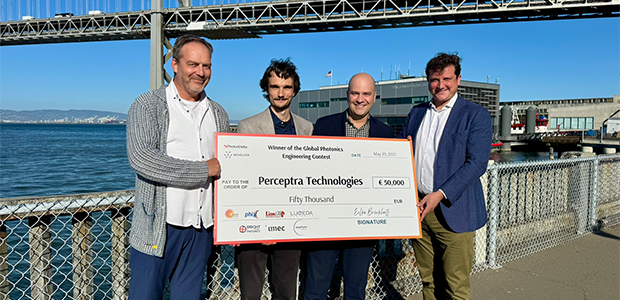
Photonic chip industry accelerator PhotonDelta has announced the winner of its global engineering contest. Perceptra was judged to be the submission with the best new application of photonic chips designed to tackle global challenges.

Women occupy less than two-fifths of executive leadership positions in the UK’s FTSE100 companies, with new data warning it will take 18 years to close the gender gap.

In 2025, MedTech World continues its global journey of connecting innovators, investors, and healthcare leaders. Following successful gatherings in Dubai and Houston earlier this year, it heads to the Bay Area, then on to Hong Kong, before culminating in the flagship summit in Malta, each event crafted to advance innovation in medical technology and healthcare.

Jamie Boyd is a former professional rugby player who suffered a career-ending knee injury aged 24. He took a £3,000 loan from The Prince’s Trust (now known as The King’s Trust) to lease a van and put in 70-hour weeks to build a nationwide same-day courier operation, Today Team, from scratch.

Nick Taylor is the Co-Founder and CEO of Building Atlas, a platform on a mission to improve the rate and cost of building retrofits by using data and AI.

From AI-powered platforms to climate-tech game changers, these startups are shaping the future – and taking centre stage at this year’s London Tech Week.