

The startup advantage no one is talking about

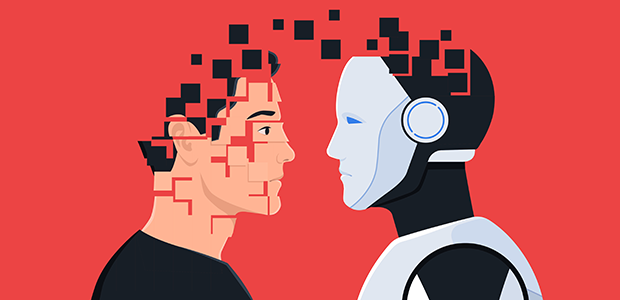

Google, ChatGPT, Amazon Rufus – a retailer chatbot. Take your pick. Within seconds, you have answers. Too many answers. Conflicting advice, outdated products, warnings about combinations you have never heard of, and a wall of options that makes ignoring the headache feel easier than choosing wrong.
What looks like a minor consumer frustration is actually a signal of something bigger. Healthcare e-commerce does not have a pure technology problem. It has a trust problem, and AI is about to expose it at scale.
The hidden fragility in AI-powered self-care
AI is accelerating across every industry, and self-care is no exception. However, healthcare e-commerce has a hidden fragility that most people overlook. It relies entirely on accurate product data.
AI can only work with what is attached to a product record. Ingredients. Claims. Usage instructions. Contraindications. Age suitability. Interactions. Even basic category labelling.
Yet across brands and retailers, that information is still too often incomplete, inconsistent, or simply incorrect. One platform lists an ingredient, another misses it. One implies a use case, another contradicts it. A third repeats a claim that is not even approved. Those disconnects are not cosmetic. They are the foundations that the entire experience sits on.
When AI sits on top of fragmented data, it does not fix the mess. It amplifies it. If the data says the wrong thing, the model will repeat the wrong thing, confidently and at speed. In healthcare, that is not a minor UX bug. It is a safety risk.
This is why I keep coming back to a simple reality. The quality of the AI experience depends on the quality of the underlying product data. Right now, that foundation is not strong enough to support the agentic future we are racing toward.
And once trust breaks, there is no easy reset. People do not give you infinite chances with their health. If a recommendation feels unreliable, the consumer retreats. They either self-diagnose in isolation or abandon the category completely. Either way, the system loses.
Agentic shopping is becoming the front door
Right now, people still search for products. Very soon, they will ask an assistant what to do. Instead of scrolling results, they will say, “What should I take for this headache?” or “What do I need for dry eyes?” and expect one clear answer.
We are watching a shift from “show me options” to “choose for me.” AI shopping agents are becoming the first line people consult, whether the industry is ready or not. The pace of this will surprise a lot of people, because it is not waiting for perfect regulation or universal comfort. It is happening because it is convenient, and convenience always wins adoption.
This future has two possible paths.
Path 1: confusion and mistrust:
Consumers bounce between assistants, pulling from different datasets. Recommendations contradict each other. People lose confidence and retreat into self-diagnosis.
Path 2: clarity and safety:
Consumers use an assistant inside a trusted retail or pharmacy environment. It draws from a verified OTC catalogue, follows human-written safety rules, asks clarifying questions, and escalates anything uncertain to a professional.
Same AI interface. Completely different outcome. The difference is not the cleverness of the model. It is the discipline of the data and the human guardrails that sit underneath it.
This is the part many people miss. In healthcare, you do not need a free-range genius. You need a supervised system that behaves safely.
What human-led AI looks like in practice
When I say ‘human-led AI’, I do not mean humans hovering over a chatbot. I mean, humans owning the truth and the guardrails that AI depends on. In healthcare, AI can scale decisions, but it cannot be left to define what is clinically correct, compliant, or safe. That responsibility stays human.
In practice, this starts with the foundations that consumers never see. Traceability, verified supply, authenticity in-market, and product data that is clean enough to be trusted everywhere it appears. If any of those layers are weak, AI does not quietly fail. It fails loudly, at speed, and in a way that damages trust on behalf of the brand.
This is where AI is genuinely powerful. It can automate the heavy lifting, spot inconsistencies, monitor marketplaces, and surface risks long before a human team could.
However, the job of defining ‘correct’, setting safety thresholds, and continuously verifying what the system is allowed to recommend must be human-led. AI accelerates the work. Humans make it trustworthy.
Many teams working in OTC e-commerce face this exact problem. AI can scale operations and surface issues quickly, but human experts still carry responsibility for verification and compliance because that is what keeps the consumer experience safe and reproducible. The specifics vary by brand, but the model is always the same: scale with AI, govern with humans.
The startup edge in regulated markets
This is also why the startup advantage in regulated markets is often framed the wrong way. People assume startups win by removing humans and letting AI run faster. In trust-heavy categories, the opposite is true. Startups win when they use AI to multiply the best people, not replace them.
If you operate in a space where a wrong recommendation creates harm, then trust is not a feature. It is the product. That means you need experts who set standards, verify outputs, and take accountability when something goes wrong. AI can extend its reach dramatically. It cannot inherit their judgement.
Startups get to build this operating model from day one. You can hard-wire governance into the product instead of bolting it on later. You can move quickly without becoming reckless because the safety system scales alongside the business. Incumbents often try to automate judgement first, then spend years repairing trust when the system oversteps. Challengers can avoid that trap.
The future belongs to startups in regulated and high-stakes commerce that treat AI as scale, and treat human expertise as the centre of gravity. The strongest teams will not be the ones with the fewest people. They will be the ones where top people can do far more, faster, because AI is built to serve their judgment, not substitute it.
What founders should take from this
A few practical lessons fall out of all of this, and they apply far beyond healthcare.

First, fix your data before you chase smarter AI.
Your assistant will only ever be as safe as your product record. If your catalogue is inconsistent, the model will be inconsistent. If your ingredients or claims are wrong, the model will be wrong. Clean data is not a back-office function anymore. It is a product strategy.
Second, be transparent about AI use.
Some founders treat AI like a secret weapon they cannot admit to. In healthcare, that is the wrong instinct. Transparency builds trust. If AI is involved in the journey, say so, explain how it is governed, and show what your human oversight looks like.
Third, keep compliance and governance human-led.
AI can support decisions, but humans must define the rules, monitor the outputs, and audit safety. Compliance should not be something you outsource to a model. It should be something you design around.
Fourth, treat compliance like a brand asset.
Done properly, governance becomes credibility. It is not a cost centre. It is a reason people choose you. If you can make safety visible, people reward you for it.
Healthcare is the hardest category here. If you can build trust-first AI in healthcare, you can apply the same playbook to finance, legal, safety-led retail, or any high-stakes space.
The future is trust heavy, not AI only
The next breakout companies will not be the ones with the flashiest AI demos. They will be the ones whose AI is trusted because it sits on verified data plus human accountability.
AI is becoming the front door to self-care. The question is whether that door opens onto clarity and safety, or onto chaos and confusion.
We should never aim for full autonomy in healthcare. We should aim for scalable power under human responsibility. The winners will be the startups that understand that trust is not automated. It is built, guarded, and earned, one correct recommendation at a time.
2025-12-05
