

British AI company Wayve secures over $1 billion to develop AI for self-driving vehicles

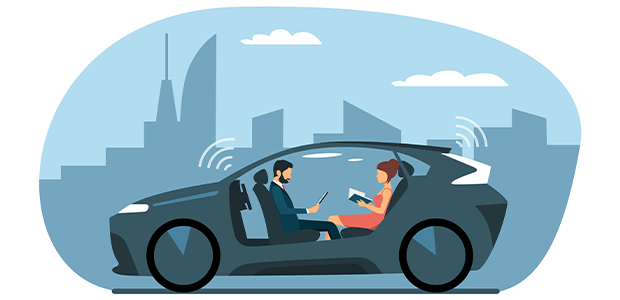
UK AI company Wayve has announced a $1.05 billion investment to develop the next generation of AI-powered self-driving vehicles, marking the biggest investment in a UK AI company in history.
Backed by SoftBank Group, NVIDIA and Microsoft, Wayve will use this investment to develop and launch the first “embodied AI” technology for self-driving vehicles in the UK.
Embodied AI will enable self-driving (otherwise known as automated) vehicles to learn from and interact with a real-world environment, including the ability to navigate and learn from situations that do not follow strict patterns or rules, such as unexpected actions by drivers or pedestrians – going far beyond the capabilities of existing AV technology.
Today’s investment cements the UK’s position as a world leader in these emerging industries, with both the self-driving vehicle and AI sectors bringing huge potential for economic growth as they develop. Between 2018 and 2022, the UK self-driving vehicle sector alone generated £475 million of direct investment and created 1,500 new jobs.
As the self-driving vehicle industry grows in the UK, it is expected to be worth £42 billion and create 38,000 more skilled jobs by 2035. The AI sector also already employs more than 50,000 people in the UK and contributes more than £3.7 billion to our economy every year. By 2035, our AI market is forecast to grow to over $1 trillion.
Founded in the UK in 2017, Wayve is a home-grown British success story and a testament to the UK’s global leadership in creating the economic and regulatory conditions for start-ups in the AI and self-driving vehicle industries to grow and thrive.
Wayve has said that their advancements in self-driving vehicle technology have been supported by the UK’s Code of Practice: Automated Vehicle Trialling, which sets out a clear framework to support and promote the safe trailing of self-driving vehicle technology. The code of practice is world-leading in its pro-innovation and flexible approach towards the development and testing of self-driving in the UK.
It relies on the company taking accountability for safety, without the requirement for onerous regulatory processes and red tape. Wayve has said the UK’s approach has been integral to their ability to build AI for assisted and automated driving so quickly.
Prime Minister Rishi Sunak said: “From the first electric light bulb or the World Wide Web, to AI and self-driving cars – the UK has a proud record of being at the forefront of some of the biggest technological advancements in history.
“I’m incredibly proud that the UK is the home for pioneers like Wayve who are breaking ground as they develop the next generation of AI models for self-driving cars. The fact that a homegrown, British business has secured the biggest investment yet in a UK AI company is a testament to our leadership in this industry, and that our plan for the economy is working.
“We are leaving no stone unturned to create the economic conditions for businesses to grow and thrive in the UK. We already have the third highest number of AI companies and private investment in AI in the world, and this announcement anchors the UK’s position as an AI superpower.”
Alex Kendall, Co-founder and CEO of Wayve said: “The UK has a rich and inspiring AI heritage, which lives on today with top talent, world-class universities, and innovation-friendly regulation, bolstered by events like the AI Summit. Today, we are proud to contribute to this legacy with our announcement of a $1.05 billion Series C investment round, the largest-ever AI fundraise in UK history.
“The UK’s progressive testing framework has supported our rapid development of cutting-edge AI, and we’ve been pleased to work with the Government on the Automated Vehicles Bill which gives investors confidence that the UK is truly a leader in AI and AVs.
“This investment will help us launch our Embodied AI products and expand our operations globally. It sends a crucial signal to the market of the strength of the UK’s AI ecosystem, and we look forward to watching more AI companies here thrive and scale.”
Wayve’s investment comes as the UK’s Automated Vehicle Bill is set to conclude its passage through parliament in the coming weeks and will lay the foundation for innovative British companies like Wayve to scale up and deploy their self-driving technology to increase safety and unlock a market worth up to £42 billion.
The Automated Vehicles Bill will unlock a transport revolution by enabling the safe deployment of self-driving vehicles – reinforcing the UK’s position as a global leader in this high-growth industry and deliver one of the world’s most comprehensive legal frameworks for self-driving vehicles, with safety at its core.
Under the Bill’s provisions all self-driving vehicles will be required to undergo robust safety testing before they are permitted to drive on UK roads. The Bill will also ensure clear legal liability when a vehicle is driving itself by creating new legal entities responsible for self-driving vehicles.
Self-driving vehicles also have the potential to make transport safer, more convenient and more accessible, improving the lives of millions of people. With 88% of accidents currently involving human error, there is also huge potential for automated vehicles to reduce costs, injuries, and fatalities.
Secretary of State for Science, Innovation, and Technology, Michelle Donelan said: “This investment is not only a vote of confidence both in our status as an AI and innovation powerhouse, but in the broader steps we have taken to make the UK a magnet for investment and growth.
“Wayve are a true homegrown success story, and today’s investment represents one of the largest ever backings for a UK start up. This injection of money will put the UK at the heart of driving forward new, cutting-edge AI solutions for self-driving vehicles, made possible by our pro-innovation approach to managing this generation-defining technology.
“We are already a world leader in AI, and this is further evidence that the UK is now firmly the global destination for tech innovation and growth.”

Business and Trade Secretary Kemi Badenoch said: “This is the latest in a long line of fantastic investments in the UK automotive sector, coming hot on the heels of major commitments by BMW, Jaguar Land Rover and Nissan.
“The Government’s plan for advanced manufacturing is working, and this $1 billion investment in Wayve will ensure that cutting-edge technologies of the future are made in Britain.”
Transport Secretary Mark Harper said: “Self-driving cars will revolutionise road travel – making it safer and more convenient for everyone.
“Our Automated Vehicles Bill paves the way for their safe use in the UK, and opens the door for investment into innovative British companies like Wayve – putting the UK at the forefront of a growing global industry. This is an important part of our plan to grow the economy and create high quality jobs into the future.”
The UK already has a world-leading technology sector, with the UK becoming only the 3rd country (behind the US and China) in the world to have a tech sector valued at over $1 trillion in total.
The UK is also an Artificial Intelligence superpower – being home to 3rd highest number of AI companies and private capital investment in AI in the world. The UK also accounts for around half of all AI private capital investment in Europe and hundreds more AI companies are starting up in the UK every year, growing our economy and creating highly-skilled, well-paid jobs.
Some of the world’s biggest AI companies including Open AI and Anthropic have chosen London as the base for their first international offices in a huge vote of confidence in our approach to AI. Microsoft recently announced a new AI hub in London, and one of the leaders in the field, Google DeepMind was also founded here over a decade ago and remains in the UK to this day.
The Government is committed to delivering a regulatory approach that drives both safety and innovation when it comes to AI, which we’ve set out in our response to the AI Regulation White Paper. The UK has not rushed to legislate due to the rapid evolution of this technology. Instead, we are focused on strengthening our understanding of the risks and empowering the UK’s expert regulators to act using their existing powers and remits.
As part of this, we’ve also invested £100 million in the world’s first AI Safety Institute to evaluate the risks of new AI models and demonstrated global leadership shown by hosting the world’s first major summit on AI safety at Bletchley Park in November. This means that, unlike in the EU, founders are not facing sweeping legislation which attempts to regulate the development of AI across all sectors.
For more startup news, check out the other articles on the website, and subscribe to the magazine for free. Listen to The Cereal Entrepreneur podcast for more interviews with entrepreneurs and big-hitters in the startup ecosystem.
