

Why Tink’s founder is betting on compliance for his next startup


Businesses spend an average of eight days a month dealing with regulation, according to research by Department for Business and Trade’s Business Perceptions Survey 2024. In addition, 63% say that the time spent complying with regulation is a burden, Business Perceptions Survey 2024 reported.
Compliance, is therefore, considered a significant drain for businesses with regards to time, money, and resources. Smaller businesses, in particular, struggle to even gain a dedicated compliance team to handle this.
To tackle this, the founders of Tink, an open banking platform acquired by Visa in 2022, have come out of stealth to launch a new startup called Freda.
Freda is essentially an AI-powered compliance assistant that helps businesses understand the rules they need to follow, work out what they need to do to comply, and automate much of the admin involved in keeping compliant.
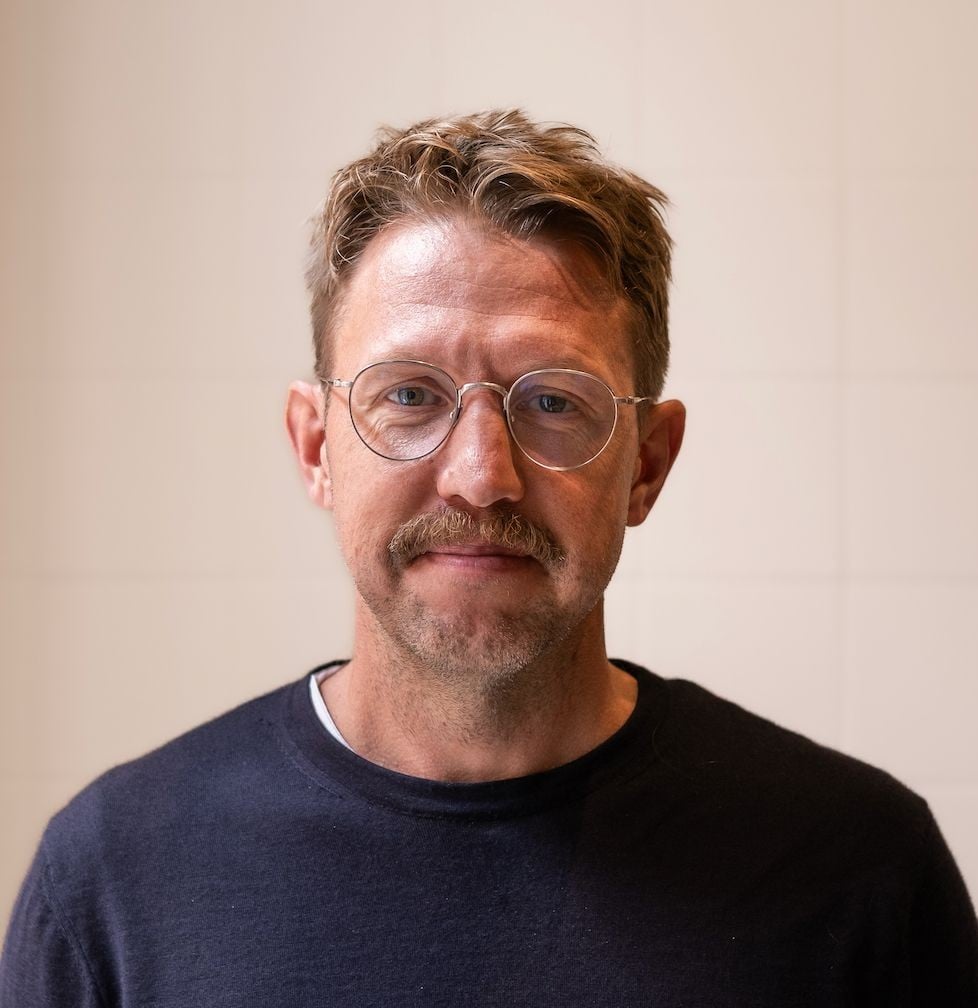
Daniel Kjellén, Co-Founder and CEO at Freda, provided some insights into his transition from Tink, the world of compliance, and the promise Freda has to offer other businesses.
Can you tell me a bit about yourself? How did you end up in the startup world?
I have always been an entrepreneur at heart. I started my first company at 21 and sold it while finishing my economics degree in Gothenburg. I then went on to start my career in investment banking at Carnegie, which was a scaled-up learning curve of everything I had encountered through university and running my own business – it’s where I set a new bar for the quality of my work, and where I built the toolbox that would later prove invaluable to me in my journey as a founder.
I was introduced to my eventual Co-founder Fredrik by a mutual friend, and we saw a chance to build something new together, at a time when European banking was about to undergo significant transformations.
We founded Tink in Stockholm in 2012, at a time when your bank did not have a mobile app yet, and ‘fintech’ was not close to an established term. The next 10 years were spent helping move European banking from closed systems to open ones. By the time Visa acquired us in 2022, we had around 700 people across Europe.
Our experience at Tink motivated us to build again – the longer you are exposed to the market, the more problems and needs you notice, and the biggest one we kept coming back to was compliance. Freda was created as a result of this.
You scaled Tink into a 700-person company operating across multiple markets before its acquisition by Visa. What did that experience teach you about the challenges of compliance, and at what point does it become a significant barrier to startup growth?
That compliance isn’t a ‘one-and-done’. Compliance is all the obligations that a company has – be it towards its employees, customers, or the law. It is something a business builds towards constantly, and every compliance decision rests on hundreds made before it – for example, a choice about how we stored customer data upon Tink’s founding ended up obstructing our engineers’ ideas five years later.
Compliance is complicated enough if you operate in one market, and in an industry where the rules are fairly stable. But as anyone building with AI in Europe today knows, regulations are ever-changing and reach into every small part of your business, especially when you’re scaling your company or building in a high-trust sector.
This becomes a barrier especially as a business grows across markets and into new sectors, because suddenly it’s not enough to know how Swedish banking regulation works – you also need to know the consumer, data, and licensing rules in every country (or state) you enter, how they interact with each other, and how to respond in a consistent way. At Tink, we ended up answering to three regulators, and as a result watched product launches slip by months and years in a sea of at-first seemingly small approvals and reviews.
Compliance remains a major challenge for businesses, reportedly costing European companies billions each year. Why do you think it has yet to be effectively solved, and where are existing approaches falling short?
Compliance is often treated as a legal problem, but in reality, it encompasses almost everything a company does. It turns up in places you’d never expect it, like a line of marketing copy or whether an Engineer is allowed to connect two systems into one. That’s why none of the tools we tried at Tink solved our compliance headache. They would fix one node of the network, but the obligations around it would all bleed together eventually anyway.
The other reason is that the technology simply wasn’t ready to fix such a complex problem. Compliance is made of text, and every company’s obligations depend on how that text uniquely applies to the business. Traditional software can track deadlines or store documents, but a person still has to read the law and work out what it means for their specific business. The first wave of compliance software got around this by narrowing its focus to one type of company or one standard, but this has the obvious flaw of only fitting a very narrow subset of businesses.
Today, language models have changed what’s possible. Agents can read a regulation, reason about what it means for a specific company, and keep acting on it across the various small decisions that together form compliance. This is what let us build Freda to be fully bespoke to each company’s obligations, whether that’s an international healthtech company or a chicken farm in Italy.
You have invested $3 million of your own money into Freda rather than immediately seeking external funding. What drove that decision, and how are you approaching the early stages of building this venture differently?
We knew what product the market needed, and thanks to where the technology is today, we could afford to build it without having to divert energy to thinking about raising external capital. A few years ago, a product of this scale would have needed hundreds of people – we’re currently a team of 22.
Venture funding is a great opportunity when you have a clear idea of how you want to scale and where the business is heading, and we’ll very likely raise as we grow. But so far, we’ve wanted the freedom to build the full product and give it the time it needed. When we do raise, we want the money to fit the plan, not the other way around.
Having built and scaled Tink before launching Freda, what have you learned about entrepreneurship that you wish you had known the first time around? Has your approach to building a team, managing risk or making decisions changed?
At Tink, scaling operations usually meant hiring more people. At Freda, we use AI in every part of the business, which means we can keep the team small and rely on deep expertise instead. This means every person in our team has real ownership over their work. We trust everyone’s unique specialism and experience, and we’ve learned that not every call needs a meeting when you trust the person making it.

As a second-time Founder, risk looks different to me as well. At Tink, we had to prove our idea step by step, starting narrow and expanding. Today, the trust we’ve earned in the ecosystem, combined with our decision to fund the early build ourselves, has meant we could take on a much bigger problem and launch only when the full product was ready.
Building this way has taught me another important lesson: outside noise is often just that – noise. There is a time and a place for strategising around the next valuation or what your competitors are up to, but don’t let it cloud your mission of solving a very real problem for very real people. At the end of the day, that is the value you will provide for your customers.
Freda aims to use AI agents to map and continuously manage a company’s compliance operations across multiple markets. How do you see agentic AI changing compliance, law and consulting over the next few years, and what should startup founders be doing now to prepare?
Oversight will get harder. A company with 20 employees can now run thousands of AI agents that answer customers or write code and iterate on products. The problem is that agents don’t read company handbooks or have common sense, and they certainly don’t keep up with new legislation, which matters a lot in a field moving as fast as AI.
This means that many companies now inadvertently have a large workforce that nobody is overseeing, because, of course, no human team can review thousands of decisions made in a day. So increasingly, we will need agents to check the work of other agents, with people overseeing that operation.
For law and consulting, I think the coming change is good news. Humans will stay in the loop for moments when a judgment call is really needed, instead of spending their days retrieving documents and doing paperwork. Lawyers and compliance officers will actually get to use their craft, which is what most of them trained for in the first place.
Anything else?
Compliance can sound abstract, so a word on what Freda actually does for businesses. Freda is a compliance platform built on AI agents. It identifies which laws, regulations, and standards apply to a company based on where it operates, what it sells, and how it runs, then its agents check and carry out the compliance work across the company’s systems. This happens continuously and in the background.
We also see Freda as support for compliance teams. They’ve been asked to do the impossible, and we want to give them a system that does the reading and checking so they can spend their time on the decisions that need an expert.
For more startup news, check out the other articles on the website, and subscribe to the magazine for free. Listen to The Cereal Entrepreneur podcast for more interviews with entrepreneurs and big-hitters in the startup ecosystem.
