

The next generation of entrepreneurs won’t all look like the founders we’ve celebrated before
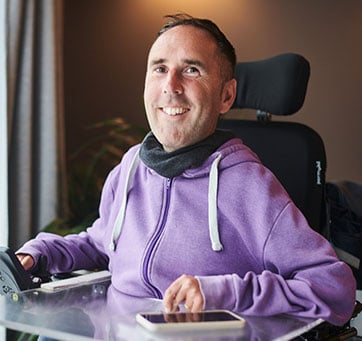
A few years after leaving my employed job in London in 2011, I found myself gallivanting around Barcelona, working with the Catalan Tourist Board to showcase the region’s accessible tourism offering.
I’ve always loved Spain. The language, culture, friendly people, and sunshine. Spending weeks exploring one of my favourite cities, meeting tourism professionals, and creating content was a dream come true.
And I was doing much of it from my smartphone.
For someone who has used a powered wheelchair since the age of three, with limited dexterity and personal care support around the clock, that freedom was extraordinary.
It also taught me something about entrepreneurship that feels increasingly relevant today.
The successful founders of tomorrow won’t necessarily look, work, or live like the entrepreneurs we’ve traditionally celebrated.
Technology is changing who gets to participate, how businesses operate and what independence really means.
From physical limitations to creative possibilities
I was born with spinal muscular atrophy, diagnosed at 18 months old. Throughout my life, technology has helped me overcome barriers, from wheelchairs and hoists to smartphones and voice-controlled devices.
Independence has never meant doing everything physically myself. It’s about having control over my choices and opportunities.
When I started creating online content in 2009, computers were essential but often cumbersome. Typing, navigating websites, and moving a mouse could require considerable effort.
Smartphones changed that.
Suddenly, I could write, photograph, film, and publish while travelling. That freedom helped me develop Disability Horizons, co-found accessible accommodation platform Accomable, later acquired by Airbnb, and eventually establish Purple Goat, an inclusive marketing agency.
Today, artificial intelligence is creating another shift, with implications for entrepreneurs everywhere.
Find the friction before finding the technology
Think about how much time you spend researching a business idea.
Searching keywords, opening websites, scrolling through articles, watching videos, comparing information, and taking notes.
For me, those tasks have always carried an additional physical cost. But even without a disability, they consume enormous amounts of time and mental bandwidth.
AI tools such as ChatGPT allow me to explain an objective, explore possibilities, organise research, and move towards practical decisions much faster.
The lesson for any founder is simple: identify the repetitive tasks draining your time and energy before deciding where AI might help.
Perhaps it’s market research, planning, administration, or organising information.
You don’t need to automate everything. Start by removing the friction that stops you doing your most valuable work.
Use AI to make business more human
One of my favourite examples comes from business development at Purple Goat.
Finding prospective clients, media opportunities, and potential partners used to feel overwhelming. There were countless organisations and people I could approach, but researching them properly took considerable effort.
Now I use AI-assisted research and scheduled workflows to identify a manageable handful of relevant opportunities each day.
I can understand the organisation, why an opportunity might exist, who to approach, and what might make a meaningful introduction.
AI helps prepare the groundwork and sometimes an initial message. I then check the research, refine the wording, and make the approach my own.
Rather than replacing relationships, AI creates more space for them.
That’s a principle any entrepreneur can apply. Let technology handle some of the preparation, but keep your judgement, curiosity, and personality firmly in charge.
A generic automated message rarely builds a meaningful relationship. A well-researched, thoughtful conversation might.
The untapped potential of different founders
This matters particularly when we consider who has historically been excluded from entrepreneurship.
I served on the steering board of the Lilac Review, which examined barriers facing disabled entrepreneurs.
Its research highlighted that disabled entrepreneurs and people with health conditions account for approximately 25% of UK small businesses, yet contribute just 8.6% of total small business turnover.

The review estimated that removing barriers could unlock £230 billion in additional economic potential.
That’s an extraordinary opportunity.
But the implications go beyond disability.
Parents juggling childcare, people with caring responsibilities, founders managing health conditions, and anyone lacking traditional resources can benefit from tools that reduce unnecessary demands on their time.
Of course, AI isn’t a magic wand. It can make mistakes, and its outputs require critical thinking and verification. The technology itself must also be accessible and affordable.
But used thoughtfully, it can help level aspects of a playing field that has never been particularly level.
Redefining entrepreneurial success
Alongside Purple Goat, I’m developing initiatives through Purple Collective, including helping hotels introduce hoists so more disabled people can travel.
AI supports everything from researching potential partners to organising complex project information. It also helps me navigate the practicalities of everyday life, including accessible travel, equipment, and care arrangements.
That matters because entrepreneurs don’t leave their personal circumstances at the office door.
We all have different demands on our time, energy and attention.
Perhaps the future of entrepreneurship isn’t about celebrating whoever works the longest hours, attends the most networking events, or manages everything single-handedly.
Perhaps it’s about recognising who can bring together ideas, people, and technology to create something valuable.
And perhaps the next great founder is someone whose potential was always there, but whose circumstances previously made the journey unnecessarily difficult.
Entrepreneurial success shouldn’t be measured by what someone can physically do, but by what they can imagine, organise and create.
For more startup news, check out the other articles on the website, and subscribe to the magazine for free. Listen to The Cereal Entrepreneur podcast for more interviews with entrepreneurs and big-hitters in the startup ecosystem.
