

Real-time market analysis through custom indicators


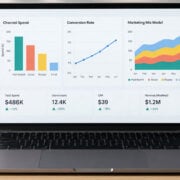
Ask any business owner what they keep open on a second monitor, and a dashboard is likely to be near the top of the list. Revenue, cash flow, and customer numbers are all refreshed as quickly as the data allows. Currency traders work more or less the same way, but their figures can change by the second. When prices move that quickly, having the right information at the right moment matters.

Why standard indicators only go so far
The scale of the FX market is hard to overlook. The Bank for International Settlements’ latest Triennial Survey found that global foreign exchange trading averaged $9.6 trillion a day in April 2025, up 28% on three years earlier. London remains the world’s largest FX trading centre, accounting for roughly 38% of global activity. In a market of this size, the tools used to interpret price movements are becoming increasingly important.
Most charting platforms arrive with a familiar selection of technical indicators. Moving averages, the Relative Strength Index (RSI), Bollinger Bands, and the Moving Average Convergence Divergence (MACD) are usually included in the package. They are useful and widely understood, which is precisely why they are so generic. Take the 14-period RSI, for example. Thousands of traders using the same settings see the same readings, even if they are looking for different things.
Custom indicators help traders to create their own calculations and display the results directly on a chart. MetaTrader 5 comes with 38 built-in technical indicators and 44 analytical objects, yet it offers real flexibility with the MQL5 programming language. MQL5 allows developers to build custom tools, while 21 chart timeframes offer different perspectives on market movements from one-minute to monthly intervals.
What happens inside a custom indicator
The mechanics behind a custom indicator are not that complicated for a beginner. Much of the work happens through a function called OnCalculate. MetaTrader 5 runs this function when price data changes, usually whenever a new market tick arrives. The official MQL5 documentation explains how the function receives arrays of open, high, low, and close prices, alongside volume and spread data.
A well-designed indicator does not need to process the entire price history every time a new tick arrives. Instead, it keeps track of the data it has already analysed and updates the latest values.
Custom indicators can serve several purposes. Some combine existing measures, such as filtering a moving-average crossover so it only triggers when volatility exceeds a set threshold. Others encode context a standard tool ignores, like shading the hours when the London and New York sessions overlap. A third group focuses on changing market conditions, so traders receive alerts when spreads widen, or prices move unusually.

A lesson from Sterling’s record low
The value of real-time analysis becomes clear when markets move outside normal working hours. In late September 2022, following the government’s mini-budget, sterling fell by almost 5% in early Asian trading. It touched around $1.035, its weakest level against the dollar since decimalisation in 1971.
Much of that move happened while UK desks were empty. A custom indicator tracking volatility against the time of day could have flagged the unusual movement and sent an alert before most London traders had switched on their screens. It would not have predicted the fall. No indicator can. What it offers is awareness at the right moment.
Founders managing currency exposure on overseas revenue will recognise this principle. Timely information does not solve a problem on its own, but late information almost always makes the situation worse.

A marketplace built by independent developers
There is a distinctly entrepreneurial side to all of this. MetaQuotes, the company behind the platform, launched its MQL5 Market in 2011 as a storefront where developers could sell indicators and trading robots directly to users. In its first year of sales, custom indicators were the most popular category by volume, accounting for 45% of products sold.
The ecosystem has grown considerably since. By early 2022, MetaQuotes reported 430,000 total sales through the marketplace, while its freelance service had completed more than 120,000 commissioned development orders. For a solo developer with a sharp idea about market behaviour, it works much like an app store with low barriers to entry, a global audience and a crowded field where quality and reviews decide who lasts.
Treating indicators like a product
The strongest custom indicators are built with the same discipline a founder would bring to software. Testing is a good place to start. An indicator that looks brilliant on historical charts may simply have been tuned to fit the past, a problem known as overfitting. Back-testing across different market conditions, then running the tool on a demo account before relying on it, exposes weaknesses early.
Another common trap is repainting, where an indicator quietly revises earlier signals once new data arrives. On a historical chart, the arrows look perfectly placed. In live conditions, they were never there when it counted. Checking how a tool behaves bar by bar, rather than in hindsight, separates useful insight from a flattering illusion.
Keeping things simple might also be more useful. Adding more settings and calculations does not automatically make an indicator better. The most effective tools often focus on answering one specific question clearly, rather than trying to track everything at once.
Turning market data into actionable insights
Custom indicators cannot make currency markets predictable, nor can they guarantee better trading decisions. Their value lies in helping traders focus on the information that matters to them. In a market where billions of pounds change hands every day, knowing what to look for can be just as important as having access to the latest data. The challenge is to build tools that provide useful signals without mistaking past patterns for future certainty.
