

CES Unveiled Milan 2026: Insights on trends in consumer technology

CES Unveiled Milan 2026 brought together businesses, startups, and industry leaders to explore the technologies shaping the future of consumer markets.
Brian Comiskey, Senior Director, Innovations and Trends and Futurist at CTA, gave a talk on the trends he was noticing. His role requires him to oversee stock market indexes that track emerging technology sectors and analyse trends.
When he gave his talk, he said that AI is no longer an experimental tool used by startups, but a technology that is being actively incorporated and widely used.
He also noted that AI has the potential to transform grid intelligence, autonomous vehicles, healthcare, and entertainment.
Whilst at CES Milan, Deputy Editor, Roshini Bains sat down with Comiskey to dive further into the emerging trends hitting consumer technology and how consumer technology may change in the future.
From experimentation to consumer life
Consumer technology is usually easily incorporated in everyday life, but the reality is that it can take around five to 15 years to move from commercial availability to widespread everyday use.
If we look at smartphones, for instance, in 12 years ownership went from roughly one-third of adults to nine in ten.
This has led businesses to ask what might be the next emerging technology that is likely to become commonly adopted by consumers.
For Comiskey, that technology is quantum. “The 2030s could be the quantum decade. Quantum technology starts as an enterprise play, but as it moves beyond experimentation, its underlying capabilities will increasingly affect everyday consumer life, from basic search functions to security, where quantum cryptography could play a role,” he says.
He says that greater AI development, however, is more likely to hit consumers slightly earlier than quantum.
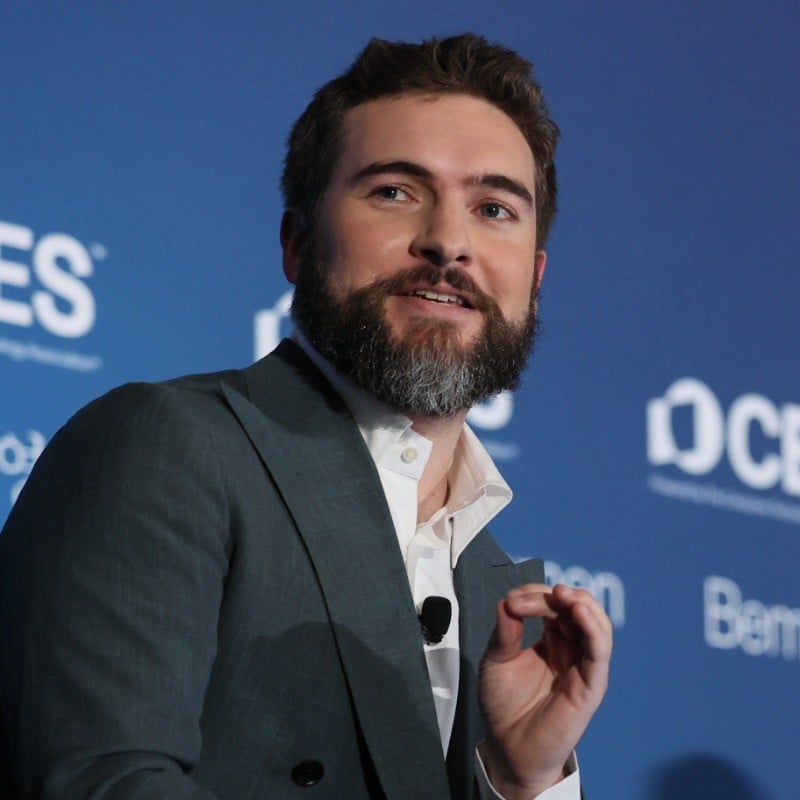
“Agentic AI has largely been an enterprise play, but we’re now starting to see consumers gain access to it, at least in the US,” he adds.
“If, by the end of the decade, consumers are using agents every day to manage information they’ve chosen to share and move seamlessly between apps, that fundamentally changes how the consumer economy works.”
He believes that by the end of the decade consumers could move from an app economy to an agentic economy where, “people have digital proxies acting on their behalf, getting things done more efficiently.”
AI: a potential misunderstanding
AI is dominating every sector and many businesses have begun adopting this software into hardware technology.
Concerns around AI’s impact on society, the environment, discrimination, and regulation continue to grow.
Comiskey says founders should be aware of the potential issues around AI, but also be aware that they are the best people to push for changes and better AI development.
“The opportunity for founders is to identify the people developing these solutions, partner with them and build a community around that work,” he says.
He adds: “Ultimately, if you’re a founder in this space, it’s about recognising that people have legitimate concerns and approaching them with empathy. But it’s also about going beyond awareness. When you’re building your business plan, ask yourself: if these are the challenges, and I genuinely want to solve them, how am I going to approach them?”
Comiskey says that consumers often misunderstand AI, especially with how it will be used and what its utility will actually be.
“There’s an overarching belief that you can throw a large language model at something and it will be the perfect tool for the job. That might work when you’re dealing with a vast amount of information and need to distill it quickly,” he says.
“But in a specific industry, like healthcare, you might use a small language model or even something that isn’t language-based at all, such as symbolic AI.”
“When people talk about the future of AI, they tend to focus on the generative AI pathway. But there are so many different types of models and approaches that there will never be a one-size-fits-all solution. It will be about finding what works best for your industry,” he says.
“That’s why I think comparing AI to the internet makes sense in terms of its disruptive potential, but in terms of adoption and application, it’s actually closer to cloud computing.”
“I think that’s the biggest thing people are getting wrong: they assume AI will follow a single path, when in reality, there will be many,” he says.
How to make robots mainstream
In 2024, nearly 20 million consumer robots were sold, with countries such as South Korea seeing consumers readily adopt this technology.
Comiskey says it is not discussed enough how consumers are already beginning to interact with robots, pointing to the widespread adoption of robotic vacuums and floor washers as examples of how the technology is becoming part of everyday life.
He says that the autonomous vehicle industry will see a greater inclusion of robotics and consumer interacting with these technologies.
“I describe it as ‘robotics in motion’. In San Francisco, you see autonomous vehicles everywhere, while other cities have barely experienced them. As national regulatory frameworks become more established, I think autonomous vehicles will become a major route for bringing robotics into everyday life.”
The incorporation of humanoid robotics is slightly more complicated because there needs to be an assurance that they are safe to interact with humans and their environment. Also, robotic dexterity requires sophisticated capabilities that are hard to develop, and therefore further incorporate.
“Another important change is how robots are being built. Traditionally, companies tried to develop the entire robot from scratch,” he says.

“Increasingly, they’re using common chassis designs while concentrating their efforts on the software and the components that perform specific tasks, such as the hands. This allows them to reduce costs and focus on the parts that matter most.”
Ultimately, better capabilities and lower production costs will make humanoid robots more useful and more affordable, which should help drive wider adoption, according to Comiskey.
He says that broader adoption will most likely happen in households in the 2030s.
Underappreciated technologies
With such a focus on AI, other technologies and innovations may be neglected when they in fact show a lot of potential for innovation and investment.
For Comiskey, this is space technology. “What’s happening in this sector is incredible,” he says.
“One example is a South Korean company called Space Map, which is working on mapping satellites and other objects in space, including their trajectories. This helps companies plan satellite launches and avoid collisions, creating a safer, more coordinated space environment and enabling a more coherent space economy,” he says.
Comiskey says that there are exciting developments around putting data centres in space and how this can help us power these centres more sustainably.
“This idea is extremely challenging, but not impossible. Google, for example, is exploring this through plans to test the concept,” he says.
“If it works, it could fundamentally change how we power our technology infrastructure. You could harness solar energy in space to support computing, potentially reducing the environmental impact of data centres on Earth,” he says.
“If we start using space-based solar energy to power large-scale computing, we’d be taking a fascinating step forward. It’s an incredible prospect.”
CES Foundry
Comiskey concludes by touching upon the CES Foundry, a dedicated programme within CES focused on AI and quantum technologies. Rather than being a traditional exhibition area, it combines panel discussions, fireside chats, live technology demonstrations, networking opportunities, and startup engagement in a single space.
“The stage presentations and panels are great, but Foundry also puts a strong emphasis on live demonstrations. When people can see how a technology is actually being used, they have a much better understanding of how they can deploy it themselves. That helps drive adoption much more quickly,” he says.
“CES does a great job of bringing people and innovations together, but programmes like Foundry make attendees feel as though the event has been created specifically for them, and that’s incredibly valuable,” he concludes.
For more startup news, check out the other articles on the website, and subscribe to the magazine for free. Listen to The Cereal Entrepreneur podcast for more interviews with entrepreneurs and big-hitters in the startup ecosystem.
