

STFC backs health start-ups at Daresbury Laboratory

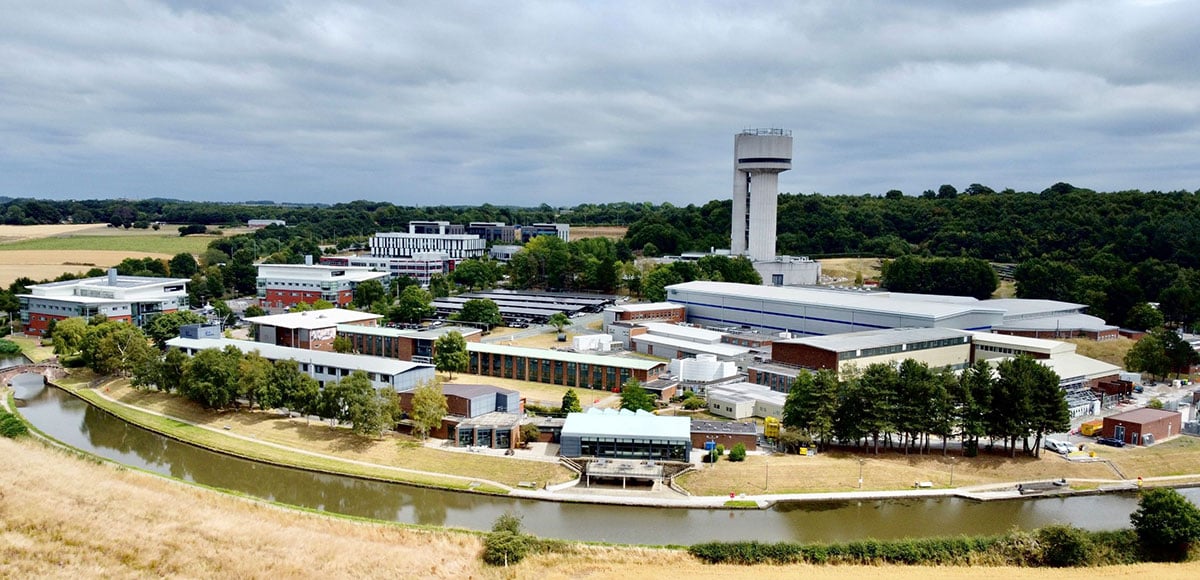
Seven pioneering health-tech startups are developing new technologies to improve how patients are diagnosed, treated, and supported at the Science and Technology Facilities Council’s (STFC) Daresbury Laboratory.
From a wearable robotic arm to support stroke rehabilitation to a new method for assessing eye conditions, these innovators are developing technologies to improve patient outcomes and healthcare.
The companies are the latest to join STFC’s DeepTech Catalyst Health (DTC Health), which helps early-stage businesses bring new ideas to market faster, to improve lives and succeed in global markets.
Innovation for real-world solutions
Located within the Sci-Tech Daresbury campus in the Liverpool City Region, DTC Health provides startups with a tailored support package worth up to £70,000, helping them turn breakthrough ideas into real-world healthcare solutions faster.
Launched in 2024 with £1.8 million from the Liverpool City Region Combined Authority Innovation Zone Programme, the DTC Health incubation programme sits within the growing North West Health Cluster, giving startups access to resources rarely available at an early stage.
These include AI and prototyping facilities, expert business guidance, and intellectual property support, to accelerate the development of products that benefit patients, create jobs, and strengthen the UK’s health innovation ecosystem.
Innovation for better patient care
The latest startups to join DTC Health are:
- UKind XR: trauma-informed VR and AI support for the wait before therapy. Built by a survivor and backed by real-world evidence, UKind XR gives employers, healthcare providers and frontline services a way to offer people immediate, confidential, emotional support, with no waiting list and no stigma
- Eyetech Innovations: developing a portable device that measures eye movement excursions, with the potential to support clinicians in assessing a range of neurological and ophthalmic conditions
- HMA Technologies: developing a wearable robotic arm support that could help stroke survivors carry out intensive rehabilitation exercises independently at home, supporting recovery beyond traditional clinical settings
- Beyond Blood: developing portable blood-testing technology that combines artificial intelligence with advanced microfluidics to deliver laboratory-quality results closer to patients, in clinics, community settings and, in future, at home
- Asika: developing AI agents for hospitals and clinics which automate administrative workflows, reducing paperwork and driving operational efficiencies
- CCI Photonics: developing an AI-enhanced diagnostic platform that uses infrared light to detect and assess infections rapidly at the point of care, helping clinicians make treatment decisions sooner
- InformiX Pharma: helping pharmaceutical companies develop better medicines by using advanced 3D X-ray imaging to understand how medicines are structured, supporting the design of more effective treatments
Pioneering better health outcomes
STFC’s Paul Vernon, Executive Director of Business and Innovation, and Head of Daresbury Laboratory, said: “From helping stroke survivors recover mobility to developing new medicines, these pioneering companies are turning ambitious ideas into technologies that could transform healthcare and improve lives.
“Through DTC Health, STFC is giving early-stage businesses access to the expertise, facilities, and support they need to take their ideas from the lab into the real world.
“By backing the next generation of health technologies, we are improving patient outcomes, creating high-value jobs, and strengthening the UK’s position as a global leader in deep tech innovation.
“In doing so, we are supporting the Government’s Modern Industrial Strategy and helping build a more resilient, prosperous and innovation-led economy.”
A leading hub for growth
The DTC Health incubation programme is part of STFC’s nationwide network of technology commercialisation programmes, collectively known as the STFC DeepTech Catalyst, collaborating with industry-leading partners in specialised fields.

Recently ranked among the Financial Times’ Europe’s Top SME Hubs 2026, the DTC helps startups access the facilities, expertise, and investment needed to grow into globally competitive businesses.
Driving economic impact
Since 2011, the DeepTech Catalyst has supported more than 230 startups, which have collectively:
- raised more than £720 million in private investment
- created over 1,100 high-skilled jobs
- achieved a 95% survival rate over five years
- generated an estimated £32 in direct economic return for every £1 invested
The programme also contributes around £125 million in gross value added to the UK economy each year.
Supporting UK Modern Industrial Strategy
As part of UK Research and Innovation, STFC uses the DeepTech Catalyst to support the UK government’s Modern Industrial Strategy.
This includes the eight sectors it identifies as having the greatest growth potential over the next decade.
It also has a critical role in driving economic security and resilience, delivering net zero, and promoting regional growth.
