

The myth of the lone genius

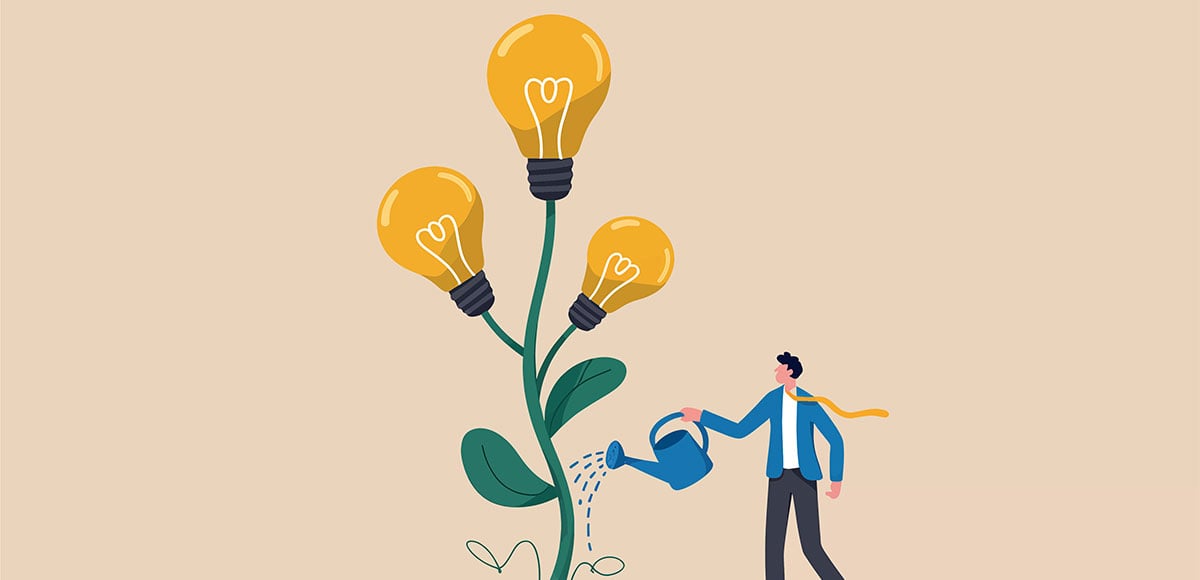
Every industry has its version of the lone genius.
The founder working late in an empty office, or the now cliché garage start-up. The prodigy who builds a company from pure inspiration. The brilliant mind who sees what nobody else can.
It’s a compelling story. It’s also mostly fiction.
Most ideas don’t appear fully formed in isolation. They begin as fragments – a thought, a question, a desire for a solution, an irritation with how something works – and develop through interaction with other people. Through stress testing and debate, disagreement and shared perspective.
The spark may come from one person. But the end idea almost never does.
Going a step further, creativity is far more social than we like to admit.
We tend to think of inspiration as an internal process, driven by talent or intelligence. Ideas are associative, they develop with exposure. Inspiration comes when different experiences and perspectives collide. A comment in a meeting reframes a problem. An overheard conversation connects two unrelated thoughts. Someone challenges an assumption you didn’t realise you were making. Everyone sees the world differently and that difference is fundamentally one of the best attributes to inspiration and, eventually, ideas that become businesses.
These moments are rarely planned. They happen informally, often accidentally, and spontaneity, or even serendipity, cannot be overlooked.
But they almost always require proximity.
And that’s where the way we work is changing.
Over the last decade, digital tools have made it possible for teams to collaborate from almost anywhere around the globe. For many organisations, colleagues rarely share the same physical space. Work happens through scheduled calls, messaging platforms and project management systems designed to support business growth.
The benefits are clear: speed, flexibility, efficiency, and access to global talent. Some could argue there’s a quality-of-life benefit.
But as the workplace has evolved, something quieter has also disappeared. Those unscripted interactions where many ideas begin go away when the virtual meeting is over.
Casual conversations, overheard discussions, what we used to call ‘water cooler conversations’. The ability to watch how someone else approaches a problem. The moment when someone from a completely different team offers a perspective that shifts your thinking. Even seeing what someone is wearing and getting inspiration from one another’s self-expression.
These exchanges are difficult, if not impossible, to recreate digitally. They rely on presence rather than scheduling, and lighting can’t strike in digital bottles in the same way it does in those moments over lunch, as people pack up in a meeting and share a final thought, during after work socials, or simply in passing.
When people work in proximity, ideas not only move faster, but so does their vetting.
Talent is essential, but it rarely operates in isolation. Talent compounds when ideas spill between people working near each other. People absorb information simply by being around others who are solving similar problems. This is known as knowledge spillover or agglomeration economies – where clusters of talent outperform isolated individuals.
Successes are shared and refined. Problems are surfaced & vetted earlier. Knowledge spreads between teams almost without effort because they’re in front of everyone all at once – there is a shared challenge which in turn creates a shared solution.
Over time, this creates momentum, which leads to opportunity.
At Second Home, where we operate shared workspaces in London and Lisbon, this is a core tenant of how we integrate our community. We look at diversity as a core strength and create an environment where different people and companies can collaborate. We host monthly events across our spaces that are designed for exactly this purpose – bringing people from different backgrounds together so they can share ideas and grow. We have multiple examples of member companies collaborating and creating separate businesses together, or several others growing from a handful of people into significant businesses in just a few years. Their progress rarely comes from a single breakthrough moment but instead from being in an environment where ideas evolve constantly through interaction with others.
People learn from what’s happening around them and physical space plays a larger role in this than many organisations realise. And often this oversight gets ignored.
Workplaces don’t just determine where work happens – the built environment shapes how people behave. Light, layout, colour, and movement all send signals about how people should interact. Rows of individual desks encourage focus, but rarely conversation. Closed doors reinforce hierarchy. Corridors move people through space without encouraging them to stop.
Shared environments behave differently and foster better outcomes, for individuals, teams and companies.

Spaces that include kitchens, lounges, event areas and informal meeting points naturally bring people together. They create serendipitous moments where conversations happen without intention and with people from another place or company. A passing remark becomes the beginning of a new product or partnership.
Many of the most important conversations in business start this way, unintentional, unplanned and without any motive.
Company culture is often discussed in abstract terms — values, behaviours, mission statements. But culture is also physical. It’s embedded in the environments people move through every day.
Design can either encourage openness, inspiration and interaction, or quietly discourage it.
Hybrid work isn’t going away, and nor should it. It brings flexibility that many employees value and businesses benefit from. But if organisations want creativity and innovation to thrive, they need to think more deliberately about the moments when people do come together.
Offices should not simply be places for individual work. They should be places designed for interaction – workshops, shared meals, cultural events, and the informal conversations that build relationships over time and create great ideas.
Ideas rarely emerge in isolation.
They grow through dialogue, exposure and proximity.
The lone genius may be a powerful myth. But in practice, creativity is almost always collective.
And the environments we build play a significant role in whether it happens.
For more startup news, check out the other articles on the website, and subscribe to the magazine for free. Listen to The Cereal Entrepreneur podcast for more interviews with entrepreneurs and big-hitters in the startup ecosystem.
