

International Women’s Day: women in tech call for action


This year’s International Women’s Day theme is Give to Gain, encouraging generosity and collaboration.
Give to Gain emphasises the power of support and reciprocity. When people, organisations, and communities generously give, opportunities for women increase. This can be in the form of shared knowledge, mentorship, infrastructure, and visibility, among other initiatives, to contribute to women’s advancement.
The technology industry is still trying to shake the tech bro reputation. Women often experience being one of very few, or the only woman, in the room where decisions happen, AI is being built on biased data, and very few women hold decision-making roles in tech companies.
This International Women’s Day, women in the industry have explained what give to gain means to them, what still needs to be done, and why AI is a big hurdle in equality.
What does Give to Gain mean for women in the industry?
Samantha Wessels, President EMEA, Box, explained: “This year’s International Women’s Day theme, ‘Give to Gain’, is a reminder that progress is about bonding with your community. To promote fairness and equality within the workplace, you need to take an active role in advocating for change, communicating, and knowledge-sharing. Diversity and inclusion doesn’t happen simply over time. It happens when people and organisations choose to invest in each other. When companies promote trust, opportunity, and real allyship, they gain stronger teams, better ideas, and cultures where people actually want to stay and grow.
“Within industry, it’s about the everyday actions: amplifying someone’s voice in a meeting, sponsoring emerging talent, creating space for flexibility, and being intentional about who gets visibility and stretch opportunities. Small, consistent acts of support compound over years.”
Mandi Walls, DevOps Advocate, PagerDuty, said: “While IWD may be about women, the goal at its heart is to make a stronger, fairer world that benefits everyone across their work and throughout society in general. Where businesses can stand out is acting as a lever, propelling greater opportunities and advancement in areas that have traditionally lacked female engagement and empowerment.
“This year’s IWD mantra of ‘Give to gain’ is especially fitting. What we share, we get back. If we want stronger, more experienced teams, more profitable businesses, and a fairer society, then we need to be intentional in our reciprocity.”
Martha Peterson, Security Incident Programme Manager, Pipedrive, said: “Gender equality in tech doesn’t fail because we lack ambition or ability. It fails when progress is treated as optional, slow, or symbolic. Accelerating action means being willing to give a little extra time and thought into challenging the systems and assumptions that still decide who is seen, heard, and trusted to lead.
“You can’t be what you can’t see, and representation across leadership, technical roles, and decision-making tables continues to shape who feels welcome in this industry. But action matters more. That’s why we need structures that empower voices, encourage allyship, and turn intent into impact.”
Marisa Pereira, VP of People & Organisation, Storyblok on navigating gender balance: “When it comes to International Women’s Day, or any other ‘celebration’ day, we’re often under pressure to come up with a corporate slogan or social media post to show that we’re either observing or taking the day seriously. However, for us in leadership, the real work is found in the operational DNA of our companies. In the tech sector, ‘diversity’ has been a popular topic for a very long time and as a metric to be tracked, yet we often overlook the day-to-day friction that actually prevents women from thriving. If we want to move the needle, we have to stop treating inclusion as an HR initiative and start treating it as a basic requirement of our technology and our culture.”
There is still progress to be made
While the industry looks very different from even ten years ago, the pace of progress is slow, and a lot is yet to be done.
Meryem Habibi, Chief Revenue Officer, Bitpace, said: “International Women’s Day is both a celebration and a reality check. We should celebrate the progress women have made in leadership while also recognising there is still significant work to do. McKinsey’s ‘Women in the Workplace 2025’ report highlights that women make up nearly half (46%) of entry level roles in technology, yet hold just a quarter (25%) of C-suite positions. Progress is trickling through, but not fast enough and we need to do more to break through glass ceilings.
“As a woman leader in this space, I am acutely aware of how few women occupy senior roles. Early in my career, I rarely saw leaders who reflected my own path. That experience has shaped my commitment to visibility and mentorship, to boost women’s representation in boardrooms and decision-making roles. To truly make an impact, as leaders, we have a responsibility to mentor deliberately, challenge structural barriers and create environments where talent from different backgrounds can thrive.”
Belma Ibrahimović, Head of AI, saas.group, explained: “There is a lot more tech businesses, especially those operating in the AI space, can do to help tackle the gender imbalance. From equitable hiring practices and mentorship programmes to promoting inclusive workplace cultures and policies that support career advancement. Among these efforts, visible female role models are crucial for making a career in AI feel attainable. By placing more women in senior technical and leadership roles, creating opportunities for them to speak at industry events and share their personal success stories, companies can challenge entrenched norms and inspire the next generation to pursue careers in tech.”
All roads lead to AI
AI is becoming a driving force in equalising the playing field for men and women, however, it is also seeming to be driving inequality.
New research from the Women and Work APPG found that AI is at risk of reinforcing existing gender inequalities unless women are meaningfully involved in its design, governance, and deployment. The report shows how AI systems trained on historically biased data can replicate and scale discrimination in recruitment, progression, and evaluation in the workplace.
Linda Benjamin, VP, AND Digital commented: “AI is shaped by the data it’s built on, the questions it’s asked, and the people who design it. When historical data implicitly reflects gender imbalances, pay disparities, or other systemic biases, AI can learn and replicate those patterns, amplifying inequality at speed and scale.”
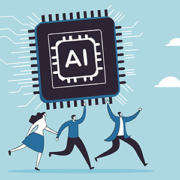
Marni Baker Stein, Chief Content Officer, Coursera, explained: “AI skills and capabilities are now top of the skills and productivity agenda for businesses and individuals alike, with data from our latest Job Skills report showing that uptake of Generative AI courses on Coursera has grown 234% year-over-year. With enrolments now averaging 15 per minute, this makes GenAI the most in-demand skill in Coursera’s history.
“Yet while AI adoption is accelerating, and learning drives along with it, women risk being left behind due to the well-established skills gap we are observing on the platform. The implications of this gender gap are profound. With GenAI having the potential to add $22.3 trillion to the global economy by 2030, GenAI skills gaps shall, if left unaddressed, translate into economic gaps.
“It’s critical that we empower women to develop the combination of technical and human skills required to enjoy the benefits promised by the AI economy. As human-in-the-loop processes continue to be imperative for effective AI deployment, learners who nurture exceptional critical thinking skills will be rewarded in their personal and professional lives. With sustained deliberate investment and targeted support, we can provide better access to GenAI upskilling for women, to scale skills more equitably and effectively, ensuring momentum translates into lasting outcomes for all.”
Belma Ibrahimović, Head of AI, saas.group on why closing the AI gender gap is key to tackling the issue of inherent bias: “Indeed, since the explosion in hype around AI a few years ago, the situation has in some ways got a lot worse. Many young women appear to be actively put off pursuing a career in AI in particular.
“Instead of framing the gender gap in terms of a moral or equitable necessity, we should perhaps focus on reframing it as a societal and economic requirement if we are to ensure that some of the most serious risks surrounding AI are mitigated. This is because every algorithm is only as good as the people who built it, how it’s developed, and how it’s used. This means that if an algorithm is, say, developed by a group of males of similar ages with similar backgrounds, it will most likely integrate some form of unintentional bias based on their commonalities. When those same groups also control how outputs are interpreted and used, the risk of structural bias increases. These structural biases could grow exponentially to create grave threats to businesses and individuals across society.
“AI may define the future. But if it continues to be shaped predominantly by men, it risks becoming a future designed without fully reflecting the needs and perspectives of half the global population. For businesses building AI systems then, diversity must be viewed not just as a ‘nice to have’ but as fundamental for relevance, fairness and long-term innovation.”
This International Women’s Day, take some time to think about how you can give back to the women in the technology industry, whether that is shining a spotlight on them, mentoring and sponsorship, or just making sure there are women in the room where decisions happen.
For more startup news, check out the other articles on the website, and subscribe to the magazine for free. Listen to The Cereal Entrepreneur podcast for more interviews with entrepreneurs and big-hitters in the startup ecosystem.
