

Making your mark when you’re ready for international trade shows

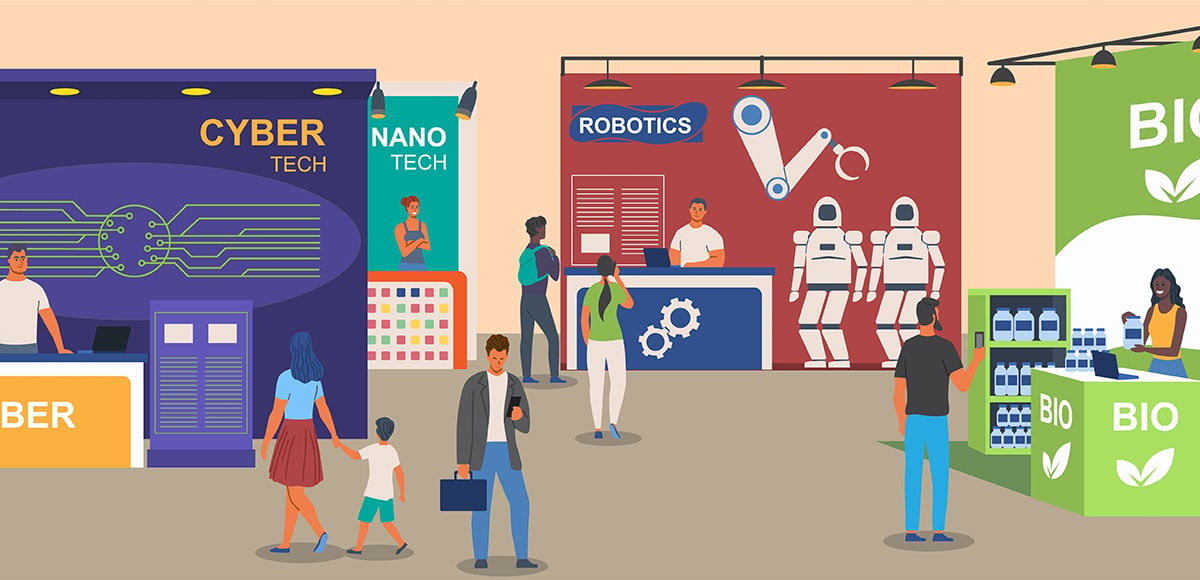
Startups fresh out of accelerators and rounds of funding hit us up all the time: “We’ve got funding now, but our branding’s a bit poor – few images, vague thoughts – and we need to compete globally against established giants.” They want to look and feel like a proper player across continents on a skeleton crew budget. It’s a real creative challenge, but doable if you nail the strategy right.
One of the best ways to elevate awareness of your startup is through international trade shows. In-person events remain the most effective driver of the bottom line, with 66% of marketers identifying them as their highest-revenue-generating channel heading into 2026, according to Splash Outlook 2025. Digital doesn’t build trust like face-to-face, where people touch, feel, and experience the brand. That’s what seals contracts, helps you find the right talent, and creates long-term engagement with consumers.
The core challenge: weak assets vs. big ambition
Startups sometimes show up with vague brand guidelines – basic images and half-formed ideas that unfortunately won’t cut it against global players at these events. First rule: only design to a confirmed budget. When looking for your experiential partner to deliver your first trade shows, you need to be aware that you won’t receive free concepts for investor decks; if the cash isn’t signed off, it’s a non-starter (at least, not with the best agencies). You’ve got to commit real money to make a proper splash, not scrimp and save.
The goal is to build something trustworthy and sophisticated, with messaging that lands perfectly for your audience. For example, a fintech startup with a Revolut partnership? Put it front and centre on the stand, right where people first engage. This provides an instant credibility boost – suddenly you look like a serious global player.
Here’s how to show up and make a real impact on the global stage.
Step 1: run a creative strategy workshop to build your unique identity
Kick things off with a proper creative strategy workshop internally and then with your chosen experiential partner, because insights always come first. You’ll review any existing assets (assuming they’re decent enough to start with), map out your brand vision clearly, and then dive into competitor analysis to carve out a truly standout identity that differentiates you in a crowded field.
For instance, if you’re targeting fintech crowds at Money20/20, think vibrant, disruptive, and youthful – they’re into crypto and fresh ideas, so lean contemporary to match that energy. Contrast that with Sibos banking events, where it’s all about grown-up legacy players seeking reliable partners; go for familiar, trusted environments there, steering clear of anything too flashy or nouveau.
A good experiential partner will back it all with solid data, they will look at trade show attendee reports for baselines, then they might use AI tools via Google to query specifics like “Sibos banking CTO top 50 global banks” and pull demographics on age, education, or profiles. That intelligence shapes every decision from there.
Step 2: go modular for scalable global execution
Once your strategy’s locked, your experiential partner will build modular from the ground up – create high-value core assets that can ship globally as a cohesive system, or produce them in-region depending on logistics and costs. The beauty is in adaptability for local audiences: use digital screens for quick content swaps, and design physical graphic frames that reuse across multiple shows without starting over.
For B2B, this stays nuanced – maintain that consistent global brand identity at the core, while layering in localised tweaks that don’t require expensive full rebuilds every time.
Keep it to one point of contact to manage the whole operation seamlessly.
Step 3: obsess over granular details to create elevated experiences
Finally, your experiential partner should elevate the whole thing with obsessive attention to the finer touches that most builders and suppliers completely miss – think premium soft furnishings and cushions for comfort, top-shelf coffee beans with your logo artfully frothed on top, or high-end alcohol and non-alcohol alternative selections that perfectly align with your brand for any after-hours parties. These details transform a standard space into something that feels like Soho House-level hospitality, making it genuinely worthy of attendees’ work time and attention.
Remember, in B2B one single attendee can hold a massive budget, so nailing 1000 targeted meetings will always outperform entertaining 10k casual consumers.
The results: trust to revenue
Do it right, and in-person crushes digital: the majority of marketing budgets go on events for that trust-to-contract conversion. Turn a shaky fintech space into a disruptor that talks the talk – or a reliable for banks. If you are funded and global-bound, then it is time to workshop your way to competing like the big boys.
For more startup news, check out the other articles on the website, and subscribe to the magazine for free. Listen to The Cereal Entrepreneur podcast for more interviews with entrepreneurs and big-hitters in the startup ecosystem.
