

‘I feared I was too small?’ You don’t have to build an empire to be successful in business

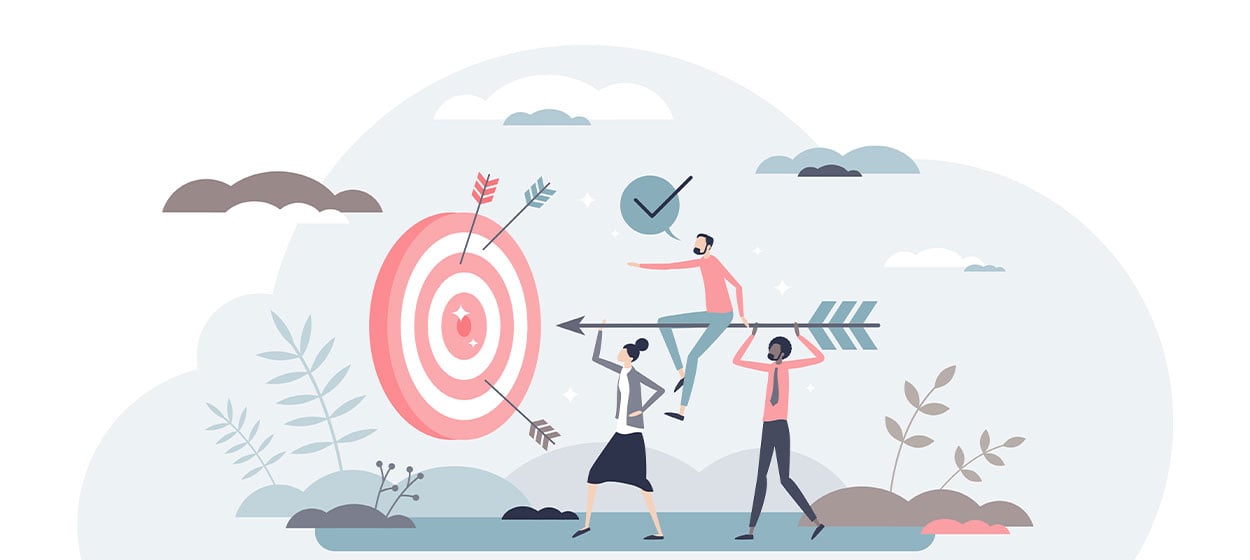
When you start a business, it’s easy to measure your success against other people’s expectations. Here, I share how I went from leading large corporate teams to running my own small business – and why I no longer see being small as something to prove wrong.
‘Am I too small?’
It’s a question I suspect more founders and business owners ask themselves than they let on. Perhaps you look at other founders building big teams, announcing impressive turnover figures or expanding into new markets and wonder whether you should be doing more. Whether your business is growing quickly enough. Whether you’re ambitious enough.
Or perhaps someone has made a comment that has left you questioning whether your business is a serious commercial venture or simply a nice little side hustle or hobby.
I know that feeling because I’ve been there myself.
When I was recently asked in an interview what had surprised me most about my career, my answer was that I’d ended up running my own coaching business, working solo without the safety net of a corporate job. And, strangely, the fact that this surprised me – well, it surprised me, too.
You see, my career had looked very different.
After university, I moved into banking, climbed the ranks relatively quickly and eventually found myself operating at director level. I led large teams, managed significant budgets and was accountable for major change and delivery programmes. I had a good reputation, earned a decent living and worked with some brilliant people. I felt I was making a difference, and I never really imagined doing anything else.
Then, in 2012, a health event knocked me sideways. The organisational support I had expected wasn’t there to help me get back on my feet, and it forced me to reconsider what I wanted from my working life.
It was the beginning of a change I could never have predicted. And, finding my feet as a founder
I didn’t have a grand business plan or a carefully mapped-out route into entrepreneurship. I picked myself up, considered my options and worked out what I wanted to do next. More than once.
I knew I wanted to work for myself and help people be at their best. I trained and practised as a nutritional therapist for a while – three years of studying that felt rather like training to become a medic! – before formalising my coaching qualifications with further training and accreditation.
Around 2019, Deborah Bulcock Coaching took shape in something close to its current form. The business has evolved considerably since then, but the focus on helping people has remained.
Going solo was daunting. I’d spent years working within large organisations, surrounded by specialist expertise, established processes, teams to lean on and budgets to work with. You don’t fully appreciate how much that infrastructure supports you until you no longer have it.
When you’re running your own business, you’re responsible for everything. You need to deliver your service, find clients, manage the finances, market yourself and make decisions without necessarily having anyone to turn to for advice.
And if, like me, you’ve started a business because you love doing something in particular, you may find that much of your time is spent on the things around it rather than the work itself.
Nobody had really prepared me for that.
When other people’s opinions become your own
One of the things I hadn’t anticipated was how other people would view my decision to leave corporate life. I heard comments along the lines of, “It’s nice to have a hobby” and “At least you won’t be working all those long hours.” I know they weren’t necessarily intended to be unkind, but there was an assumption that I was stepping into something smaller, less demanding and less commercially significant than the career I’d left behind.
And, in those challenging early years, I sometimes started to believe it myself – Was this it? Had I made a mistake? Was I supposed to settle for less?
The reality was that running my own business was harder than many of the corporate roles I’d held. I was responsible for every aspect of it, without an in-house expert to turn to or an investment pot to dip into. I wanted to spend my time coaching, but a significant amount of my time needed to go into business development, marketing and networking.
I was determined to make it work. I didn’t want to return to an employed role, and I wanted to build something I could enjoy, feel fulfilled by and rely on financially.
I also wanted to prove wrong the person who told me I’d never earn what I had earned in corporate life. I remember that comment!
But here’s what I’ve learned – you can spend an awful lot of energy trying to prove that your business is successful by somebody else’s definition.
You can chase growth because everyone else seems to be doing it. You can feel you need employees to look established, a bigger turnover to feel legitimate or a more impressive business model to convince people you’re serious.
But to what end?
I never needed to build an empire or sell a business to prove I’d succeeded. I wanted a business that was enjoyable, fulfilling and financially sustainable. I wanted to do work I cared about and make a difference.
Those things haven’t become less ambitious simply because they don’t require a huge organisation.
If you compare what I do today with my former corporate career, the difference in scale is obvious. I no longer lead large teams or oversee huge budgets. My business has a simple operating model, minimal infrastructure and a virtual team made up of other self-employed professionals.
But, small in size doesn’t mean small in impact.
I’ve worked with hundreds of leaders, helping them develop, perform at their best and make a meaningful difference within their organisations. I’ve written two books that have helped people in their own lives and work. Much of my business comes through recommendation, which tells me something important about the relationships I’ve built and the value people see in what I do.
I also intentionally invest in other small businesses because I know what a difference it makes when someone chooses to work with you, recommends your services or gives you an opportunity.
The impact of a business isn’t measured solely by its turnover, headcount or market share. Those things matter, of course. A business needs to make money and be commercially viable if it’s going to support you.
But impact also comes from the people you help, the relationships you build, the opportunities you create for others and the work you put into the world.

I do work I love. I make my own decisions. I can choose how I operate, who I work with and what I want my future to look like.
For me, that’s not going small. It’s creating something that is the right size for the life and work I want.
What does success look like for you?
If you’re starting a business, or trying to work out what the next stage should look like, I’d encourage you to pause before automatically reaching for the next growth target.
Instead, ask yourself a few questions.
- What do I actually want my business to give me? Is it financial security, flexibility, the freedom to do work you care about, the opportunity to make a difference or the challenge of building something bigger? It might be a combination of all those things. There’s no single right answer.
- What does financial sustainability look like for me? It’s important to understand your numbers, know what you need to earn and make decisions that support a viable business. But your definition of enough may be very different from somebody else’s.
- Am I growing because I want to, or because I think I should? More clients, employees and turnover can be brilliant if they’re taking you towards the business you want. But growth for its own sake can leave you with more responsibility, more pressure and a business that no longer fits the life you wanted it to support.
- Am I measuring my progress against my own goals or somebody else’s highlight reel? It’s easy to see another founder’s achievements without knowing what sits behind them: their resources, responsibilities, challenges or personal definition of success.
These aren’t questions you answer once and never revisit. Your priorities will change, and your business will probably evolve with them. Mine certainly has.
You don’t have to prove yourself by building an empire
I regularly speak to people who dream of doing something different. Some are still in corporate roles, wondering whether they could make a living doing something they care about. Others have already taken the leap but worry about whether their business will ever become financially viable.
Often, they talk about these things quite quietly, as though they’re embarrassed to admit what they want or unsure whether they’re allowed to aim for something different.
I understand that uncertainty. I didn’t have a detailed masterplan when I started, and I certainly didn’t know everything I needed to know about running a business. I worked things out along the way, learned from experience and kept going.
But with time, I’ve become much more comfortable with the professional journey I’ve taken and the choices I’ve made. I no longer worry so much about whether other people think I’ve gone small.
I’d never suggest that building a small business is easy, or that ambition and financial success don’t matter. They do. You need to know your market, communicate the value of what you offer, find your customers and keep an eye on the numbers.
But you also need to decide what you’re working towards and why.
You can build a business that’s ambitious without being enormous, commercially successful without becoming an empire, and meaningful without consuming your entire life.
So, if you’ve ever looked at your business and wondered whether it’s too small, perhaps the better question is this: is it delivering what you set out to achieve?
If it supports you financially, gives you work you love and allows you to make the difference you want to make, don’t underestimate what you’ve built. You don’t have to make your business bigger to make it count. And you certainly don’t need somebody else’s permission to decide what success looks like for you.
For more startup news, check out the other articles on the website, and subscribe to the magazine for free. Listen to The Cereal Entrepreneur podcast for more interviews with entrepreneurs and big-hitters in the startup ecosystem.
