

How journaling can help start up founders create headspace, set goals and stay on track
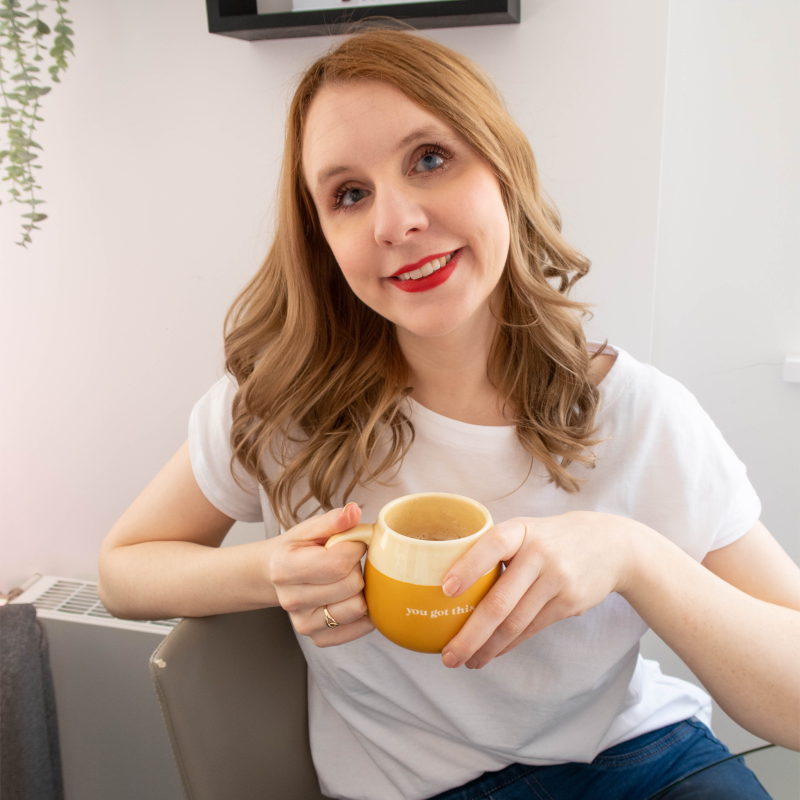

As a founder, there is always something else I could be doing… another email to answer, another idea to explore, another target to hit, another product to think about. I know how easy it is to get caught up in that constant feeling of what next?
For a long time, I thought being productive meant ticking things off, hitting the target and moving straight on to the next thing. If I achieved something, I rarely stopped to acknowledge it. I was already thinking about what needed to happen next. Looking back, I think that way of working can become exhausting, particularly when you are building your own business and there isn’t necessarily a clear point at which the work stops.
Journaling has become one of the ways I create some headspace around all of that noise. It gives me somewhere to put the thoughts, ideas, worries and ambitions that can otherwise keep going round and round in my head. And as the founder of a creative business, that feels particularly important to me.
I launched Rebecca Yates Designs from my kitchen table in 2019, after returning to art and creativity following a career in politics, Parliament and the tech and energy sectors. What started as a creative outlet has grown into a British independent stationery brand, with journals, planners and other creative products. But, my relationship with journaling started long before I became a business owner.
I have been writing journals since I was a child. I remember having a Groovy Chick journal and filling pages with whatever was going on in my world. As I grew up, journaling came with me through different chapters of my life – moving from Yorkshire to London, working in demanding environments, returning to creativity, starting my business and navigating difficult and hopeful times.
It has never been about having the perfect journal or writing something profound every day. Sometimes it has simply been somewhere to put what is in my head.
I think that is particularly valuable when you are running a business because your brain rarely gets to switch off completely. There is always an idea, a decision, a problem or something you could be doing. You can finish one task and immediately find yourself thinking about the next three!
The page doesn’t need anything from me. There is no audience, no algorithm and no expectation that what I write needs to be polished or shared. It is simply a space where I can be honest with myself.
One of the biggest things I have had to learn as a founder is that there is a difference between setting ambitious goals and attaching my sense of worth to whether I achieve them. I still love a big, scary goal. I still have things I would love to achieve and places I want to take Rebecca Yates Designs. But I have had to learn to loosen my grip on the outcome.
When we become too attached to whether something succeeds, it can become an emotional rollercoaster. If we don’t achieve the thing we wanted, it can feel like we have failed or somehow aren’t good enough. If we do achieve it, there can be a brief high before we start looking towards the next target.
I know that feeling well.
Now, I try to think about goals in two parts. There is the goal itself, and then there is what I can actually do today to move towards it. The first part isn’t always within my control. The second part is.
That shift has changed how I approach my business. Instead of asking myself only, Did I achieve it?, I can ask, Did I show up? Did I take the action I said I would take?
Sometimes that action is something quite uncomfortable. It might be sending a pitch I have been putting off, sharing something publicly when I feel nervous, applying for an opportunity or having a conversation I have been avoiding. It might even be saying no to something that isn’t right for me or the business.
I have started to see those actions as achievements in themselves, rather than only celebrating the final outcome.
I think founders can be very good at moving the goalposts. We achieve something and immediately tell ourselves it isn’t enough. We get the opportunity we have been working towards and start thinking about the next one. We make progress but barely notice it because we are already looking ahead.
Journaling gives me a chance to stop and actually see that progress.
It also helps me think about what I want in the first place. Sometimes I journal in the morning, using it as a way to set an intention for the day and think about what matters rather than simply reacting to whatever lands in my inbox. Other times, writing in the evening helps me process what has happened, recognise what I have achieved and think about what I might do differently tomorrow.
There isn’t a right or wrong time to do it, and I don’t think journaling should become another productivity target. You don’t need to write for half an hour every morning or fill several pages. Five minutes can be enough.
You can write one sentence.
You can make a list.
You can have a rant.
You can write that you don’t know what to write.
You can doodle.
You can write down the thing that is worrying you…
…or the thing you are excited about.
There are no rules.
For me, the value is often simply in getting something out of my head and onto the page.
My belief in creativity and journaling is deeply connected to my own story. I was born with congenital cataracts and childhood glaucoma and spent much of my early childhood having specialist treatment and operations. I grew up knowing that I saw the world differently, and creativity eventually became a way for me to explore that.
As a child and teenager, I loved making things, including handmade cards, but I also had experiences at school that made me believe creativity wasn’t something I could build a career around. At one point, I struggled to thread a sewing machine needle because of my eyesight and was too embarrassed to ask for help. I moved away from creativity and studied politics instead.
I worked in Parliament and then spent six years working in tech and energy before returning to art as a hobby in 2016. That eventually led to my first exhibition and then to the business I have today.
Looking back, I think there is something quite fitting about the fact that journaling has been part of so many of those chapters. It has given me somewhere to process things I didn’t necessarily know how to say out loud.
One of the most significant examples came when I was around 30 and realised I didn’t actually know everything about my own eye condition. I started asking questions of my parents and medical professionals, and used journalling to work through what I was learning and how I felt about it.
I remember writing ‘I have glaucoma’ in huge letters in my journal and then crying. It was a kind of grief for something I had never known – having perfect vision.
Writing it down didn’t change the situation. But it gave me a place to acknowledge it.
That is what I think journaling can offer us. It doesn’t have to fix something. Sometimes it simply gives us somewhere to put it.
And, I think that can be incredibly valuable for founders. We spend so much time making decisions, solving problems and being the person other people look to that we don’t always give ourselves the same space to stop and ask how we are actually doing.
So, if you are a founder reading this and thinking, I don’t have time to journal’, I would start small. Put your phone down for five minutes. Take whatever notebook or piece of paper you have to hand and ask yourself what is taking up space in your head right now.
Then write.
It doesn’t need to make sense. It doesn’t need to be useful. Nobody else needs to see it.
And, if you have a goal that feels huge, write that down too. Ask yourself what is actually within your control and what one small action you can take today to move towards it.
You don’t need to know exactly how everything will turn out. You don’t need to have the whole journey mapped out. You just need to take the next step.
Because I am learning that building a business isn’t only about where you eventually get to. It is also about being present for the journey of building it.
For more startup news, check out the other articles on the website, and subscribe to the magazine for free. Listen to The Cereal Entrepreneur podcast for more interviews with entrepreneurs and big-hitters in the startup ecosystem.
