
The rise in AI adoption by companies encourages the hiring of more managers – rather than fewer – relative to other positions, to supervise the implementation of this new technology. That’s according to a working paper co-authored by IESE Business School professors Mireia Giné, Sampsa Samila, and José Azar that analyses 375 million US job vacancies over more than a decade.

With content flooding our devices 24/7, the human attention span at first sight seems to be shrinking, leading many businesses to believe their advert or marketing has to be as brief as possible to succeed.
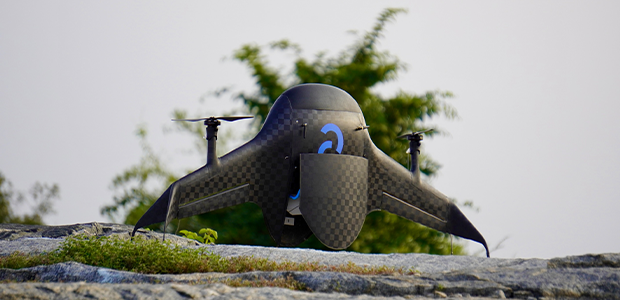
Airbound, a drone technology startup, has announced a $1.7 million seed round led by Lightspeed to build the world’s most efficient delivery drone. With its proprietary blended wing body tailsitter design, called TRT, Airbound aims to transform logistics, reducing delivery costs by two orders of magnitude compared to traditional options.

Cornwall’s flourishing tech ecosystem took centre stage last month at the highly anticipated Cornwall Slush’D 2024, showcasing the region’s most innovative startups and highlighting Tech Cornwall’s strengthened commitment to supporting early-stage businesses.

Virgin Media O2 Business and Cebr have published a new report, ‘The economic and social benefits of digitalisation’, revealing the significant growth potential UK businesses have left untapped. The report highlights that if all British-based firms had increased their digital technology usage in 2021, the economy could have seen a staggering £111 billion boost in turnover by 2023.

A newly released report has named London the number one city in Europe and number three globally for life sciences, behind Boston and New York, and ahead of Amsterdam, Munich, Paris, San Francisco, and Singapore.
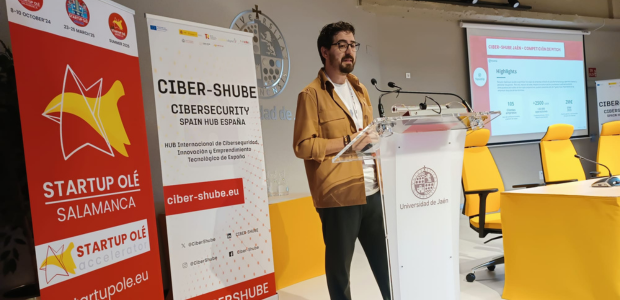
This international hub on cybersecurity, co-funded by Instituto Nacional de Ciberseguridad (INCIBE), an entity under Ministerio para la Transformación Digital y de la Función Pública, through Secretaría de Estado de Digitalisación e Inteligencia Artificial, and Universidad de Salamanca continues its activity connecting Spanish companies with international investors by attending the Finnish event from 20 to 21 November.

Sage Foundation, the social impact arm of Sage, the accounting, financial, HR and payroll technology for small and mid-sized businesses (SMBs) firm, has launched a new, three-year partnership with Village Capital to support 165 impact-creating startups across Europe, UK, and the US.

In a momentous cooperation signalling a new era of industrial progress, KAOUN International, in strategic partnership with the Saudi Authority for Industrial Cities and Technology Zones (MODON), announces the World Advanced Manufacturing & Logistics Summit & Expo Saudi 2025 (WAM Saudi). During the WAM Summit 2024, a significant cooperation agreement was signed, marking a landmark commitment to advancing Saudi Arabia’s status as a leading global industrial powerhouse.

In a strategic move set to reshape the industrial Augmented Reality (AR) landscape, Almer Technologies has announced its acquisition by RealWear, a company in wearable computing for industrial applications. This strategic acquisition, financially backed by TeamViewer marks a significant leap forward in the mission to empower frontline workers worldwide with cutting-edge AR technology.

Workspace Design Show (26 – 27 February 2025, BDC, London) is proud to announce the launch of the “Workspace Wellbeing Hero” initiative, recognising and celebrating exceptional individuals in the workspace design industry who go above and beyond to support the wellbeing of others through acts of kindness and resilience in their work environments. This initiative shines a spotlight on those who make a tangible difference in workplace culture through selflessness, compassion, and perseverance.

Bitsight has announced it has signed a definitive agreement to acquire Cybersixgill, a global cyber threat intelligence (CTI) data provider. Together, Bitsight and Cybersixgill will provide unmatched visibility into an organisation’s external attack surface, supply chain, and the threats targeting it. As a result, security leaders can proactively identify, prioritise, and mitigate risk across their first and third party environments.

No one ever said launching a startup was easy. As such, founders want to employ the best professionals to spearhead various functions as companies get their footing. However, some roles are more essential than others. These are 10 positions they should hire for first.

Future Planet Capital is working with NatWest Cushon, with a view to the Cushon Master Trust potentially making an investment in the British Co-Investment Fund (BCF). Any future investment will be subject to commercial terms, due diligence, and Trustee approval. If approved, NatWest Cushon’s participation would signify a major step forward, creating new avenues for British pension funds to access high-growth, private technology companies at scale.

What an event! The 50th edition of The Business Show has come to a close, marking a milestone in the event’s history. This year’s show brought together over 750 exhibitors, 350 expert-led seminars, and thousands of attendees under one roof, delivering two days packed with inspiration, innovation, and actionable insights for entrepreneurs and small business owners.

AshGrove Capital an independent pan-European specialty lender, has announced the final close of AshGrove Specialty Lending Fund II at the hard cap of €650 million, surpassing its target of €500 million.

Atlas.co has announced its $2 million pre-seed funding round led by climate-focused VC fund Pale Blue Dot, high-profile investors Ben Lang (early employee and ex-community lead at Notion), and Andreas Klinger (ex-CTO and founding team at Product Hunt).

Bower, the AI-driven waste sorting app helping users correctly recycle everyday waste, and VARTA, the European battery manufacturer, have announced their new AI-powered scanning feature, which allows consumer batteries to be immediately recognised and sorted for recycling without the need of a barcode.

Tenity, the global fintech innovation ecosystem and early-stage VC, releases its third Climate Fintech Report. Drawing on data from 750 startups worldwide, the report highlights the subsector’s resilience to economic challenges and its leading position in gender equality in venture funding, with female-founded or led companies achieving funding parity at pre-Series B rounds.
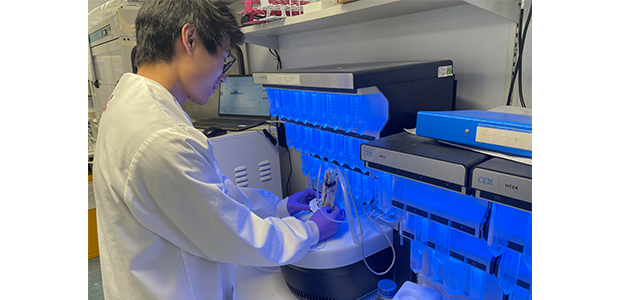
Revolver Therapeutics is pleased to announce its new funding is from UK Innovation Science and Seed Fund (UKI2S), managed by Future Planet Capital, and from o2h Ventures to progress its transcription factor inhibitors.