Now Reading
Aeon raises €8.2M seed round to scale its AI preventive health platform

Aeon raises €8.2M seed round to scale its AI preventive health platform

While most consumer health platforms rely on surface-level data (like wearables, skin scans, or basic blood tests) Aeon integrates full-body MRI, advanced blood biomarkers, and genetic insights into a single 60-minute check-up. The result: early detection and prediction of over 500 diseases and health risks, reviewed by board-certified physicians and discussed directly with a radiologist. To date, Aeon has maintained a 0% false positive rate in clinical-grade follow-ups, a critical differentiator in a field plagued by overdiagnosis and unnecessary procedures.

Aeon uses AI in three ways:

  • Automated imaging analysis: detecting and quantifying anomalies on MRI scans, improving the speed and consistency of clinical evaluations
  • Cross-validation: correlating MRI, blood, and genetic data to reduce false positives and improve clinical relevance
  • Predictive modelling: generating a personalised risk profile for each user, forecasting the likelihood of over 500 conditions and enabling targeted prevention

According to the Global Alliance for Chronic Diseases, 41 million people die each year from non-communicable diseases (chronic illnesses that aren’t transmissible), a number projected to rise by 27% by 2030. Despite 80% of these deaths being preventable, fragmented data and sluggish healthcare systems continue to stand in the way of effective prevention.

Since launching in 2024, Aeon has already helped detect early-stage cancers, aneurysms, Alzheimer’s, and other critical conditions, often in people who felt perfectly healthy. In one case, a 56-year-old man with undiagnosed kidney cancer was identified through a single scan, enabling life-saving surgery.

It is also the first health platform to offer full-body check-ups eligible for reimbursement by health insurers, and has already signed deals with Switzerland’s largest insurance providers, including KPT. Depending on the plan, customers can receive up to 80% of the cost back, setting a new precedent for accessible, proactive healthcare.

The new capital will support Aeon’s expansion across Switzerland, Germany, and the UK, with further international markets planned. It will also be used to accelerate partnerships with insurers and employers to improve access and affordability, and to enhance Aeon’s multi-modal AI platform for earlier and more precise diagnostics. Aeon plans to open more than 10 new locations in the coming months as it scales its clinical network.
See Also
When global labour market data is released, headlines tend to fixate on a single metric: unemployment. This year is no different. According to the latest figures from the United Nations and the International Labour Organisation, global unemployment remains relatively stable at just under five per cent. At face value, this suggests a labour market that is holding firm despite economic uncertainty, geopolitical instability and technological upheaval. In reality, it masks a serious and underreported problem: the true global jobs crisis is not a lack of work, but the growing scale of informal work. More than 2.1 billion people worldwide are employed in the informal economy, including misclassified workers operating outside effective regulatory coverage, where employment is typically unregistered, contracts are absent or unenforced, and access to labour rights and social protections is limited or non-existent. That represents a large portion of the global workforce. If unemployment reveals how many people cannot find work, informality shows how many are working without protection or long-term opportunity. Informal work is often associated with developing economies or unregulated sectors. However, this form of work is increasingly occurring within developed economies and regulated sectors, hidden within otherwise legitimate, fast-growing small and medium-sized enterprises – and this is often unintentional. For both businesses operating solely in domestic markets and those that have expanded abroad, adopting new workforce models and attempting to respond to rapid technological change, the crisis of informality is emerging in three key areas. The first is worker misclassification. Individuals are engaged as independent contractors but operate in practice like employees – working fulltime, at set hours, for years at a time. This is particularly prevalent in gig and platform-based roles, where algorithms determine pay, hours and performance without considering employment rights. Gig and platform work often presents as flexible and empowering, however, in practice, many platforms exercise employer-like control over payment, performance management, hours, and length of engagement, while explicitly avoiding employer obligations such as tax filings and the provision of statutory benefits like annual leave and healthcare. The result is a growing cohort of workers who fall between legal categories, carrying the risks of self-employment without the autonomy or protections that should accompany this mode of work. The second area is cross-border remote work, where informality can inadvertently arise. With post-COVID remote working models here to stay, companies are directly hiring overseas talent, assuming that because the worker is not based in the company’s home country, local employment laws do not apply. Where employment is not properly registered (whether by the employer and/or employee), local labour law is not applied, or social security obligations are misunderstood or ignored, these arrangements can slip into a form of modern informality, even where the relationship appears to be formal on the surface. This is often the point at which organisations begin to seek external guidance. In many cases, neither party fully understands the legal implications of the arrangement, which leaves both employer and worker exposed. We frequently see organisations approach us when a specific issue surfaces, such as payroll inconsistencies, questions around benefits entitlement, or concerns raised by the workers themselves, including registration process failures. Business leaders should also be aware that permanent establishment risk can arise if a remote employee is deemed to represent the company locally, which can trigger corporate tax obligations. Social security errors can happen when contributions are not made correctly in either jurisdiction, leaving workers without coverage and employers facing backdated liabilities. Meanwhile, employment law conflicts can emerge when contracts fail to meet the requirements of the host country regarding notice periods, benefits or termination rights. The third driver of informality is structural. These arrangements are becoming more common as artificial intelligence and evolving workforce models outpace regulation. Businesses are innovating at speed, but legal frameworks are struggling to keep pace. The UK’s Employment Rights Act offers a clear case study of the direction of travel. Worker protections are expanding, classification rules are tightening and enforcement is becoming more coordinated across agencies. Informal arrangements that once sat in legal grey areas are moving firmly into view and what was previously tolerated is falling under scrutiny. The challenge is that informality is rarely a deliberate choice. For many growing organisations, it becomes the default because compliant pathways are complicated and difficult to navigate alone, particularly across multiple jurisdictions. Legal advice, payroll, tax, HR, and immigration compliance are often siloed, leaving gaps that businesses may not even realise exist until a problem arises. For instance, digital nomad visas are often viewed as providing holders with wholly compliant right to work status, however employers may not realise that this is not always the case and contracts may not reflect the correct legal status or entitlements. Addressing informality requires a change in how we think about employment at a global level and recognising that flexibility and compliance are not mutually exclusive. Businesses need models that allow them to access global talent quickly while ensuring workers are properly employed and protected under local law. As attention remains fixed on unemployment figures, informality continues to expand beneath the surface. It is this hidden cohort of workers, contributing economically without security or rights, that represents the real crisis in the global labour market. Solving it will require coordinated action from policymakers and businesses alike, and a commitment to building workforce models that are not only innovative, but sustainable and fair.

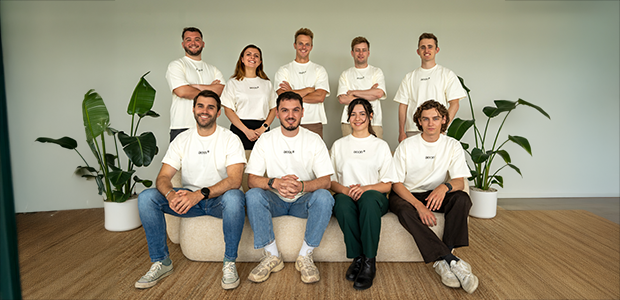
Aeon’s founding team includes CEO Tim Seithe, who previously founded and sold Tillhub to Unzer (KKR owned), and CPO Samuel Frey, who brings a decade of product leadership and most recently led a turnaround at diagnostics scale-up Platomics. They are joined by scientific advisor Dr. Andreas Lemke, one of Europe’s leading MRI physicists and founder of Mediaire, a company pioneering AI-driven brain imaging diagnostics.

“We’re redefining preventive care by shifting it from reactive checks to proactive, personalised health management. Our approach goes beyond early disease detection we’re tackling one of preventive medicine’s biggest challenges: false positives”, said Tim Seithe, Aeon’s Founder and CEO. “Every customer receives a tailored risk profile, along with a clear, medically grounded plan to monitor and reduce their health risks over time.”

“Aeon is not just another testing solution. In our view, many consumer health products on the market today deliver questionable value,” said Alex Stroud, Principal at Concentric. “Validated by insurers, Aeon is delivering the most medically robust preventive health product on the market. That rare combination of clinical rigor and commercial scalability is what makes this team so exciting.”

Startups Magazine. All rights reserved. c 2026. Company number is: 06755141

Scroll To Top