

From the Stormtrooper helmet to British manufacturing: Andrew Ainsworth’s lesson for founders on protecting intellectual property

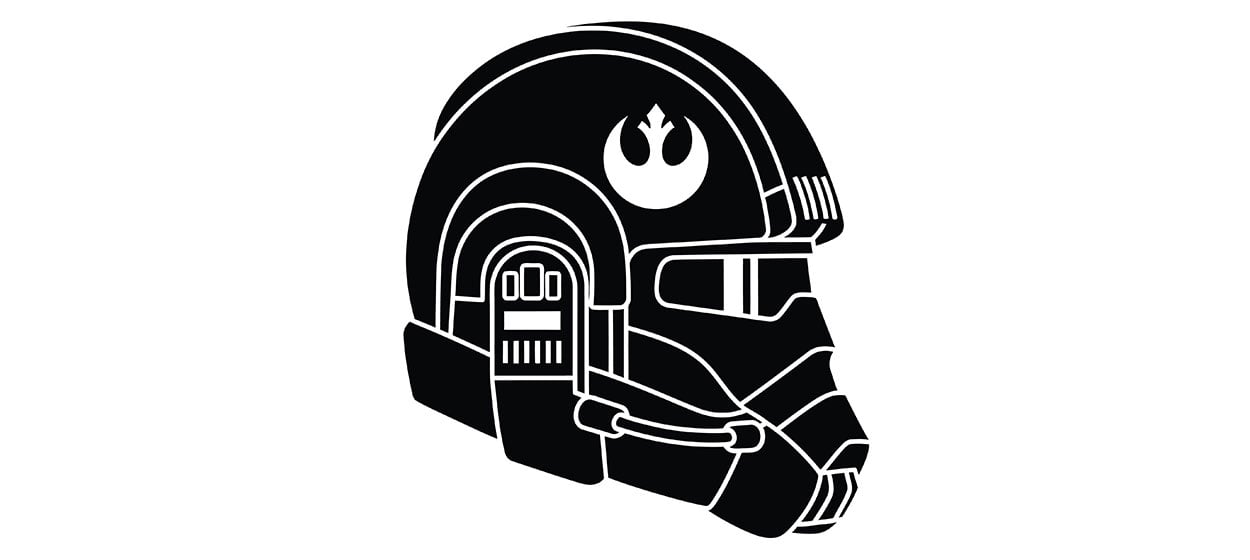
The Stormtrooper helmet is one of cinema’s most recognisable designs. But behind the iconic white armour lies a story of British ingenuity, intellectual property, and a decade-long legal battle.
Andrew Ainsworth, the British Engineer and Manufacturer who helped create the original helmets and costumes for Star Wars, found himself at the centre of a dispute over who owned the rights to his work. His case would eventually reach the UK Supreme Court, raising important questions about creativity, copyright, and commercial ownership.
For today’s founders and designers, Ainsworth’s experience offers a timely lesson: creating a successful product is one challenge; understanding who owns its intellectual property, and how to protect it.
“From 1976 to 1981 I worked in the film industry, first from home and then from Shepperton Studios, while also developing many kinds of watersports products for the rowing, windsurfing, and kayaking industries worldwide,” he says.
“In 1976 I was approached by my neighbour, Nick Pemberton, who had been contacted by the buyer for Star Wars to make helmets, costumes, and so on. He asked me to make a prototype helmet, saying the film was a ‘no-hoper’, but that if anything came of it I should give him 10%,” he says.
After agreeing, Ainsworth made a prototype with some guidance from Director, George Lucas, and illustrations provided by Ralph McQuarrie, the renowned American concept aritist.
“I made it at no cost, as a punt to see whether there might be work in the film industry,” he says.
Little did Ainsworth know that this side project would turn into a decade-long legal battle – highlighting the strong vulnerabilities that designers and business owners face.
Making of the Stroomtrooper helmet
Ainsworth sculpted vacuum-forming moulds to produce the helmet as a slick futuristic character rather than the fabricated metal look that had been depicted to him.
“I saw the plastic prototype as artistic licence, and as something that would fit my plastics manufacturing process,” he says.
His neighbour presented the prototype to George Lucas who then returned to the US.
“When he came back two weeks later, he immediately ordered 50 helmets. How influential the prototype was on the survival of the film we don’t know; we can only speculate,” he says.
Though Ainsworth wanted to modify and improve on the prototype further, the film executives were keen to use the designs as soon as possible.
Under intense time pressure, Ainsworth used the materials available to him to develop the vacuum-forming process to produce 27 sets of helmets and armour in time for filming.
“I ended up creating over 200 character costumes for the film, including Stormtroopers, X-wing pilots, TIE pilots, Rebel troops, Tusken Raiders, Imperial gunners, and Navy troopers, most of which evolved from phone calls with British Costume Designer, John Mollo,” he says.
A decade long legal battle
In 2004, Ainsworth began selling replica helmets and armour using his original moulds. A year later Lucasfilm sued him in the US and obtained a default judgement worth $20 million.
“It was an eye-opener. To realise that one’s own creations could be bought and owned by a sophisticated money-making machine was a disappointing revelation,” he says.
In 2011, the case reached the UK Supreme Court, which ruled in Ainsworth’s favour on the key English copyright issue and allowed Lucasfilm’s US copyright claims to be heard in English courts.
The Court held that the helmets were not sculptures under UK copyright law, meaning Ainsworth could rely on a statutory defence to the relevant English copyright claims.
“I did eventually win enough IP rights to carry on making my creations, the trade-off being that this doesn’t extend to the USA. I can live with that.”
Ainsworth says that the experience taught him that, however early in the creative process, an artist or designer must protect their work, no matter how difficult it is at the time.
“If I had written ‘All rights reserved’ at the bottom of my invoices to Star Wars, it might have given me a leg to stand on,” he says.
The current state of UK businesses
Ainsworth says that Britain used to be a “country of making” and the current climate has meant that Britain has lost a sense of creativity.
“It’s a shame, because this country still has the creativity, style, and humour that the rest of the world craves,” he says.

He says that in order for UK businesses to survive, designers and manufacturers need hope of success, as well as financial reward to support their ambitions.
“Poorly thought-out legislation can easily kill an industry, and bureaucracy can make it very difficult to start one when there is minimal cash flow to cover compliance. High taxation is the final nail in the coffin, and it’s not surprising that young, ambitious graduates seek their fortunes elsewhere,” he says.
The UK government is slowly starting to react to the plights of young founders with the recent announcement of the Autumn Budget 2026 where Chancellor John Healey announced the launch of a new young entrepreneurs allowance, which will cover a year of living costs for young founders.
Healey also announced a “founders’ relief”, a 10% rate on lifetime gains up to £10 million for the founders of Britain’s most successful firms.
How the Government can support startups
Ainsworth shows a lot of sympathy for younger founders, saying that he was given much support when he was starting out compared to entrepreneurs now.
“I was blessed with three years of engineering and three years of industrial design – six years of higher education supported by a government grant,” he says.
“I don’t know who came up with the idea of making students take out loans for their education and turning educational establishments into businesses, but it was totally misguided and short-sighted.”
He says that because students are being left with huge amounts of debt, these young minds are unable to take modest risks to start an enterprise when they already have this financial burden.
“It’s not surprising that many of our talented young people are leaving the country to fulfil their ambitions and pay off their student loans,” he says.
“Obviously, reversing this policy would require a serious look at welfare spending, but surely positive growth through keeping our talent at home is a better policy,” he concludes.
For aspiring founders, Ainsworth’s experience offers a simple lesson: creating something valuable is only the beginning. Knowing your rights, securing your intellectual property, and protecting your work from the outset can make all the difference when an idea becomes a business.
For more startup news, check out the other articles on the website, and subscribe to the magazine for free. Listen to The Cereal Entrepreneur podcast for more interviews with entrepreneurs and big-hitters in the startup ecosystem.
