

Your first overseas hire is also your first logistics test

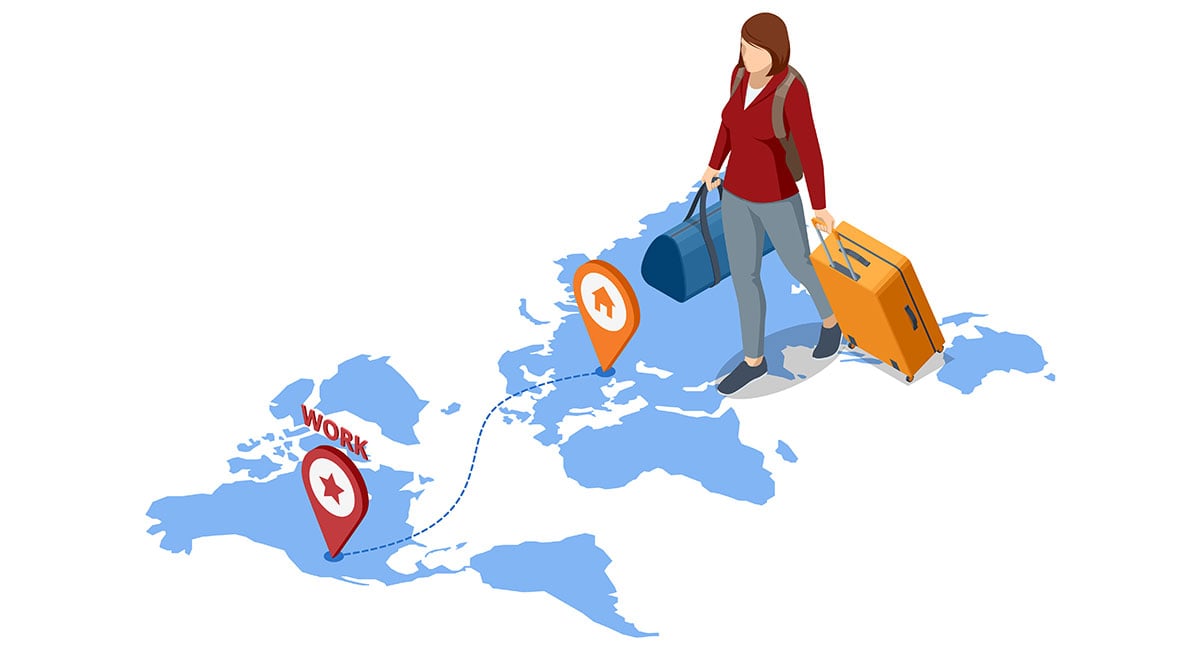
UK companies are hiring abroad with more confidence than their counterparts in the US, Canada, or Australia. In BambooHR’s 2026 research, 38% of UK business leaders described themselves as enthusiastic and proactive about international hiring, the highest rate of the four countries surveyed.
Most of the planning behind that ambition goes into finding the right person and signing the contract. Equipment tends to run through spreadsheets, inboxes, and one-off orders. Such improvisation can cope well enough with the first few hires, but it will buckle once more people in more countries depend on it, with each new market adding its own couriers, customs rules, and support gaps.
I saw this repeatedly as Head of IT at Revolut, scaling the function from around 200 people to more than 5,000 across 17 offices. Deciding how a device will be sourced, configured, delivered, and eventually recovered is part of entering a market. The first overseas hire is where that plan gets tested.
Cheap orders, expensive fortnights
Buying and shipping laptops one at a time looks cheap because each order is small. Follow a single one through the business, though, and it picks up costs along the way: retail prices with no volume terms, mismatched models that slow every support request, and staff hours wasted on chasing a device that was never returned by someone who left six months ago.
The costs are quiet and cumulative, with first hires being the first to feel them. A survey of US office workers found that 51% named technology problems, such as computers that didn’t work or hadn’t been set up, among their biggest onboarding frustrations. At a startup, the first hire in a new country is often the entire local team, so a lost fortnight means a stalled market launch.
A delay also shapes how people see the company. New employees judge how well it is run within a week, while founders and investors judge an expansion by how quickly the new market starts producing. A missing laptop undermines both.
Run the route before you post the role
The simplest readiness check costs one laptop and about a week: before advertising a role in a new country, send a device there configured exactly as a new hire would receive it. The shipment will show whether the company needs an EORI number, who pays the duties and VAT, how much customs adds to the courier’s quote, and where the machine could be repaired locally.
Since Brexit, UK companies have more reason than most to rehearse. The FSB’s ‘Ticket to Trade’ report found that 63% of small firms trading with the EU have faced significant barriers, and nearly one in five named taking equipment overseas when travelling for work among them.
Run that first test in the hardest market on the roadmap rather than the one you’re most confident about. One company I’ve advised did exactly that, testing its equipment route across several Latin American countries at once, knowing the region’s vendors were unreliable and its lead times long. Only once that worked did they roll out across Western Europe. Almost any process looks fine in Germany. A market like Colombia is where you find out whether yours works.
Automate the handoffs first
The first time I mapped a single laptop request at Revolut, it split into eight separate steps: choosing the model, getting approvals, placing the order, handling payment, preparing the device, shipping and tracking it, updating the inventory, and eventually recovering it. From the outside, it was one request. From the inside, it was eight small projects, each one waiting for someone to pass it on.

Several of those steps can start without anyone passing them on. A signed offer in the HR system should raise the device request automatically, and role-based device profiles remove the decision about which machine to buy for each hire. Zero-touch enrolment through Apple Business Manager or Windows Autopilot lets a laptop configure itself when its owner first logs in, wherever they are, and a leaver’s exit date should trigger recovery the same way.
A startup can run all of this without building an IT department. It needs one named owner for the process, written device standards, and external partners to handle procurement and local delivery. With those in place, the workload stays close to flat as headcount grows.
What I’d tell a founder hiring abroad
Investors and boards judge an expansion by how quickly a new market starts producing, and the equipment route shapes that more than its place on most launch plans would suggest. Settling it before the first hire abroad means the fifth and fifteenth markets open as smoothly as the first, with nobody rebuilding the process from memory each time.
The first overseas hire will test your logistics either way, so run the test yourself first.
