

What starting a healthcare education business taught me about being a founder

Launching a business in healthcare education means navigating an industry where trust, credibility, and quality are essential, while also dealing with the challenges every founder faces when trying to grow a company.
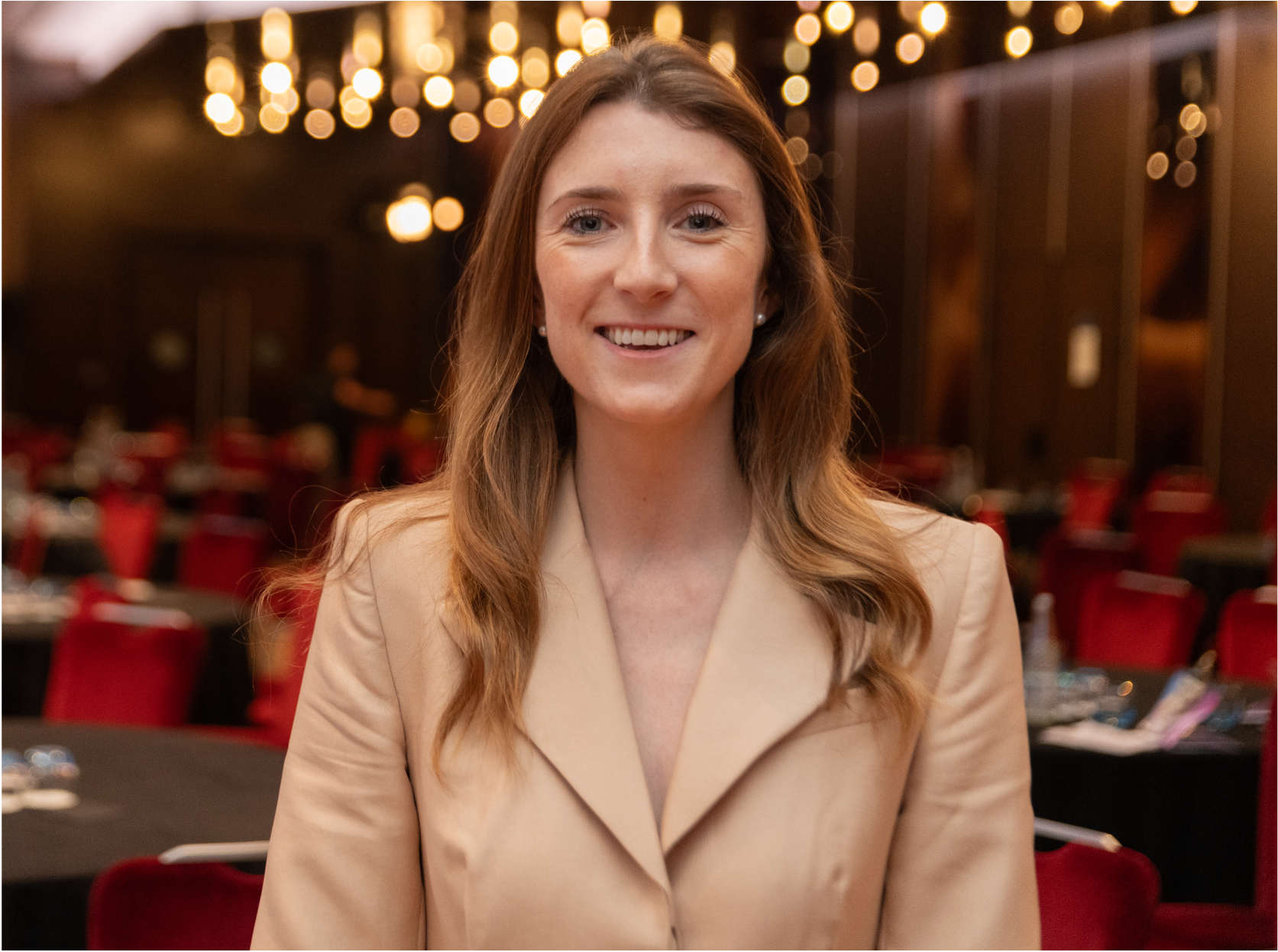
After years working in independent medical education, Emily Harrison launched Nexus Healthcare Education after identifying an opportunity to better demonstrate the impact education has on clinical practice. Since then, she has had to learn how to turn her industry expertise into a growing business, build a team and put the right structures in place to support its development.
Here, Emily discusses the lessons she has learned from starting and growing Nexus, the mistakes she has made along the way and her advice for other entrepreneurs looking to build a business in healthcare.
What made you decide to launch Nexus Healthcare Education and what opportunity did you see in the healthcare industry?
Before launching Nexus Healthcare Education, I had spent a number of years working in independent medical education and could see a fundamental challenge in the way its success was measured.
The healthcare industry invests significantly in educating healthcare professionals, but success has often been measured using relatively immediate metrics: how many people participated, whether they valued the programme, or whether their knowledge improved straight afterwards. Those measures matter, but they do not necessarily answer the most important question: did the education actually change anything?
I wanted to build a company that could go further – designing education around the change we wanted to achieve and then following its impact through to clinical decision-making and, ultimately, changes in practice.
That thinking became the foundation for GAUGE, our outcomes analytics platform. GAUGE enables us to measure educational impact across five levels – participation, satisfaction and confidence, knowledge, competence, and performance – with longitudinal follow-up extending for up to nine months.
Importantly, we do not simply produce a result at the end of a programme. We establish what practice looks like before the education begins, define what we are trying to change, and assess the results against that baseline, the programme’s target and an external benchmark. This helps us understand not only where education has worked, but where gaps remain and what the next educational intervention should address.
That was a major reason I started Nexus. I saw an opportunity to move independent medical education away from simply delivering activities and reporting engagement, towards demonstrating meaningful, measurable change in clinical practice.
Starting a new company also gave me the freedom to build that philosophy into the business from day one. Rather than adding outcomes measurement at the end, we could design the educational strategy, programme and measurement approach together from the outset.
Ultimately, I wanted Nexus to be accountable for more than delivering excellent education. I wanted us to be able to demonstrate what that education actually changed.
What have been the biggest challenges you have faced starting and growing a business in healthcare during your first two years?
The biggest challenge has probably been managing the pace of growth.
When you start a business, your initial focus is understandably on winning work. Once that happens, the challenge changes very quickly: you need the people, processes and infrastructure capable of delivering that work to the same standard as you grow.
Healthcare adds another layer because there is very little room for error. We operate in a highly regulated environment and work with pharmaceutical companies, healthcare professionals, medical societies and accreditation bodies. Quality, scientific integrity, compliance and governance all have to scale alongside the commercial side of the business.
One of my biggest lessons has therefore been that you have to build ahead of where the company is today. The systems or structures that work when you are a very small team will not necessarily work six months later.
I have also had to learn to move from being involved in almost everything to building a team that can take genuine ownership. That is probably one of the hardest transitions for any founder, but also one of the most important if you want to create a sustainable company.
Healthcare can be a complex industry to break into. What should entrepreneurs understand before starting a business in the sector?
Healthcare is an industry where trust and credibility are incredibly important, and they take time to build.
It is not enough to have a good commercial idea. You need to understand the environment in which your clients and stakeholders operate – regulation, compliance, evidence, governance and, most importantly, the responsibility that comes with anything that could ultimately influence patient care.
I would also encourage entrepreneurs to understand exactly where they add value. Healthcare is enormous, and trying to be everything to everyone is rarely a strong starting point.
Find a genuine problem you understand well, become exceptionally good at solving it, and build your reputation from there.
How did you go about winning your first clients and building trust as a new business in healthcare?
I had spent years working in the industry before launching Nexus, so I was not entering healthcare without a network or track record. People knew how I worked and the standards I expected, which gave us an important foundation.
But I was also very conscious that previous relationships might open a door, but they would not build a successful company. We had to prove ourselves as Nexus.
In the early days, that meant being incredibly responsive, doing what we said we would do and putting a huge amount of energy into delivering excellent work. Every project mattered because every successful project created another advocate for the business.
A lot of our growth since then has come through repeat business, referrals and introductions, which I think is one of the strongest indicators that you have earned people’s trust.
How important was your previous experience and understanding of the healthcare industry when starting Nexus?
My previous experience gave me an understanding not only of medical education, but of how the wider ecosystem works – pharmaceutical companies, healthcare professionals, medical societies, accreditation, compliance and the practical realities of delivering programmes internationally.
It also allowed me to recognise the outcomes-measurement problem that ultimately shaped Nexus and GAUGE. I had seen how much excellent education was being delivered, but also how difficult it could be to demonstrate what changed afterwards. Understanding both the educational and operational realities helped me see that measurement had to be designed into the learning journey from the beginning, rather than added at the end.
At the same time, there is a danger in assuming that because you have worked within an industry, you automatically know how to build a business within it. Being good at your profession and running a successful company are two very different skill sets.
I have had to learn enormously over the past three years about finance, recruitment, leadership, operations, contracts and commercial strategy. You suddenly become responsible for areas you may never previously have had to think about.
Industry experience gave me the foundations, but becoming a founder has required an entirely new education.
What have you learned about turning your expertise and knowledge into a commercially successful business?
I have learned that expertise on its own is not a business.

You have to turn that expertise into something that solves a clear problem for somebody else, and you need to be able to communicate the value of that solution very simply.
GAUGE is a good example. It grew from an issue I had observed repeatedly in the industry: education providers could report reach, satisfaction and immediate knowledge, but often found it harder to show whether learning translated into clinical decisions or practice. We turned that insight into a structured outcomes approach that measures impact from participation through to performance, pairs pre- and post-activity responses at learner level, and reports results against a researched baseline, a defined target and an external benchmark.
That has given Nexus a clear point of difference, but it also reflects a wider lesson: proprietary ideas only become commercially valuable when they are useful, repeatable and embedded in the service a client receives.
For us, commercial success also means understanding what our clients are trying to achieve, where the genuine educational need exists, and then developing an approach that connects the two while maintaining our independence and educational integrity.
I have also learned the importance of commercial discipline. Particularly when you are passionate about what you do, it is very easy to over-service, underestimate the resources required or say yes to everything.
A sustainable business needs strong margins, good forecasting and an understanding of where your team’s time creates the greatest value. Commercial success is not separate from doing excellent work – it is what allows you to keep investing in your people, technology and ideas, and ultimately increase the impact you can have.
What mistakes have you made along the way, and what would you do differently if you were starting the business again today?
One of the biggest was probably waiting too long to put certain structures in place because they felt unnecessary when we were smaller. Growth happened faster than I anticipated, and suddenly processes that had worked perfectly well for a small business were being stretched.
If I were starting again, I would build more of that infrastructure earlier – particularly around financial visibility, project management, resource planning and clearly defined responsibilities.
I would also hire ahead of growth sooner. As a founder, there is a temptation to keep absorbing more yourself because it feels quicker or more economical. Eventually you realise that your own capacity becomes one of the biggest constraints on the business.
But I would not want to remove every mistake. Some of the most valuable lessons I have learned have come from getting something wrong, understanding why, and then building a better business as a result.
What advice would you give to someone considering starting their own business in the healthcare or medical industry?
Starting a company is incredibly rewarding, but there will be periods of uncertainty, long hours and decisions where there is no obvious right answer, so you need a reason for building the business that goes beyond simply wanting to work for yourself.
I would also say do not wait until everything is perfect. Have a clear proposition, understand your market, know your numbers and then start. You will learn more from your first six months of actually running the business than you ever could from trying to plan for every eventuality.
Surround yourself with people who are better than you in areas where you are weaker, listen carefully to your clients, and protect your reputation relentlessly.
And particularly in healthcare, never lose sight of the person at the end of everything you do. However commercial or complex the industry becomes, ultimately our work should contribute to better healthcare and better outcomes for patients. That is both a responsibility and an enormous privilege.
For more startup news, check out the other articles on the website, and subscribe to the magazine for free. Listen to The Cereal Entrepreneur podcast for more interviews with entrepreneurs and big-hitters in the startup ecosystem.
