

Dote: an AI-powered smart baby monitor

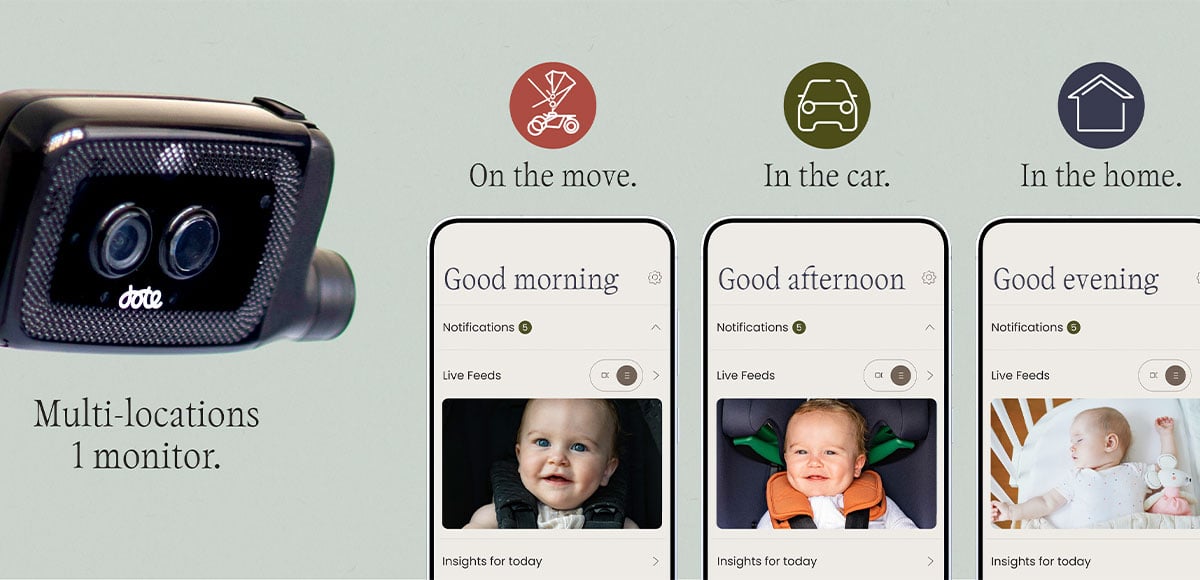
Dote is a Manchester-based startup founded by Stephen Senior that is rethinking what it means to be a parent in the modern world. At the heart of its offering is the AI-powered Dote Buddy baby monitor, which goes beyond simple alerts to provide parents with personalised insights and reassurance. Working through an app, it aims to ease the worry that often comes with early parenthood – spotting what matters and letting parents relax when everything is fine.
The idea is simple: take away some of the stress and uncertainty of those first years, so families can spend less time anxious and more time enjoying life with their child.
“At Dote, we completely understand that parenting is magical and exciting, especially at the start of the journey. But we also recognise that it can be overwhelming, stressful day to day, and at times quite lonely. This is particularly true in the early stages of pregnancy and when caring for a newborn,” said Denise Namakando, Managing Director, Dote.
“We believe it doesn’t have to be that way. Through our technology and our platform, we want to support parents by giving them greater guidance and empowerment in making the right decisions. Using data and insights, our product and technology aim to lift some of the weight from parents’ shoulders.”
A POWERFUL ECOSYSTEM
Dote Buddy can seamlessly transition between environments. At home, it works as a regular monitor. Unclip it, and you can take it into the car. Unclip it again, and it attaches to the bumper bar of your stroller. Wherever you go, the monitor is constantly building a picture of your baby’s behaviours, patterns, and development.
Parents can then access all that information through the app. Together, it creates a powerful ecosystem that gives families insights and reassurance wherever they are.
“This is the first time a single device can monitor and support babies and parents both inside and outside of the home,” notes Namakando.
Dote’s technology is supported by AI, more specifically Edge AI. Rather than sending data up to the Cloud and back, everything happens in real time. There’s no latency – what you see is exactly what’s happening – and it also provides higher levels of security.
The monitor includes the basics expected from such a device, such as audio and visual monitoring, but the quality goes further. It features a 2K crystal-clear camera with day and night vision, two-way audio, and a sound library built directly into the unit.
Some of the more advanced functions include cry detection. The monitor can distinguish between a baby’s cry and other noises, such as a dog barking, a lorry reversing, or general background sounds. This ensures that parents only receive alerts when their baby actually needs attention.
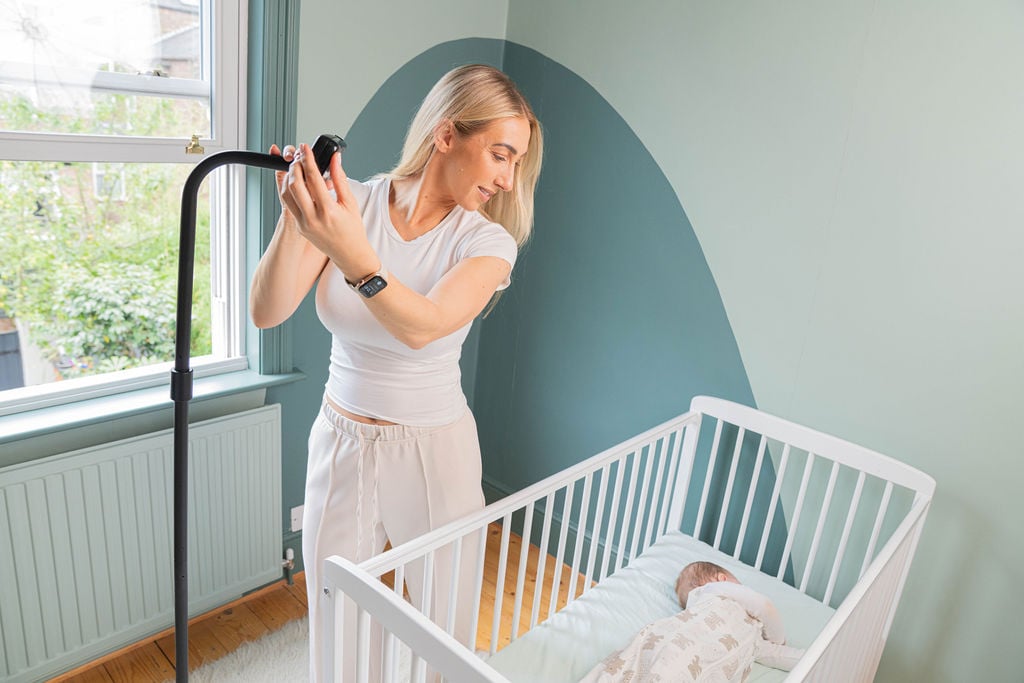
Another feature is the use of virtual boundaries. Through the app, parents can create a safe zone around a cot, car seat, or play area. If the boundary is broken, the system notifies their phone immediately. This supports parents during those stages when babies develop quickly, for example, moving from being unable to climb out of the cot to suddenly managing it.
The monitor also incorporates multiple temperature sensors. It is able to measure ambient temperature, humidity, and even the baby’s surface temperature. This is an area of common concern for parents, particularly when moving a baby from a nursery, where conditions are stable, to a car, where it is more difficult to judge comfort.
AI INSIGHTS FOR HOME AND BEYOND
Dote has carried out extensive research in both the UK and the US, using focus groups and quantitative studies. While not centred on the product itself, the aim was to test the appetite and understanding for in- and out-of-home monitoring. As this concept breaks many category norms, the company wanted to ensure it was understood and that parents could clearly see the benefits. The research also explored parents’ acceptance of AI in the home, particularly in relation to baby monitoring.
“The results were exceptional – some of the strongest I’ve ever seen at concept stage in product development,” said Namakando.
In the UK study, run in April 2024, 67% of parents embraced the idea of in- and out-of-home monitoring. Parents immediately understood the value, saying they wanted access to data and insight whether in the car, in the stroller, or while out and about. A follow-up study in the US, conducted May 2025, delivered even stronger findings. Over 80% of parents said they would use the product daily in their home.
Acceptance of AI was also notable. Compared with results from April the previous year, parents in the US increasingly viewed AI as part of everyday life.
“It no longer feels like a big, scary ‘Big Brother’ concept. Instead, parents are saying: if it gives me benefits, if it helps me with relevant insights, then I’m all for it,” notes Namakando.

Early use of the product among friends and family has been positive, with strong feedback on quality and experience. Dote is continuing to refine the app, build its knowledge base, and enhance functionality.
To help with this, Dote has partnered with academic and research institutions to anonymously share the data collected on the app. Experts in this space are excited by the impact such collaborations can have. Many highlight that their studies and findings often remain locked in whitepapers or take years to be published, reaching only an academic audience rather than parents and families who could benefit. They want their work to have a direct impact, and Dote’s approach offers a way to achieve that.
By gathering data at scale and sharing insights with research institutions, Dote enables experts to see what is happening in real time. At the same time, the company has the opportunity to share relevant insights back with parents, closing the loop between research and day-to-day family life.
PREPARING FOR LAUNCH
To date, the company has raised around £1.7 million in funding. This has enabled progress across product development, testing, and verification, as well as the creation of packaging and branding. The business is now positioned for commercial launch.
In recent years, activity has accelerated, particularly with meetings and discussions in retail and trade. Early conversations began with John Lewis, and these have since expanded significantly. The company now has contracts in place with Amazon and is in discussions with major retailers in the US, as well as leading names in the UK market.
Over the past two years, commercial readiness and go-to-market planning have gathered real momentum, and the business is preparing to launch early next year (2026).
“For me, the focus is definitely on launch, but also on leading the marketing side and really growing our brand. What I love about Dote is that it’s so much more than just a collection of products. There’s real depth and a clear mission behind what we’re doing, which I personally find exciting. That matters to parents too, especially the new generation of parents,” said Namakando.
As the user base grows, the company will build a large dataset that can be used to learn, optimise, and deliver even greater insight to parents. This will open the door to new features and capabilities in the future.
This article originally appeared in the November/December 2025 issue of Startups Magazine. Click here to subscribe
