

Former Dragons Den investor talks AI and Entrepreneurship

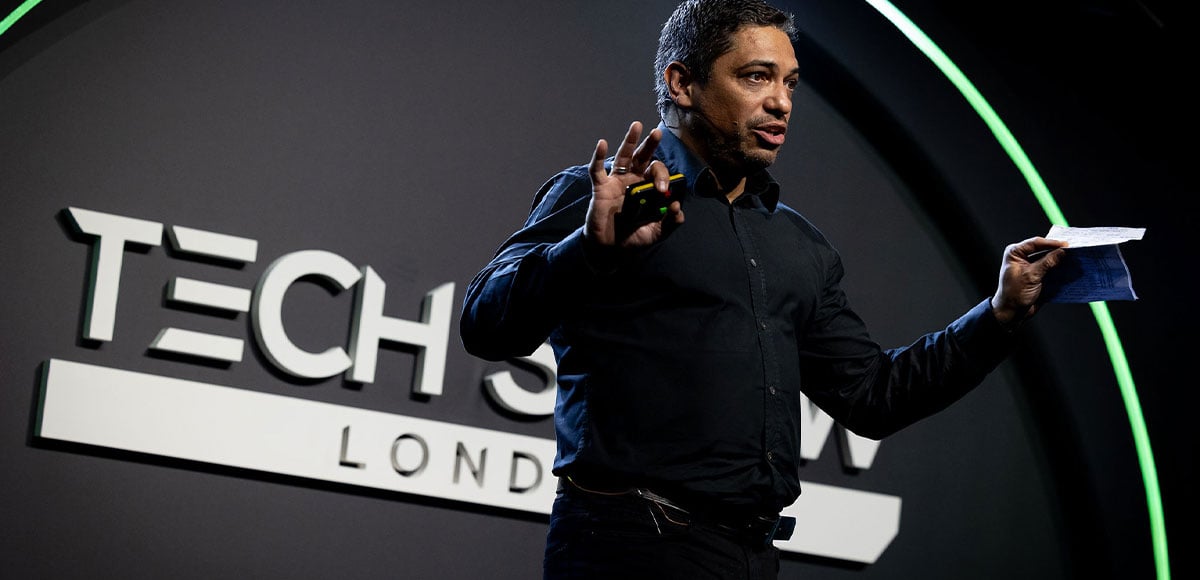
Piers Linney was born in Stoke-on-Trent and raised in a Lancashire mill town. He studied Accounting and Law at the University of Manchester before qualifying as a corporate finance lawyer in 1997. He went on to work in investment banking with Credit Suisse First Boston, but in 2000 left to launch his first major venture, a dotcom business at the height of the Internet boom. Since then, his career has spanned technology, media, and telecoms, with a particular focus on exponential technologies including additive manufacturing, space media, and, more recently, AI.
Piers is the Co-Founder of Implement AI, a provider of scalable digital workforces of managed AI agents and winner of AI Startup of the Year – London at the UK Startup Awards 2025. He also co-hosts The Implement AI Podcast, focusing on the role of artificial intelligence in business, and publishes a bi-weekly LinkedIn newsletter, ‘Business as Usual?’, for insights into AI, technology, and economics.
Alongside his work in AI, Piers is Chairman and Co-Founder of Atherton Bikes, a producer of additive manufactured mountain bikes that secured first and second place at the 2023 World Championships.
A recognised champion of entrepreneurship and small and medium-sized businesses, he is a frequent commentator across radio and television, as well as a keynote speaker at events.
Piers became widely recognised for his role as an investor on the BBC television series Dragons’ Den. During his time on the show, he brought his entrepreneurial experience and technology expertise to a broad audience, offering insights into business strategy and investment, while supporting entrepreneurs looking to scale their ventures.
He further raised his public profile through Channel 4’s The Secret Millionaire, where he spent time living within a community facing social and economic challenges before revealing his identity and contributing personal funds to support local projects. The experience highlighted his commitment to social mobility, community development, and using business as a force for positive impact.
He was previously a Trustee of Nesta, the UK’s largest innovation agency with a £500 million endowment, and has been recognised among the UK’s top 100 most influential black Britons, as well as one of the top 20 ethnic minority executives in 2020.
Startups Magazine sat down with Piers to discuss his technology ventures, the misconceptions around AI adoption, as well as the challenges of entrepreneurship, the value of diversity and inclusion in business, and the importance of mentoring future leaders.
COULD YOU SHARE WITH US WHAT INITIALLY INSPIRED YOU TO EMBARK ON YOUR ENTREPRENEURIAL JOURNEY? WHAT SPARKED YOUR DEEP INTEREST IN AI?
I’ve been fascinated by entrepreneurship since I was a child. Growing up in Lancashire, I was surrounded by the remnants of the Industrial Revolution – mills, waterwheels, weavers’ cottages – which inspired me to think about how industries are created.
My first business was a Sunday paper round at 13, which I grew and sold. Later ventures included selling candles and perfumes door-to-door.
AI became a focus because it’s the most transformative technology I’ll ever experience – arguably the biggest in human history. I knew I had to get on the pitch, so we built Implement AI to help organisations adopt it.
AS A CO-FOUNDER, WHAT HAVE BEEN SOME OF THE BIGGEST CHALLENGES AND HOW DID YOU OVERCOME THEM?
Entrepreneurship is a constant cycle of successes and failures. I’ve had businesses that scaled and exited well, and others that ended in administration. Even with experience, things still don’t always work – it’s a grind. The real challenge is ensuring you have more successes than failures and accepting that setbacks are part of the process.
I’ve learned that proving your hypothesis, not just making money, is what drives entrepreneurs.
YOU BECAME WIDELY KNOWN AS AN INVESTOR ON DRAGONS’ DEN. HOW DID THAT EXPERIENCE INFLUENCE YOUR APPROACH TO SPOTTING AND SUPPORTING ENTREPRENEURS?
It reinforced what I already believed: early-stage investing is about people, not business plans. You invest in the founders’ ability to execute, adapt, and endure the inevitable challenges.
The best founders know how to pivot. Even with the right people and ideas, timing matters, and sometimes businesses don’t work despite everything.
THROUGH IMPLEMENT AI, YOU HELP ORGANISATIONS HARNESS AI. WHAT MISCONCEPTIONS DO BUSINESS LEADERS STILL HOLD?
The biggest misconception is that AI will instantly take everyone’s jobs. In the short to medium term, AI augments people, increasing capacity, improving customer experience, and driving revenue.
Some tasks are better suited to AI, but overall, it enables growth. The danger is waiting too long – this isn’t like Cloud adoption where you could afford to delay. Those who adopt AI early will be the ones who stay ahead.
YOU’VE BEEN RECOGNISED AS ONE OF THE TOP 100 MOST INFLUENTIAL BLACK BRITONS AND A CHAMPION OF DIVERSITY. WHAT ADVICE WOULD YOU GIVE LEADERS WHO WANT TO CREATE INCLUSIVE ORGANISATIONS?
Diversity is being invited to the party; inclusion is being asked to dance. It’s not just the right thing to do – it’s good for business. Diverse organisations are more profitable and deliver higher job satisfaction.

At its core, inclusion is about belonging: ensuring people feel they have an equal opportunity to get to the start line, and that once there, they are supported and valued.
MENTORSHIP HAS BEEN AN IMPORTANT PART OF YOUR JOURNEY, INCLUDING THE SECRET MILLIONAIRE. HOW DO YOU VIEW THE ROLE OF MENTORING IN SUPPORTING FUTURE LEADERS?
Mentoring is vital, but it doesn’t need to be formal or time-consuming. A conversation, a coffee, or an introduction can change the trajectory of someone’s life.
On The Secret Millionaire, I mentored a young man called Nathan from a young offenders’ institution. Today he’s a Cloud infrastructure architect earning over £100,000. That experience proved to me the long-term impact of sharing social capital.
IF YOU COULD GO BACK TO WHEN YOU WERE STARTING OUT, WHAT ADVICE WOULD YOU GIVE YOURSELF?
Learn when to stop. Your first business is unlikely to be the one that defines you. Sometimes, despite your best efforts, things don’t work. Be honest with yourself, your investors, and your team. Pivot if you can but also know when to call it a day and move on.
WHAT HAS YOUR FAVOURITE PART OF THE JOURNEY BEEN SO FAR?
Developing people. Of course, building successful businesses and proving your thesis is rewarding, but seeing people you’ve worked with grow into leaders, and even creating wealth for them along the way, is the most fulfilling part of my journey.
LOOKING AHEAD, WHAT ARE YOUR FUTURE PLANS AND VISIONS?
I want to build Implement AI into the category leader for deploying digital workers and AI agents into SMEs, scaleups, and enterprises. We’re scaling directly and through a reseller channel.
Alongside the business, I’ll continue writing thought leadership pieces, hosting the Implement AI podcast, and building awareness of how AI can transform organisations. This is the culmination of everything I’ve done so far.
This article originally appeared in the November/December 2025 issue of Startups Magazine. Click here to subscribe
