

EU Inc must close the gap between single market ideals and reality

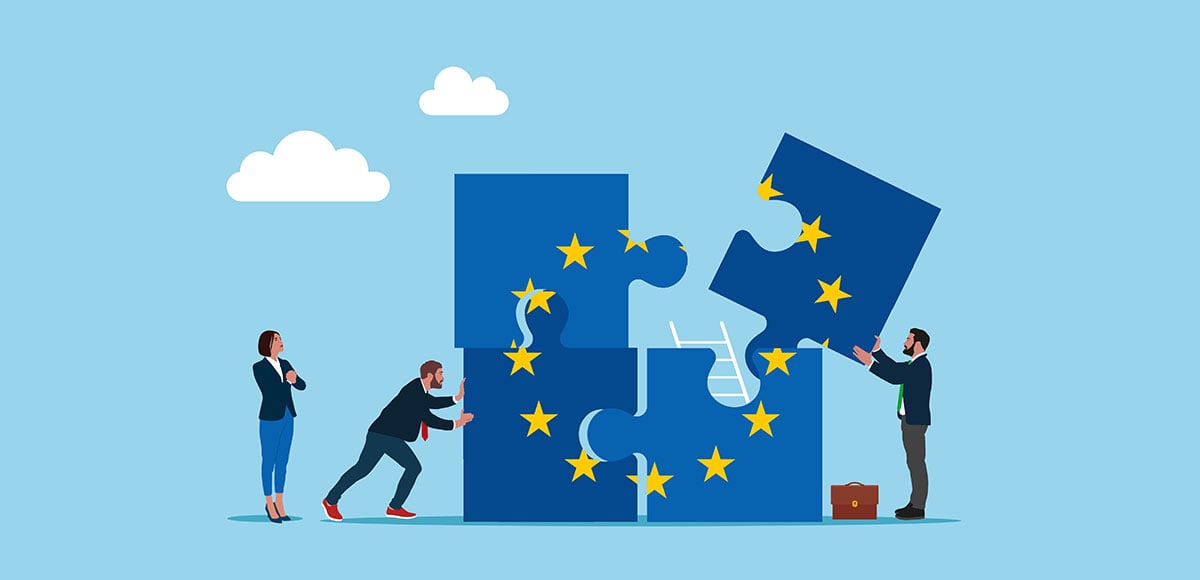
A founder can set up a company in Europe in under 24 hours, hire across seamlessly across France, Spain, and Germany, and continue to grow across the region with limited costs – these are the oft-touted ambitions of the European Union’s single market. Sadly, this is far from any founder’s experience.
In reality, this takes months of admin, requiring multiple legal entities, separate payroll systems, and dedicated employment and tax lawyers in every jurisdiction.
Any founder that has expanded across Europe will know that the gap between the idea of a single market and the operational reality is vast. Europe has plenty of high-growth potential, with some of the best and brightest talent in the world, but the time and money spent on administration hinders progress, costing European businesses around $176 billion every year.
That is why the European Commission’s proposal for a pan-European solution in the form of ‘EU INC’ matters.
Designed to give founders the option of a single legal entity across all 27 member states, it should make growing and investing in an EU business more straightforward and more attractive. It won’t fix everything overnight, but it finally acknowledges what founders have been living with for years – fragmentation. It is a step in the right direction, but long overdue.
The operational cost of fragmentation
Of all the barriers faced by European startups, one of the most costly is the requirement to run separate legal entities in every member state in which you operate. In practical terms, that means setting up and managing multiple distinct corporate structures within the
EU, adding time, cost, and operational complexity at every stage of growth.
Taking VAT as an example. Each of the 27 member states are free to set their own rates and exemptions, ranging drastically from 17% in Luxembourg to 27% in Hungary. That variation, not to mention the complexity of operating across it, can often mean delaying entry into certain countries entirely.
When it comes to hiring, employment regulations differ significantly across countries, from notice periods and probation rules to how contractors are classified, and those differences make it genuinely hard to scale teams consistently across Europe.
For a business trying to grow quickly, these are not minor details. Probation rules determine how fast you can bring someone on. Notice periods affect how quickly you can adapt when things change. Contractor classification affects who you can hire and how. Add employee equity structures into the mix, which work differently in every country, and every new market becomes its own mountain to scale.
This country-by-country adaptation at every stage of the hiring process is not just an administrative inconvenience, it directly affects how quickly and competitively a business can grow and prevents companies from gaining access to the bloc’s impressive talent pool.
Ultimately, these challenges together are making the region a less attractive place to operate. Between 2008 and 2021, nearly 30% of European unicorns relocated outside the EU entirely, and only 8% of global scaleups are based in Europe.
How EU Inc can make a difference
The EU Inc proposal is a clear step in the right direction, but it must be designed and executed in a way that directly responds to the challenges faced by companies here, instead of creating even more bureaucracy for firms.
What is particularly encouraging is the focus on reducing administrative burden for investors. Founders need capital to scale, but investors need straightforward processes in order to deploy it. Right now, the complexity of operating across multiple European jurisdictions adds unnecessary steps to both sides of that equation.

By creating simpler share transfers and fully digital processes for funding rounds, EU Inc starts to fix that, making it easier for capital to flow into high growth EU companies.
This also brings Europe up to speed with the rest of the world, reflecting the broader direction of travel in markets, where digitisation is bringing greater efficiency and competitiveness.
The future of scaling in Europe
Europe’s startups do not lack ambition. They lack the time and money that is required to expand across Europe. The moment a founder tries to grow beyond their home market, they run headfirst into a system that wasn’t designed for them to do so. The EU Inc proposal is the right move, but the real test of its success will be whether founders and investors actually experience less friction in practice.
Good implementation has to be measurable. Company setup should take days, not months. Cross-border hiring should not require a separate legal team in every market. Reporting requirements should be consistent across member states, not duplicated across them.
EU Inc has the potential to make Europe a far more attractive place to build and invest. But that potential only translates if implementation moves at the speed the market demands.
For more startup news, check out the other articles on the website, and subscribe to the magazine for free. Listen to The Cereal Entrepreneur podcast for more interviews with entrepreneurs and big-hitters in the startup ecosystem.
