

Turning niche content into a scalable business

In the startup world, there’s often an assumption that growth comes from reaching the widest possible audience as quickly as possible.
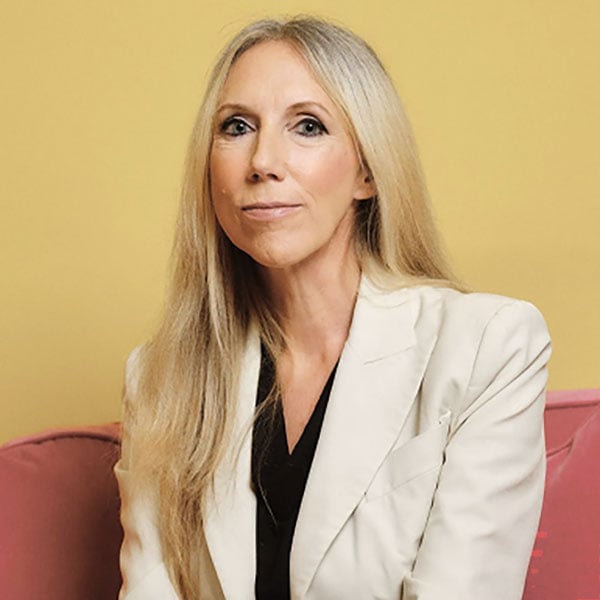
Building Get Birding has taught me and my co-founder, Katie Derham, something quite different.
What began as a premium audio series rooted in storytelling and nature has grown into a wider transmedia brand with a loyal and highly engaged audience. Today, Get Birding centres around its visualised podcast, hosted by award-winning actor Sean Bean, extensive YouTube content, owned social channels, and its members club, The Flock, where audiences can access deeper experiences and additional content.
Alongside these existing platforms, future-facing projects including children’s animation, TV and streamer formats, books and live experiences; and an interactive game is currently in development. We’re also preparing to expand internationally with a forthcoming US podcast, a natural next step given the scale of the American birding and outdoor recreation market.
For founders building modern brands, particularly in media and community-led businesses, the real opportunity lies in creating something that can evolve across platforms without losing its identity.
Start with depth, not breadth
One of the biggest lessons we learned early on was that niche audiences can often be far more valuable than broad but disengaged ones.
Get Birding was never designed to be generic lifestyle content. It had a very clear tone, audience, and emotional point of view. That clarity became one of our biggest advantages.
Founders are often encouraged to appeal to everyone, particularly when they start thinking about growth or investment. But audiences connect with specificity. Investors do too.
A clearly defined audience allows you to build trust faster, understand behaviour more deeply, and identify opportunities for monetisation earlier. It also creates stronger loyalty, which becomes essential once you start expanding into new formats.
For us, audience engagement became the foundation for every commercial decision that followed.
Storytelling is a business strategy
Founders sometimes separate storytelling from commercial strategy, but in reality the two are deeply connected.
Strong storytelling creates emotional investment. Emotional investment builds community. And community creates retention, advocacy, partnerships, and ultimately revenue.
When audiences genuinely care about a brand, they don’t just consume content passively. They follow the journey, engage across platforms, and become part of the wider ecosystem around it.
That became particularly important as we began thinking about Get Birding as more than a podcast.
As we’ve developed the brand, every potential expansion has been rooted in how audiences already engage with the Get Birding world. Our digital and video channels have allowed audiences to experience the brand more visually and immersively, while The Flock has created a dedicated community space for deeper engagement.
From there, it became clear there was an opportunity to thoughtfully expand into new formats. We’re currently developing an animated children’s series in collaboration with award-winning studio Brighton Zoo, alongside an interactive game with Preloaded. Future ambitions also include books, live experiences, and TV or streamer formats, all designed to extend the audience relationship while remaining true to the original vision.
The key lesson for founders is that diversification works best when it feels natural to the audience.
There’s an important difference between scaling a brand and diluting it.
The strongest brands build ecosystems, not collections of disconnected products. That same thinking is shaping the next phase of our growth strategy as we begin expanding beyond Get Birding into additional verticals, including Get Fishing, applying the same audience-first philosophy to adjacent outdoor and interest-led communities.
Growth requires clarity
One reality of scaling any media business is that creative ambition alone isn’t enough.
At some point, founders need to demonstrate operational clarity. Investors and partners want to understand not only what the brand is today, but what it can realistically become.
That means being clear about audience growth, revenue opportunities, brand positioning, scalability and long-term commercial potential. Investors want to see that growth is intentional rather than reactive.
While we’ve secured investment to support growth, our focus has always been on building sustainably and partnering strategically rather than scaling for scale’s sake.
For founders in creative industries especially, there can sometimes be a fear that too much commercial focus compromises creativity. In our experience, the opposite is true.
The stronger the business structure and partnerships become, the more freedom you have creatively.
Working with brilliant collaborators has been essential to our growth. Great partners don’t just help execute ideas more effectively; they expand what’s creatively possible while helping maintain quality and consistency as a brand evolves.
Community is your greatest advantage
In a world saturated with content, community becomes the differentiator.
Platforms change constantly. Algorithms are unpredictable. But audiences who feel genuinely connected to a brand are remarkably resilient. That’s why community-building should never be treated as a marketing afterthought.

The most successful modern brands are participatory. Audiences want to feel involved in the journey. They want access, dialogue, and experiences that feel authentic.
For founders, this creates a major strategic advantage. A loyal community lowers acquisition costs, strengthens organic growth, increases retention, and opens new commercial pathways. It also creates protection against platform dependency because the audience relationship exists independently of any single channel.
That flexibility becomes incredibly valuable during periods of rapid change.
Scaling without losing identity
Perhaps the biggest challenge founders face during growth is protecting what made the original brand resonate in the first place.
As businesses expand, there’s often pressure to increase output, chase trends, or broaden the audience too quickly. The risk is that growth begins to erode the qualities that made the brand distinctive.
We’ve found that maintaining brand integrity requires discipline.
Not every opportunity is the right opportunity.
Sometimes protecting long-term trust means saying no to short-term visibility or revenue.
That can feel counterintuitive in startup culture, where speed is often prioritised above all else. But sustainable brands are built through consistency.
The founders who succeed long term are usually the ones who understand exactly what their brand stands for and protect that identity as they scale.
The future belongs to adaptable brands that know who they are
The media landscape is evolving rapidly. Audiences move fluidly across audio, video, social platforms, streaming, gaming, and live experiences. The businesses that thrive in this environment will be the ones capable of adapting without fragmenting.
For founders, that means thinking beyond single products from the outset. The goal for Get Birding is not simply to create content. It’s to build intellectual property, emotional connection, and commercial ecosystems that can evolve over time.
Transmedia brands are not built by chasing every platform. They are built by understanding audience behaviour deeply enough to know where the brand naturally belongs next.
When done well, niche content such as birding can become something far more powerful: a scalable business with cultural relevance, diversified revenue, and lasting audience loyalty.
