

UK founders: stop confusing a pitch desk with investment readiness
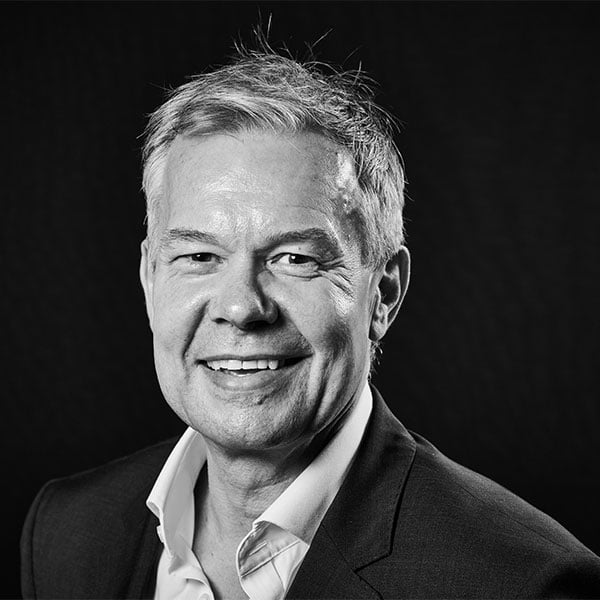

Rupert Lyle, FPC Regional’s Investment Director and Fund Principal of the West Midlands Co-Investment Fund (WMCO), explores today’s startup funding landscape and explains why founders who prioritise readiness over rapid scaling dramatically improve their odds of long-term success.
Let’s be honest, the UK doesn’t have a startup shortage. It suffers from a founder mindset and capital culture problem.
Every week, founders are told they’re ‘not quite ready’; more traction, more revenue, more proof. Told to come back later. So founders polish the deck, tighten the numbers and refine their story. Yet still they are told no.
The hard truth? Fundraising in the UK isn’t a level playing field. It’s a high-pressure environment shaped by networks, familiarity and unequal power. If you don’t look or sound familiar – or grow at the expected pace – the standard shifts, and that is a reality that no one prepares founders for.
Fundraising is psychological warfare (with a smile)
As a founder, you’re expected to walk into a room and radiate conviction, whilst knowing that most investors you meet won’t back you. You defend valuation, vision, capability, market size; all while being sized up in minutes.
You’re told dilution is normal, governance control is standard and aggressive targets are market expectation. Yet, after your 27th rejection, you start questioning your own judgement. It’s important to recognise that this is not a funding gap. It’s a resilience test.
The UK ecosystem loves talking about capital efficiency, but what it talks far less about is the emotional cost of accessing that capital. Yet this is where many founders make their worst decisions. We regularly see founders accepting misaligned investors out of fatigue, over-diluting too early, pivoting strategy to please the room and scaling prematurely to match someone else’s model.
This isn’t about toughness. It’s about preparation.
Investment readiness is not a deck
If your definition of readiness is traction, TAM and a polished pitch then, frankly, you’re missing the point.
Real readiness means:
- Knowing exactly what dilution will cost you in five years
- Understanding how board dynamics shift post-investment
- Being able to walk away from a bad term sheet
- Having the emotional discipline not to chase validation
- Aligning capital with the business you actually want to build
- And having a world class team to deliver the world class business you describe.
Too many UK founders raise money before they’re ready for what comes with it, and too many advisors push fundraising as proof of progress. It isn’t.
Thomas Edison said, ‘vision without execution is hallucination’. Too many founders have no idea how to execute and until you do and begin to build a structure capable of delivering it, investment will be difficult to access.
The UK founder trap
Here’s the tension. Many UK founders are building real companies; profitable, sustainable, long-term businesses, but much of venture capital is still wired for velocity: rapid scale, rapid return, rapid recycling.
When founders don’t match that tempo, oftentimes they’re labelled as lacking ambition. However, there is nothing unambitious about building a durable, cash-generative company, it just doesn’t fit the VC model. The UK doesn’t need more inflated valuations that collapse under pressure, it needs more resilient operators.

Stop playing the hero
If you’re raising alone, you’re already at a disadvantage.
Investors back teams, not lone crusaders. If you’re still carrying strategy, finance and operations yourself, the pressure of fundraising will expose that fragility.
My advice is to build financial depth early. Bring in independent challenge. Separate your identity from investor response. Think of your business purely from an investor point of view. Ask yourself, ‘Does my business have a world class team capable of executing on its vision?’ If it doesn’t, that is where you are failing. It’s crucial to build a team of experts within your business that not only mirrors its value, but builds it.
The hard truth
The UK doesn’t need more startups chasing funding. It needs founders prepared for the structural and psychological reality of raising capital – and brave enough to say no when it doesn’t fit – and then, first and foremost, taking any investment raised to build a world class team.
The UK also needs a capital culture that values durability as much as velocity. Until then, we’ll keep celebrating funding rounds as success – while quietly ignoring the burnout, governance conflict and strategic drift that follow.
If you’re building in the UK, prepare for the arena. Don’t just refine the pitch. Strengthen the spine of the team.
For more startup news, check out the other articles on the website, and subscribe to the magazine for free. Listen to The Cereal Entrepreneur podcast for more interviews with entrepreneurs and big-hitters in the startup ecosystem.
